


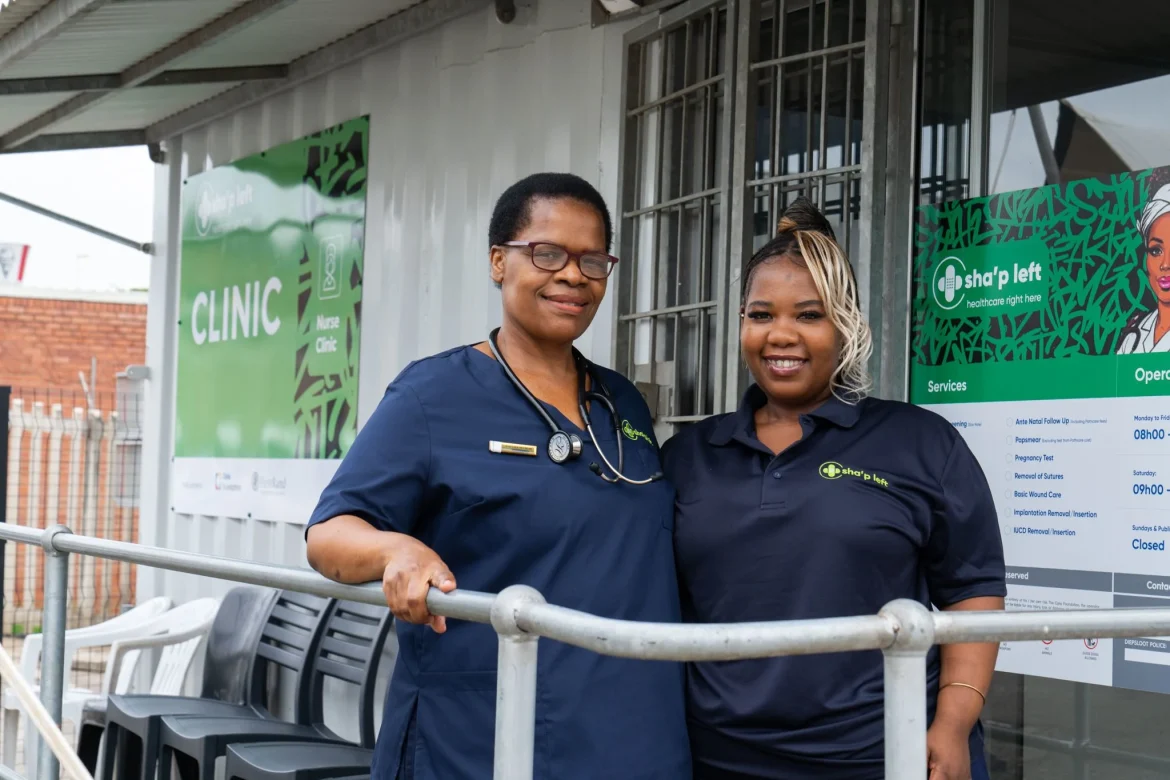
South Africa is expanding access to primary healthcare in underserved communities through a nurse-led clinic model supported by the FirstRand Empowerment Foundation and the Cipla Foundation, reflecting a growing shift towards decentralised healthcare delivery systems designed to reduce service gaps, improve health outcomes and strengthen local economic participation.
The initiative, known as Sha’p Left, is scaling the deployment of containerised primary healthcare clinics across communities where public health facilities remain overstretched or geographically inaccessible. Operated by qualified clinical nurse practitioners, the model seeks to bring essential healthcare services closer to patients while reducing the economic and logistical barriers that often prevent timely access to treatment.
 The programme is being expanded through a strategic investment by the FirstRand Empowerment Foundation, which aims to increase the number of operational clinics from 11 currently to 61 by 2029. Initial expansion sites include Senoane in Gauteng and the communities of KwaNyuswa and Verulam in KwaZulu-Natal, areas identified as facing persistent healthcare access challenges.
According to programme stakeholders, the clinics are designed to function as fully operational primary healthcare facilities, providing consultations, diagnoses and medication dispensing within a single patient visit. The nurse practitioners operating the facilities are authorised to dispense Schedule 4 medicines, enabling treatment to be delivered efficiently without requiring patients to navigate multiple stages of the healthcare system.
The model addresses a longstanding challenge across many African health systems, where shortages of healthcare professionals, limited infrastructure and increasing population growth continue to place pressure on public facilities. In South Africa, these pressures are particularly pronounced in township communities and peri-urban areas where residents often spend considerable time and financial resources travelling to healthcare centres.
By locating clinics in transport hubs and densely populated residential areas, the programme seeks to minimise indirect healthcare costs, including lost income and transportation expenses. For many low-income households, these costs often represent a significant barrier to preventative care and early treatment, contributing to poorer health outcomes and increased pressure on hospitals.
The initiative also reflects broader efforts to diversify healthcare delivery models in response to rising demand and constrained public sector resources. Across Africa, governments and development finance institutions are increasingly exploring community-based healthcare solutions as a means of expanding coverage while maintaining fiscal sustainability.
According to programme documentation, the Sha’p Left model currently serves more than 5,000 patients each month, highlighting both demand for decentralised healthcare services and the potential role of nurse-led care in supporting national health systems. The expansion comes at a time when many African countries are seeking innovative approaches to achieve universal health coverage amid growing demographic pressures and tightening public budgets.
Beyond healthcare delivery, the programme incorporates an enterprise development component that enables nurse practitioners to own and manage clinic operations. This approach aims to create a financially sustainable ecosystem that combines service provision with entrepreneurship, while generating employment opportunities within local communities.
The integration of healthcare delivery and enterprise development is increasingly attracting attention among social investors seeking scalable solutions that address multiple development objectives simultaneously. By supporting healthcare professionals as business operators, the model seeks to strengthen local economic resilience while improving access to essential services.
Environmental sustainability has also been incorporated into the expansion strategy through the introduction of solar energy systems across clinic sites. Reliable energy access remains a significant challenge for healthcare facilities across parts of Africa, where power disruptions can compromise service delivery, medicine storage and diagnostic operations.
The adoption of solar systems is expected to improve operational continuity while reducing dependence on grid electricity and lowering long-term operating costs. This reflects a wider trend in African healthcare infrastructure, where renewable energy technologies are increasingly being deployed to strengthen service reliability and climate resilience.
The significance of healthcare infrastructure extends beyond individual patient outcomes. Healthier populations contribute directly to labour productivity, educational attainment and economic participation, making healthcare investment an important component of long-term development planning. The World Bank and other development institutions have consistently identified healthcare access as a critical factor influencing economic growth and poverty reduction outcomes.
South Africa’s experience also reflects a broader continental conversation around health system resilience. The COVID-19 pandemic exposed vulnerabilities in healthcare infrastructure across many African countries, accelerating efforts to strengthen primary healthcare systems and expand community-based care models capable of responding to both routine health needs and future public health emergencies.
Within the framework of the African Union’s Agenda 2063, initiatives that improve healthcare access while addressing structural inequalities contribute to wider objectives related to human capital development, social inclusion and sustainable economic transformation. Expanding healthcare services in underserved communities supports efforts to build more equitable societies while strengthening resilience against future social and economic shocks.
 As African governments continue to balance rising healthcare demands with fiscal constraints, decentralised service delivery models such as Sha’p Left are likely to attract increasing interest from policymakers, development financiers and healthcare stakeholders. The success of such programmes will depend not only on expansion targets but also on their ability to deliver measurable improvements in health outcomes, financial sustainability and community trust.
The FirstRand Empowerment Foundation’s investment signals growing recognition that healthcare access, economic empowerment and sustainability objectives are increasingly interconnected. As countries seek practical solutions to complex development challenges, integrated approaches that combine service delivery, entrepreneurship and climate resilience may become an increasingly important feature of Africa’s evolving healthcare landscape.


