


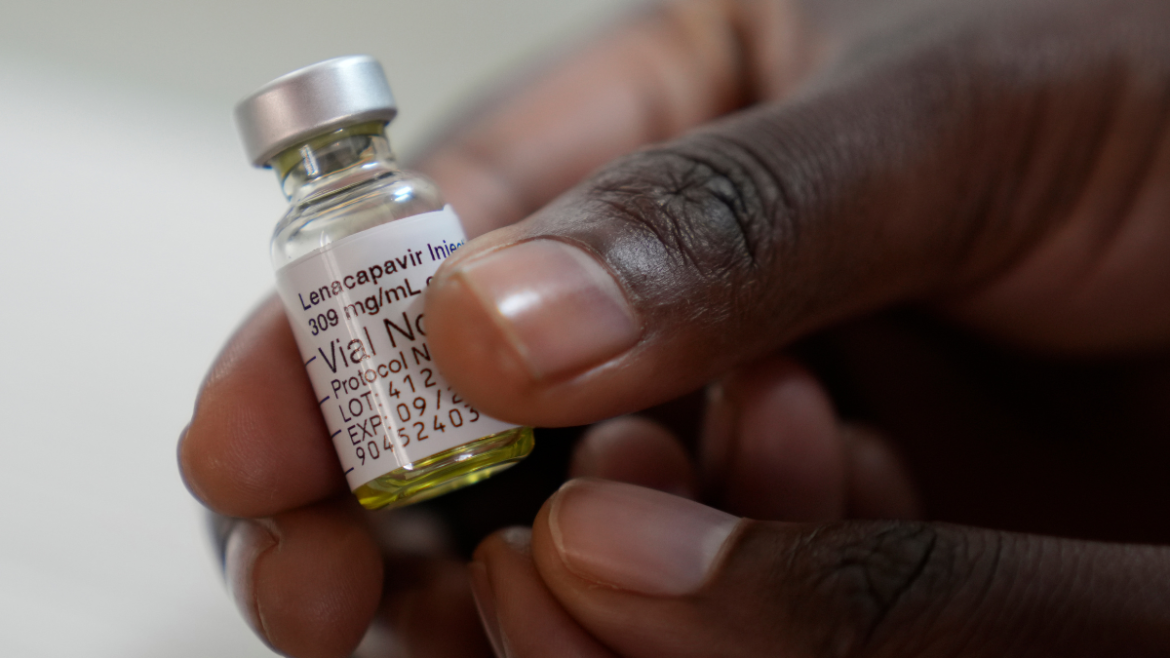
South Africa is preparing to introduce one of the most significant advances in HIV prevention in decades as public health authorities begin rolling out the long-acting HIV prevention injection lenacapavir through selected public clinics, but the programme’s success may depend as much on financing and community outreach systems as on the drug’s scientific effectiveness.
Initial doses are expected to be distributed in high HIV-burden districts within weeks, supported through funding from the Global Fund to fight AIDS, Tuberculosis and Malaria. The launch positions South Africa at the forefront of a new generation of HIV prevention technologies capable of providing protection for up to six months from a single injection, potentially addressing longstanding challenges associated with adherence to daily oral Pre-Exposure Prophylaxis (PrEP).
 The rollout comes at a critical moment for a country that remains home to the world’s largest HIV treatment programme and one of the highest HIV prevalence rates globally. According to UNAIDS estimates, South Africa continues to account for a substantial share of global HIV infections, making the effectiveness of prevention interventions central not only to national health outcomes but also to broader development and fiscal priorities.
Health researchers and policy analysts, however, caution that biomedical innovation alone is unlikely to deliver the desired public health impact. The introduction of lenacapavir is taking place against a backdrop of shrinking international donor support and growing concerns about the weakening of community-based health systems that have historically served as the foundation of HIV prevention efforts.
According to reporting cited by News24 and health sector stakeholders, reductions in funding linked to the United States President’s Emergency Plan for AIDS Relief (PEPFAR) have affected a range of frontline services, including community outreach, HIV testing, recruitment programmes and support networks that connect vulnerable populations to prevention and treatment services. Although PEPFAR contributes only a portion of South Africa’s overall HIV financing, its investments have traditionally focused on high-impact interventions in districts with elevated infection rates.
The resulting challenge is one of implementation rather than scientific capability. Public health specialists note that successful HIV prevention requires a functioning ecosystem that extends beyond clinics and pharmaceuticals. Community mobilisation, behavioural awareness campaigns, testing services and patient follow-up mechanisms play a critical role in ensuring that prevention technologies reach those most at risk.
Evidence from previous HIV prevention programmes demonstrates that uptake often depends on trust, accessibility and sustained engagement rather than availability alone. Researchers have warned that declining testing rates and reduced participation in existing PrEP programmes may indicate weaknesses in demand-generation systems that could also affect adoption of the new injectable option.
The stakes extend beyond public health. HIV remains a major economic issue across Southern Africa, influencing labour productivity, household income stability, healthcare expenditure and long-term human capital development. Sustained reductions in new infections can lower future treatment costs, reduce pressure on public health budgets and support broader economic resilience. Conversely, setbacks in prevention efforts risk increasing long-term fiscal burdens on governments already facing competing demands for social services and infrastructure investment.
The introduction of lenacapavir also reflects a broader shift within global health policy towards long-acting prevention technologies designed to improve adherence and simplify service delivery. Similar approaches are increasingly being explored for other infectious diseases, reflecting growing recognition that healthcare outcomes often depend on reducing the complexity of treatment and prevention regimens.
For African countries, the development carries wider implications for health system innovation and equitable access to emerging medical technologies. As governments seek to strengthen domestic healthcare capacity while navigating constrained public finances, the ability to integrate new scientific advances into existing service delivery frameworks is becoming an increasingly important measure of institutional effectiveness.
The financing dimension remains particularly significant. Many African health systems continue to rely on external support for disease-specific programmes, raising concerns about sustainability when donor priorities shift. The South African experience highlights the importance of developing resilient domestic funding mechanisms capable of preserving critical health services even during periods of changing international assistance.
According to health policy experts, rebuilding and strengthening community-level prevention infrastructure may ultimately prove as important as the procurement of the medication itself. The effectiveness of lenacapavir will likely depend on whether governments and partners can maintain the networks that encourage testing, facilitate access and ensure continuity of care among vulnerable populations.
 The rollout therefore represents more than the introduction of a new pharmaceutical product. It serves as a test of how African health systems can translate scientific innovation into measurable public health outcomes under increasingly constrained financing conditions. As countries across the continent work to achieve ambitious health and development targets under the African Union’s Agenda 2063 framework, the lessons emerging from South Africa’s experience may influence future approaches to disease prevention, healthcare financing and health system resilience.
While lenacapavir offers the prospect of substantially reducing new HIV infections, its ultimate impact will depend on whether scientific progress can be matched by effective governance, sustainable financing and strong community engagement. The coming years are expected to demonstrate whether Africa’s most advanced HIV prevention technology can achieve its full potential within a changing global health financing landscape.


