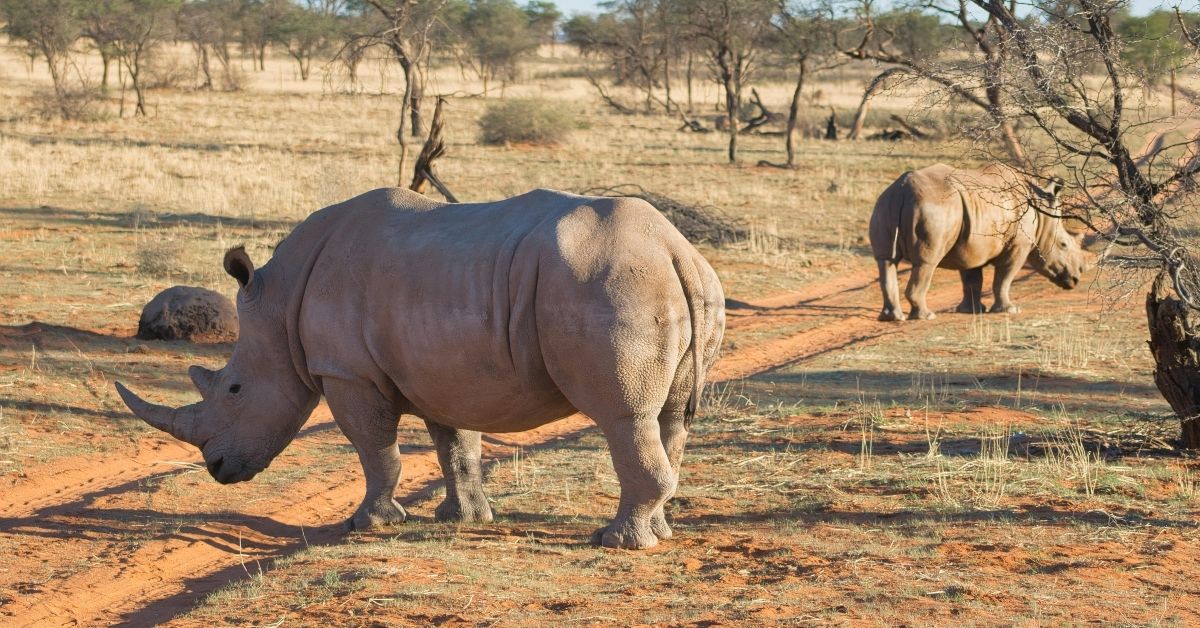

South Africa recorded a 16 percent decline in rhino poaching in 2025, the environment ministry said on Tuesday, offering a rare national improvement in a country that has for more than a decade stood at the centre of the global illegal wildlife trade, even as sharp regional disparities underline the fragility of those gains.
A total of 352 rhinos were poached between January and December 2025, down from 420 the previous year, according to Environment Minister Willie Aucamp. Of those losses, 266 animals were killed on state-owned land and 86 on private reserves, reflecting the continued exposure of both public conservation estates and commercial wildlife operations.
The national decline masks a worsening situation in key frontline areas. Mpumalanga province recorded 178 rhino killings, nearly double the 92 reported in 2024. Kruger National Park alone accounted for 175 of those deaths, up from 88 a year earlier, reinforcing its status as the most contested battleground between conservation authorities and organised poaching syndicates operating across South Africa’s north-eastern borders.
By contrast, KwaZulu-Natal registered a significant reduction in losses, with poaching in Hluhluwe-iMfolozi Park falling to 63 rhinos from 198 in 2024. According to the ministry, the improvement reflects tighter coordination between park authorities, law enforcement and intelligence units, alongside changes in deployment strategies that reduced predictability.
Read also: Cape Town’s Baboons: New action plan balances urban safety and Wildlife conservation
Aucamp attributed the overall decline to improved detection and enforcement, including expanded use of surveillance cameras and sensor technology, as well as integrity measures such as the routine polygraphing of park law-enforcement personnel. He said these efforts were supported by closer cooperation between anti-poaching and anti-trafficking agencies, both domestically and across borders.
South Africa’s experience matters beyond conservation outcomes alone. Rhino poaching has long imposed fiscal and institutional costs on the state, diverting public resources towards security, militarised patrols and prosecutions, while undermining tourism revenues and private investment in wildlife-based land use. According to government estimates, the country spends hundreds of millions of rand annually on anti-poaching operations, with Kruger absorbing a disproportionate share of that burden.
The uneven 2025 results highlight the adaptive nature of wildlife crime in Africa, where enforcement pressure in one region often displaces activity to another. Kruger’s resurgence in losses underscores the persistent role of transnational criminal networks that exploit porous borders, corruption risks and uneven capacity across the region.

Although poaching levels remain well below the 2014 peak, when more than 1,200 rhinos were killed nationwide, authorities acknowledge that progress remains reversible. Aucamp said South Africa would continue to prioritise international cooperation following recognition last year for its work against transboundary environmental crime, noting that sustained reductions depend on constant adaptation rather than static enforcement models.
For African countries balancing conservation, fiscal constraints and rural livelihoods, the data underscores a broader lesson: wildlife protection is not a linear trajectory but a governance challenge that requires consistent investment, institutional integrity and regional coordination to translate short-term gains into durable outcomes.
Engage with us on LinkedIn: Africa Sustainability Matters