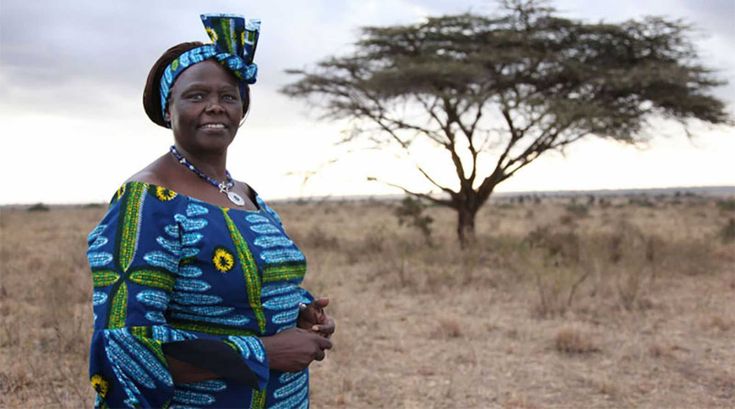

Wangari Maathai’s legacy returned to the global stage in Nairobi, Kenya, this week as the UN Environment Assembly marked the twentieth anniversary of her Nobel Peace Prize with a quiet but meaningful ceremony that brought together her family, Kenya’s environment authorities and global environmental leaders.
The event, held on the tree named in her honor within the United Nations compound, gathered the people who have carried her work forward, and renewed the question of how Africa can grow the next generation of environmental defenders at a time when the continent’s ecosystems are under mounting strain.

Wanjira Mathai, speaking on behalf of her late mother, watered the tree that has stood within the compound for years, a living symbol of a movement that began in Kenya’s rural villages and went on to shape global environmental politics. To those watching, the moment was not ceremonial alone; it was a reminder that Maathai’s work grew from ordinary citizens who decided that degraded land, polluted rivers and shrinking forests were not inevitable features of African life.
Many of the participants at UNEA-7 had themselves been influenced by the Green Belt Movement, which mobilized women to restore Kenya’s landscapes long before most African governments began budgeting for climate adaptation or forest rehabilitation.
Across Africa, the significance of honoring Maathai at a multilateral forum lies in the gap she identified decades ago: a continent rich in natural resources but short of political will to protect them. The pressures she fought—illegal logging, land grabbing, urban encroachment and political intimidation—still shape the environmental realities of many countries.
Kenya continues to lose tens of thousands of hectares of forest cover each year despite major gains since 2018. Ghana faces one of the world’s fastest rates of primary forest loss, driven largely by small-scale mining and agricultural expansion.
Nigeria’s forest cover has fallen by more than half over the past century, tightening pressure on water systems and rural livelihoods. These are not abstract trends; they translate into longer drought cycles in the Horn of Africa, fluctuating hydropower generation in southern Africa and declining soil fertility that affects farmers from the Sahel to the Great Lakes.
UNEP’s decision to anchor Maathai’s memory at UNEA-7 signals an attempt to link policy ambition with the grounded activism she embodied. Her insistence that environmental protection must be practiced, not only legislated, remains a challenge for governments balancing development needs with ecological limits.
What she demonstrated through the Green Belt Movement was that environmental leadership can come from the margins; women’s groups, youth networks and communities that seldom appear in official climate dialogues. This matters now more than ever as Africa prepares for a future in which the success of climate adaptation will depend on widespread citizen participation, from community forest associations in Ethiopia’s highlands to coastal restoration groups along Mozambique’s shoreline.
As the ceremony concluded, the story Maathai often shared, the hummingbird trying to put out a forest fire with drops of water, was recalled by several participants. It carried weight not as folklore but as an instruction to a continent facing the combined challenges of population growth, rapid urbanization and climate shocks.
Honoring her legacy at UNEA-7 served to remind policymakers that Africa’s environmental champions do not emerge spontaneously; they grow from consistent investment, public trust and the space to act. In celebrating her life, the assembly recognized that safeguarding Africa’s future will require many more of them.
Engage with us on LinkedIn: Africa Sustainability Matters