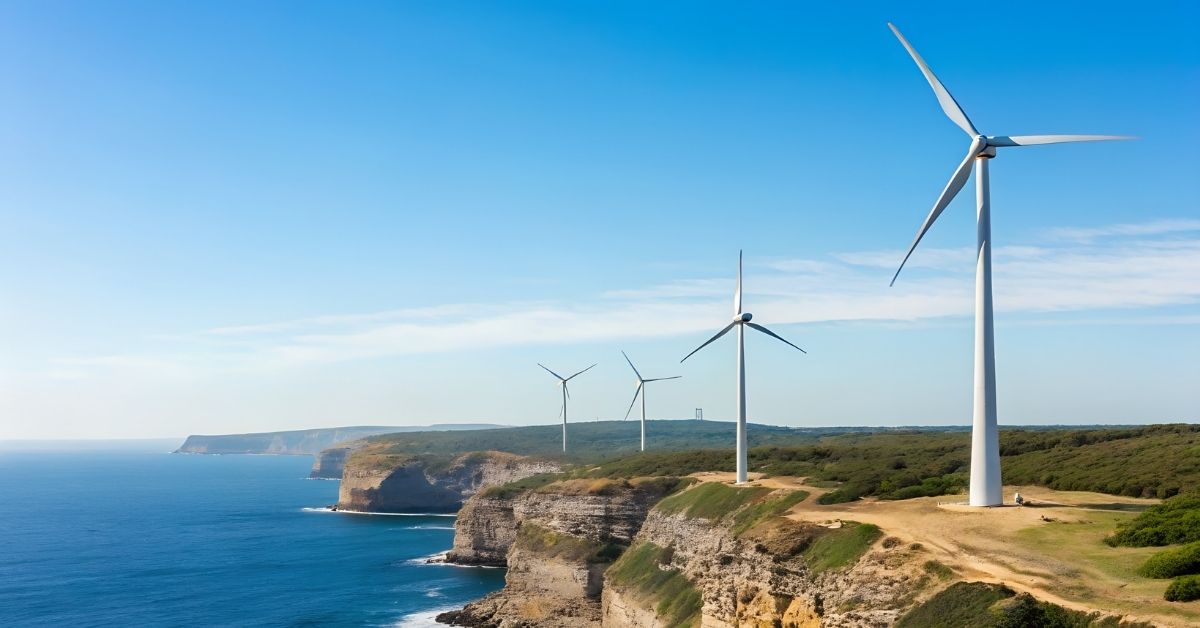

On 23 December 2025, the Japanese government announced it would commit 210 billion yen, about $1.34 billion, over five years to subsidise companies that run entirely on decarbonized electricity, tying public money to clean power demand, regional development and industrial competitiveness.
The policy, unveiled by Japan’s Ministry of Economy, Trade and Industry in Tokyo, is designed to redirect private investment toward renewable energy consumption at a time when the country is struggling to meet its long-term climate and energy targets. For Africa, where the gap between clean energy supply and bankable demand remains wide, the move offers lessons that go beyond headline figures.
Read also: Tunisia commissions 120MW Kairouan Solar Plant in major boost to energy security
Japan is the world’s fifth-largest emitter of carbon dioxide and remains heavily dependent on imported fossil fuels. Energy price shocks over the past few years exposed the vulnerability of that dependence, pushing policymakers to rethink how decarbonization and economic security intersect.
While Japan has invested heavily in renewable generation, progress has slowed. Renewables accounted for just under 23 percent of electricity generation in 2023, and nuclear power less than 9 percent, far short of the government’s ambition to reach around 50 percent renewables and 20 percent nuclear by 2040.
Offshore wind projects have been delayed by rising costs, while large solar developments have faced local resistance. Supply-side expansion alone has not delivered the pace of change policymakers expected.

The new subsidy plan shifts attention to demand. Under the scheme, companies that commit to using fully decarbonised electricity can receive public support covering up to half of their capital expenditure. Eligibility is also tied to regional economic impact, meaning firms must demonstrate that their operations support local jobs and investment where the clean power is produced.
Data centres, whose electricity consumption is growing rapidly, are explicitly included. In effect, Japan is using public funds to guarantee long-term, credible demand for clean electricity, giving renewable developers and grid operators greater confidence to invest.
Read also: Burkina Faso, Mali and Niger launch confederal investment bank for regional development financing
Across the African continent, more than 600 million people still lack access to electricity, while many national grids operate below capacity due to weak demand from industry and limited purchasing power. Even where renewable potential is abundant, projects often struggle to reach financial close because there are too few large, reliable off-takers.
According to the International Energy Agency, Africa accounts for less than 5 percent of global clean energy investment despite holding some of the world’s best solar and wind resources. The constraint is not just supply, but demand that can pay and endure.
Japan’s approach highlights how policy can deliberately create that demand. By subsidising capital investment rather than electricity prices, the government is encouraging companies to anchor their long-term business models to clean power.
In Africa, similar logic could apply to industrial parks, agro-processing zones or digital infrastructure such as data centres, which are expanding in countries like Kenya, Nigeria and South Africa. Where governments or development banks help underwrite the upfront cost of clean-power-dependent facilities, renewable projects become easier to finance, grids more stable and local economies more diversified.

The regional dimension of Japan’s plan also resonates. Subsidies are linked to economic activity outside major cities, using clean electricity as a tool for regional revitalisation. Many African countries face stark regional inequalities, with energy infrastructure concentrated around capitals while secondary cities and rural areas lag behind.
Ethiopia’s industrial parks, Morocco’s renewable-linked manufacturing zones and Egypt’s new desert developments show that energy can shape geography. What Japan adds is a clear fiscal mechanism to steer private capital toward regions where clean power is available, rather than waiting for markets to do so on their own.
There are limits to the comparison. Japan has deep fiscal capacity, mature institutions and an existing industrial base. Most African governments operate under tighter budget constraints and higher political risk. Yet Africa already relies heavily on blended finance, guarantees and concessional funding from development partners.
Read also: Africa’s Cocoa, Coffee and Timber exports face new EU timeline under EU Deforestation Rules
Redirecting some of that support toward demand-side incentives, rather than focusing almost exclusively on generation, could help unlock stalled projects. The African Development Bank has estimated that Africa needs over $130 billion annually in energy investment to meet its goals; without stable demand, much of that capital will remain theoretical.
Japan’s subsidy plan also reflects a broader shift in thinking about decarbonisation. Instead of treating climate policy as a cost, it is being used as an industrial strategy. Clean electricity becomes a competitive asset, not just an environmental one. For African policymakers, the lesson is not to copy Japan’s model wholesale, but to adapt the principle: align energy transition goals with job creation, industrial growth and regional development, and back that alignment with credible public finance.
As Japan prepares to roll out the programme from 2026, its success will be judged by whether it converts subsidies into lasting clean power demand and bankable projects. For Africa, watching that experiment closely may be worthwhile. The continent’s energy transition will not be driven by supply alone. It will depend on whether governments can help create the demand that turns abundant renewable resources into engines of growth, resilience and sustainability.
Engage with us on LinkedIn: Africa Sustainability Matters
Engage with us on LinkedIn: Africa Sustainability Matters