


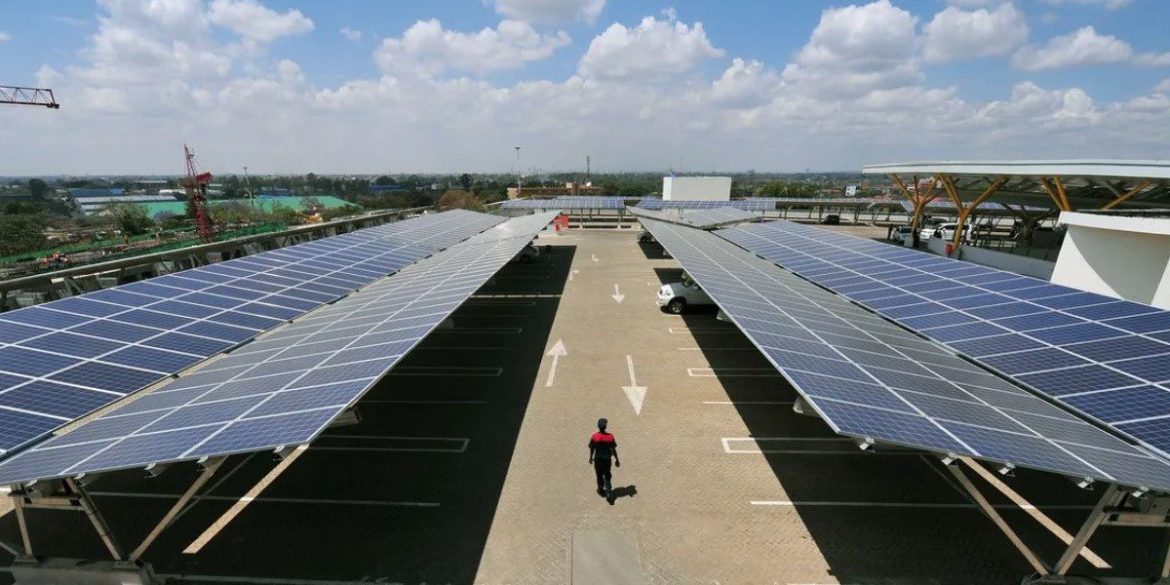
Zambia has significantly expanded its renewable energy capacity after commissioning the second phase of the Chisamba Solar Power Plant, doubling the facility’s output to 200 megawatts (MW). The latest 100MW expansion, inaugurated by President Hakainde Hichilema on 21 July 2026, represents another milestone in the country’s efforts to diversify its electricity mix, reduce vulnerability to climate-induced power shortages and strengthen energy security at a time when Southern Africa continues to grapple with prolonged droughts and rising electricity demand.
The second phase of the Chisamba Solar Complex, developed by state-owned utility ZESCO Limited in partnership with China’s PowerChina, was completed in approximately seven months at a reported cost of US$70 million. According to Zambia’s Ministry of Energy, the project created more than 1,400 jobs during construction while reinforcing the government’s broader strategy of accelerating investment in renewable energy infrastructure capable of supporting both economic growth and climate resilience.
Speaking during the commissioning ceremony, President Hichilema described the project as evidence that Zambia’s investment in electricity generation is beginning to deliver measurable results through the steady addition of new generation capacity to the national grid. The expansion comes at a pivotal moment for Zambia’s electricity sector. According to the International Energy Agency (IEA), Zambia remains one of Africa’s most hydropower-dependent economies, with more than 80% of its electricity generated from hydroelectric facilities. While hydropower has historically provided relatively low-cost electricity, successive droughts linked to climate variability have exposed the country’s dependence on rainfall, reducing reservoir levels and constraining electricity generation.
The severe El Niño-induced drought that affected Southern Africa during 2024 significantly reduced water inflows into the Kariba Dam, one of the region’s largest hydropower facilities jointly managed by Zambia and Zimbabwe. According to the Zambezi River Authority, declining water levels forced reductions in electricity generation, leading to extensive power rationing that disrupted mining operations, manufacturing, agriculture and household electricity supply across Zambia.
Against that backdrop, solar energy has emerged as a strategic priority for diversifying Zambia’s generation portfolio. According to the International Renewable Energy Agency (IRENA), Zambia possesses some of the strongest solar irradiation levels in Sub-Saharan Africa, creating favourable conditions for utility-scale photovoltaic projects capable of complementing hydropower during dry seasons.
The completion of Chisamba’s second phase therefore represents more than an increase in installed capacity. It illustrates how African countries are increasingly deploying renewable technologies to strengthen grid resilience while reducing climate-related risks to critical infrastructure. According to Zambia’s Ministry of Energy, electricity generated by the new 100MW facility will primarily be supplied to the national grid, helping improve electricity availability for households, businesses and public services. Combined with the commercial structure established under the first phase, the Chisamba complex will now serve both regulated electricity markets and large private consumers.
The first phase of the project was financed through a different investment model involving Kariba North Bank Extension Power Corporation, a subsidiary of ZESCO, with financing provided by Stanbic Bank Zambia. Electricity generated under that arrangement is marketed through Africa GreenCo, which supplies power to major industrial customers including mining company First Quantum Minerals.
The coexistence of these two commercial models demonstrates Zambia’s growing use of diversified financing mechanisms to expand electricity infrastructure. According to the African Development Bank (AfDB), blended finance, commercial lending and independent power producer models are becoming increasingly important for closing Africa’s substantial infrastructure financing gap.
The continent requires between US$130 billion and US$170 billion annually for infrastructure development, yet current investment falls well short of that requirement. Energy infrastructure remains one of the largest components of this financing deficit. For Zambia, expanding renewable generation carries implications far beyond electricity supply. Mining contributes more than 70% of the country’s export earnings, making reliable electricity essential for sustaining copper production, attracting investment and supporting the government’s ambition to significantly increase national copper output over the coming decade.
Frequent electricity shortages have previously constrained mining productivity while increasing operational costs for manufacturers and small businesses that rely on diesel generators during power outages. According to the World Bank, improving electricity reliability remains one of the most effective ways of enhancing industrial competitiveness across developing economies.
Solar investments such as Chisamba therefore contribute simultaneously to climate adaptation, industrial productivity and macroeconomic stability. The project’s employment impact also reflects the growing role of renewable energy as a source of economic opportunity. More than 1,400 construction jobs were created during the seven-month development period, supporting local incomes while building technical capacity within Zambia’s expanding renewable energy sector.
According to the International Labour Organization (ILO), the global transition towards clean energy is expected to generate millions of new jobs across renewable energy, energy efficiency, electric mobility and grid infrastructure. African countries investing early in renewable industries could therefore benefit not only from cleaner electricity but also from expanding employment opportunities for engineers, technicians, electricians and project developers.
China’s continued participation through PowerChina also illustrates the evolving nature of Africa’s renewable energy partnerships. Chinese companies have become major investors in African electricity infrastructure, supporting solar, hydropower, transmission and battery storage projects across multiple countries through engineering expertise, construction capacity and project financing. The Chisamba expansion further aligns with Zambia’s broader climate commitments under the Paris Agreement and the country’s long-term Integrated Resource Plan, which seeks greater diversification of electricity generation while strengthening resilience against increasingly frequent climate shocks.
According to the International Energy Agency, utility-scale solar will continue playing an expanding role in Africa’s electricity systems as photovoltaic costs continue declining and battery storage technologies become more commercially viable. Falling technology costs have significantly improved the competitiveness of renewable energy compared with conventional fossil fuel generation over the past decade.
The commissioning of Chisamba’s second phase also reflects broader trends unfolding across Southern Africa, where countries including Namibia, Botswana, Zimbabwe and South Africa are accelerating investments in solar and wind energy to reduce dependence on ageing thermal generation and climate-sensitive hydropower resources. For Africa, Zambia’s expanding solar programme illustrates how renewable energy is increasingly becoming an economic development strategy rather than solely a climate policy. Investments in large-scale clean energy infrastructure strengthen electricity security, improve industrial competitiveness, attract private capital and reduce exposure to weather-related disruptions that continue to affect economic performance across the continent.
As electricity demand rises alongside urbanisation, industrialisation and digital transformation, projects such as the Chisamba Solar Complex demonstrate the growing importance of diversified energy systems capable of supporting long-term economic growth while strengthening resilience against climate and market uncertainties. Their success will ultimately be measured not only by installed capacity but by their contribution to reliable electricity access, productive industries and sustainable development across Zambia and the wider Southern African region.


