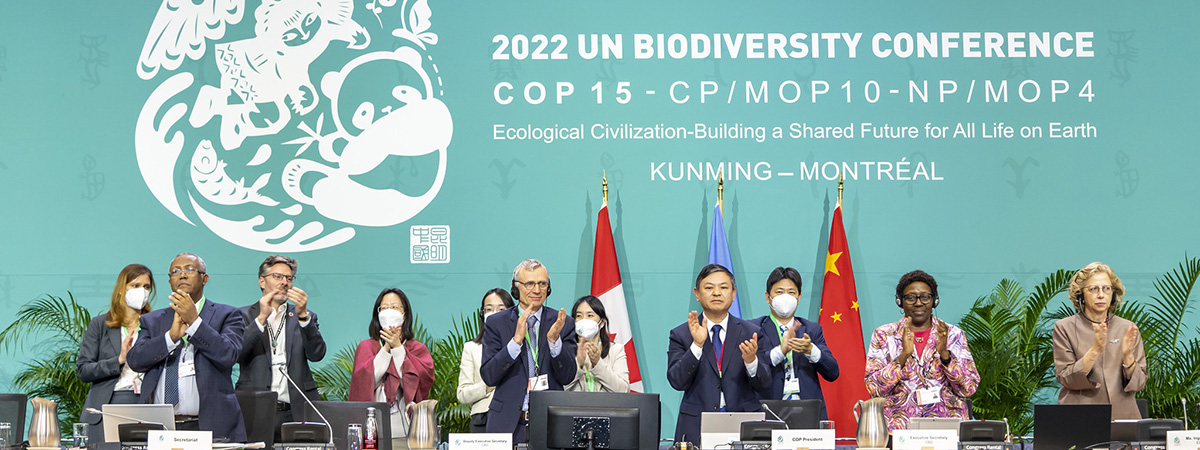

Some 125 countries, representing nearly two-thirds of the 196 Parties to the Convention on Biological Diversity (CBD) and a substantial share of global biodiversity, have submitted their 7th National Reports in preparation for the first review of collective progress under the Kunming-Montreal Global Biodiversity Framework (KMGBF). The review will take place during COP17, scheduled from October 19 to 30, 2026, in Yerevan, Armenia.
The February 28, 2026, deadline set by the Parties at COP15 marked a critical milestone for assessing global commitments to halt biodiversity loss. Timely submissions were deemed essential to allow the Secretariat sufficient time to compile a comprehensive global report. A minor technical issue, however, means that some reports requiring manual upload will appear later in the online system.
Read also: South Africa reports 16% decline in Rhino poaching in 2025, Kruger National Park remains vulnerable
According to Astrid Schomaker, Executive Secretary of the CBD, the high submission rate across the CBD and its Protocols demonstrates sustained international commitment to biodiversity conservation. “The laudable efforts to meet the national reporting deadlines under the CBD and also under its Protocols, demonstrate Parties’ strong commitment to the global endeavor to halt and reverse the world’s biodiversity loss,” Schomaker said.
Among the Protocols, nearly three-quarters (129 of 173) of the Parties to the Cartagena Protocol on Biosafety and two-thirds (95 of 142) of the Parties to the Nagoya Protocol on Access and Benefit-Sharing of Genetic Resources met the reporting deadline.
The seventh National Reports, guided by Article 26 of the CBD, integrate quantitative data aligned with the Planning, Monitoring, Reporting, and Review mechanisms of the KMGBF. Standardized templates and guidelines adopted by the Conference of the Parties ensured consistency across submissions, allowing comparative assessment of progress and gaps. While some reports will not be incorporated into the immediate global report due to timing constraints, all submissions will be made publicly accessible, reinforcing transparency in tracking biodiversity commitments.
For African nations, the KMGBF review has direct implications for natural resource management, rural livelihoods, and economic resilience. Biodiversity underpins key sectors such as agriculture, fisheries, forestry, and tourism, which collectively contribute significant shares of national GDPs and employment.
Data from the National Reports can guide domestic policymaking on land use, conservation finance, and ecosystem-based adaptation measures, shaping investment priorities and public spending decisions.
The global report will also integrate inputs from non-state actors, including indigenous peoples, local communities, cities, financial institutions, and private-sector actors. This “whole-of-society” approach aims to reflect the multi-level nature of biodiversity stewardship and to identify gaps in implementation beyond national government actions.
For Africa, where indigenous and community-based natural resource management remains central to ecological preservation, such inclusivity may inform targeted support for local conservation initiatives and improve access to international financing mechanisms.
Observers note that the COP17 review in Yerevan will be closely watched for its capacity to convert reporting into actionable measures. The evaluation of collective progress could influence global financing allocations, technical support initiatives, and the prioritization of policies addressing habitat loss, species decline, and ecosystem degradation.
For African governments, civil society, and businesses, the insights emerging from these National Reports will provide evidence-based guidance for strengthening institutional frameworks, aligning biodiversity objectives with national development strategies, and mitigating the economic and social risks posed by ecosystem loss.
Engage with us on LinkedIn: Africa Sustainability Matters