
With less than two weeks before Africa’s new agricultural blueprint takes effect, a group of leading policy and agriculture experts has released a detailed playbook aimed at helping governments turn long-standing commitments on food security and resilience into measurable outcomes.
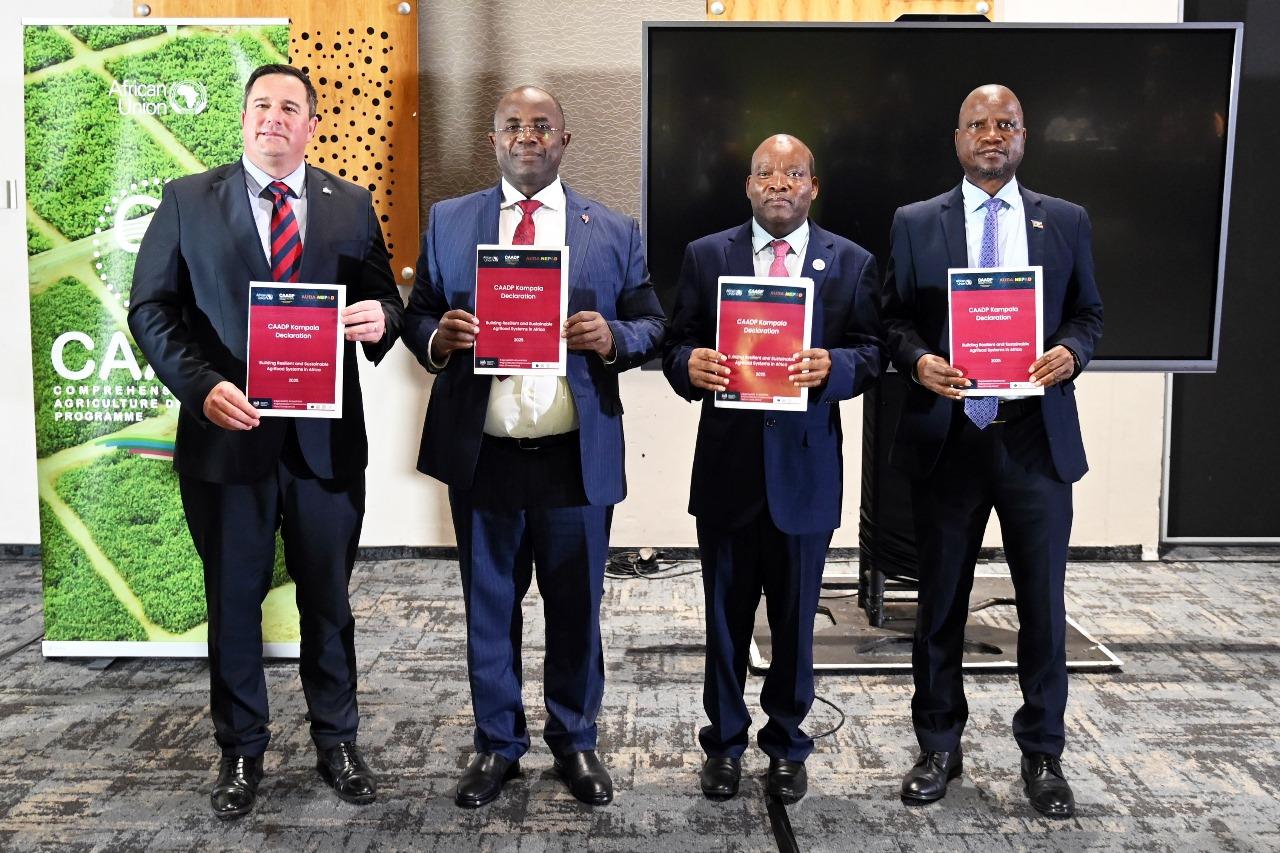
African Leaders during the signing of the CAADP Kampala agreement
The Malabo Montpellier Panel on Wednesday published Recipes for Success 2: Policy Innovations to Achieve the Kampala Declaration Goals, a synthesis of evidence drawn from 70 country case studies as African Union member states prepare to implement the next phase of the Comprehensive Africa Agriculture Development Programme from January 1, 2026.
Read also: The CAADP Kampala Declaration: A game changer in Africa’s food systems transformation
The report arrives at a pivotal moment. The Kampala Declaration, adopted in 2025, replaces the Malabo commitments that guided African agricultural policy for more than a decade. While agricultural output has risen steadily across the continent since the early 2000s, progress has been uneven and repeatedly disrupted by climate shocks, the COVID-19 pandemic and volatility in global food and energy markets following the Russia–Ukraine war. The new declaration sets out six commitments that seek to stabilize food systems, improve nutrition, strengthen livelihoods and make agriculture more resilient to future shocks.
Rather than proposing new targets, the Panel’s report focuses on what has already worked. Drawing on 16 flagship studies published since 2017, the analysis tracks policy choices and delivery models that have produced results in countries facing similar constraints of finance, infrastructure and climate exposure. The aim, according to the Panel, is to reduce the gap between ambition and execution that has characterized earlier continental strategies.

Agriculture remains central to Africa’s economy, employing more than half of the labour force in many countries and contributing up to a third of GDP in low-income economies. Yet food imports continue to rise, with Africa spending tens of billions of dollars annually to meet domestic demand.
The Kampala Declaration sets a goal of increasing agricultural output by 45 percent by 2035, halving post-harvest losses and tripling intra-African agricultural trade over the same period. Evidence cited in the report shows that countries such as Ethiopia, Rwanda and Senegal have made gains where investments in irrigation, mechanisation and digital advisory services were aligned with clear policy incentives and farmer demand.
Financing emerges as a recurring constraint. The Kampala framework calls for mobilising at least US$100 billion in public and private investment by 2035 and allocating 10 percent of national budgets to agriculture, a target many countries have struggled to meet since it was first introduced under the Maputo Declaration in 2003.
Case studies from Morocco, Zambia and Seychelles illustrate how blended finance, revolving funds and results-based subsidies have expanded access to capital, particularly for women and young producers who are often excluded from conventional credit markets.
Read also: Kenya’s Maize farmers turn to new crop technologies as pests and climate pressures intensify
Nutrition outcomes, another pillar of the declaration, remain fragile. Despite increased food production, nearly one in five Africans remains undernourished, and the cost of a healthy diet is out of reach for a majority of households in several countries. Programmes in Malawi, Ghana and Côte d’Ivoire cited in the report show that combining agricultural diversification with school feeding schemes, biofortified crops and targeted safety nets can improve dietary quality while supporting local producers.
The report also examines equity within agrifood systems. Closing gender yield gaps and reducing rural poverty, the Panel argues, depends less on isolated projects and more on reforms that secure land rights, improve access to technology and integrate young people into value chains. Experiences from Kenya, Uganda and Zimbabwe point to innovation hubs and tailored financial products as mechanisms that help youth move from subsistence farming into agribusiness.
Climate resilience cuts across all six commitments. As droughts, floods and pests become more frequent, countries such as Niger, Mali and Morocco have invested in early warning systems, drought-tolerant seeds and solar-powered irrigation to reduce vulnerability. Elsewhere, cross-border cooperation on fisheries and water management, including in Mozambique and Malawi, has helped stabilise food supplies while protecting shared ecosystems.

Governance is the final thread running through the analysis. Countries that have invested in data-driven planning, inter-ministerial coordination and transparent regulatory systems have tended to progress faster. Rwanda and Senegal are cited as examples where regular performance reviews and digital monitoring have improved accountability and attracted private investment.
For the Malabo Montpellier Panel, the message is pragmatic. Africa does not lack ideas or experience, but it often fails to scale what works. As governments move from declaration to delivery under the Kampala framework, the report positions evidence, coordination and sustained financing as the difference between another cycle of unmet targets and tangible gains in food security and resilience.
Engage with us on LinkedIn: Africa Sustainability Matters