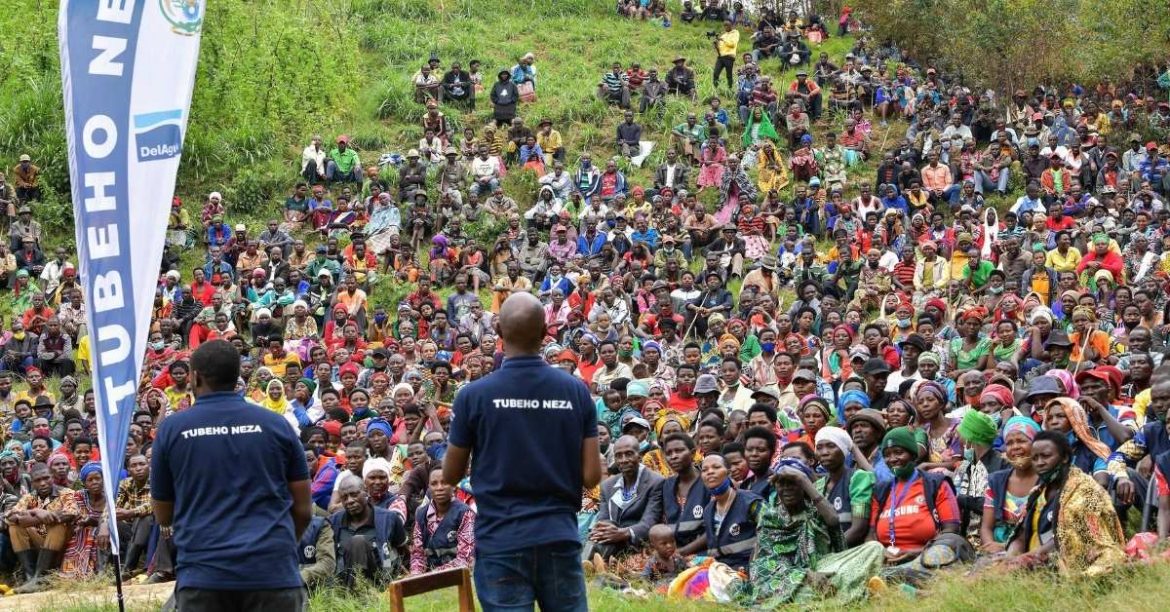
More than 4.7 million carbon credits generated by clean cooking projects in Africa have been approved for use under the aviation sector’s global carbon offsetting scheme, marking a significant milestone for both the continent’s carbon markets and the financing of household energy transitions.
DelAgua said the credits have been declared eligible under Phase 1 of the Carbon Offsetting and Reduction Scheme for International Aviation (CORSIA), following approval by Verra, one of the world’s largest carbon credit registries. The decision makes DelAgua’s credits among the first globally to receive CORSIA eligibility tags under Verra’s programme, allowing airlines to use them to meet compliance obligations for international flights.
Read also: Kenya clean cooking startup KOKO shuts down following carbon credit dispute approval standoff
CORSIA, overseen by the International Civil Aviation Organization, requires airlines to offset emissions growth above 2019 levels using approved carbon credits. As the scheme enters its compliance phase, demand for eligible credits has risen sharply, while supply remains constrained by strict technical and governance requirements.
According to DelAgua, a total of 4,776,194 credits have been approved, generated from projects in Rwanda, The Gambia and Sierra Leone. Rwanda accounts for the largest share, with more than 4.5 million credits linked to two large-scale clean cooking programmes. Smaller volumes originate from projects in The Gambia and Sierra Leone, all of which involve the distribution of improved cookstoves to rural households.
The credits stem from projects registered under the Verified Carbon Standard, which quantify emissions reductions achieved by replacing traditional biomass cooking methods with more efficient stoves. In much of sub-Saharan Africa, cooking with firewood or charcoal remains a major source of household air pollution, deforestation and carbon emissions, particularly in rural areas where access to electricity or clean fuels is limited.
The approval is notable not only for its scale, but also for the regulatory hurdles it clears. Under the Paris Agreement’s Article 6 framework, host countries must formally authorise the use of emissions reductions toward international schemes such as CORSIA. DelAgua said it has secured Letters of Authorization from all host governments, confirming that the credits can be used without triggering double counting against national climate targets.

To further address buyer concerns, the company has arranged insurance policies designed to protect against the risk of Article 6 revocation, a scenario in which credits could lose eligibility if corresponding adjustments are not applied by host countries. Such measures reflect growing scrutiny of credit quality in both compliance and voluntary carbon markets, following years of criticism over integrity, transparency and overstated climate benefits.
Industry analysts say CORSIA eligibility places these credits in a premium category at a time when airlines are under pressure to demonstrate credible decarbonisation pathways. While aviation continues to explore fuel efficiency, sustainable aviation fuels and new aircraft technologies, offsets remain a central tool for managing near- to medium-term emissions growth.
DelAgua said demand for the newly approved credits has been strong, with a large proportion already pre-sold to airlines and intermediaries. Some inventory remains available, and the company expects a further three million credits to be tagged as CORSIA-eligible in the second quarter of 2026. Over the longer term, it anticipates issuing more than three million CORSIA-approved credits annually.
Beyond aviation compliance, the development highlights how carbon finance is increasingly shaping infrastructure and development outcomes in Africa. Clean cooking remains one of the continent’s most persistent energy challenges, with hundreds of millions of households reliant on inefficient and polluting fuels. While governments and donors have struggled to mobilise sufficient public funding, carbon revenues have emerged as a key mechanism for scaling interventions at household level.
DelAgua, which operates as a social enterprise, said revenues from CORSIA-eligible credits will support further stove distribution across least developed countries, targeting rural communities that would otherwise be unable to afford cleaner technologies. The company estimates it has already distributed more than two million stoves across its operating countries.
As global carbon markets evolve, Africa’s role as a supplier of high-integrity credits is likely to face both opportunity and scrutiny. The approval of CORSIA-eligible credits from clean cooking projects underscores the potential for climate finance to flow into community-level infrastructure, while also illustrating the rising bar for governance, verification and host-country consent.