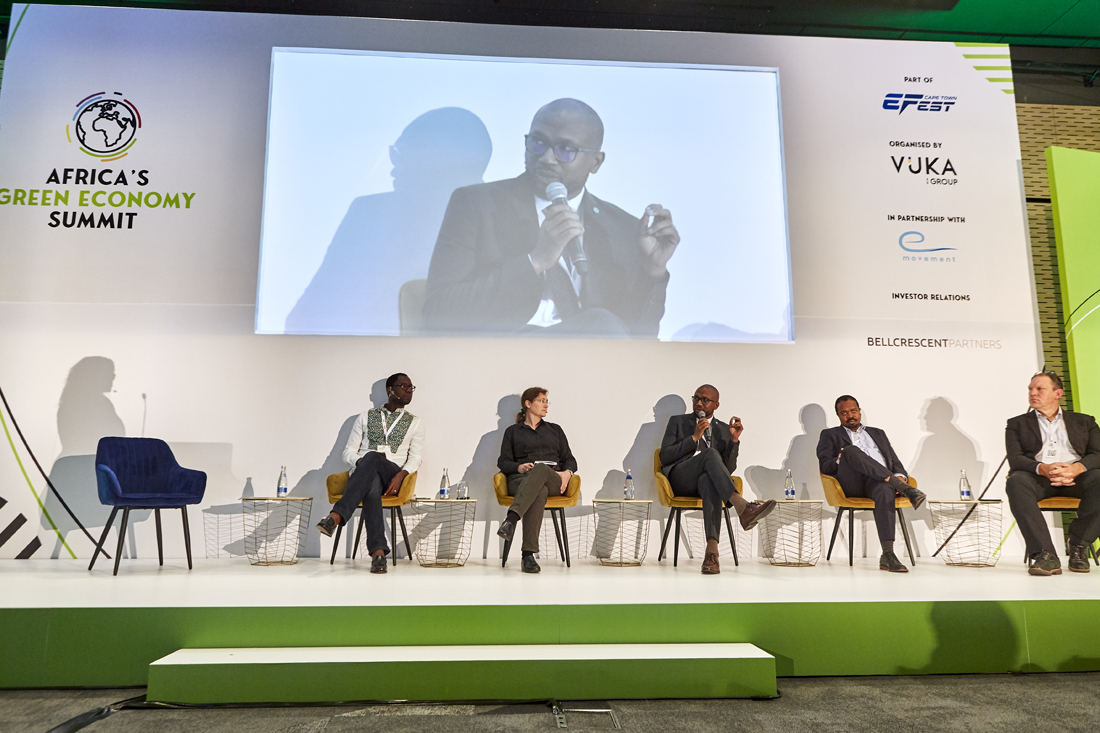
The long-anticipated Africa’s Green Economy Summit (AGES) 2026 will open later this month with a dedicated Climate, Carbon and Nature Financing Academy, as governments, investors and development institutions seek practical ways to convert Africa’s climate and biodiversity priorities into bankable investment opportunities.
The academy will take place on February 24 in Cape Town, ahead of the main summit scheduled for February 25–27. It is expected to focus on financial structures and instruments aimed at mobilising capital into climate mitigation, adaptation and nature-based projects, including carbon markets, green, blue and wildlife bonds, debt-for-nature swaps and performance-linked finance.

Organisers say the decision to foreground climate, carbon and nature finance reflects a shift in market thinking, as environmental risks increasingly shape investment decisions, sovereign risk assessments and infrastructure planning, particularly in regions where natural capital plays a central economic role.
Africa is among the most exposed. Natural capital is estimated to account for between 30% and 50% of total wealth in many African economies, far exceeding the share represented by manufactured assets such as roads, factories and power plants. As a result, climate shocks and ecosystem degradation can quickly translate into economic losses, fiscal pressure and heightened investment risk.
According to the United Nations Environment Programme, the global biodiversity finance gap could reach nearly US$1 trillion a year by 2030. Current financing for nature-related activities is estimated at about US$200 billion annually, with private capital contributing less than US$40 billion, highlighting the scale of the challenge in mobilising commercial finance.
Read also: African insurers link $52bn to climate and inclusion, but protection gaps remain wide
Private investment in nature-linked assets has nevertheless grown rapidly in recent years, increasing more than tenfold to over US$100 billion. Market projections suggest that combined investment across climate adaptation, carbon markets and biodiversity-related assets could reach up to US$1.45 trillion by the end of the decade if current trends continue.
For African policymakers and project developers, the challenge lies less in policy ambition than in execution. While most countries on the continent have adopted climate strategies, adaptation plans and biodiversity frameworks, investors continue to cite weak project pipelines, limited financial structuring capacity and regulatory uncertainty as constraints on large-scale capital deployment.
South Africa illustrates both the risks and the opportunity. Healthy ecosystems contribute more than R275 billion (about US$14 billion) to the economy each year, equivalent to at least 7% of GDP. Recent flooding in and around the Kruger National Park, alongside prolonged water stress in the Western Cape, has underscored how climate and ecosystem pressures feed directly into infrastructure damage, insurance losses and public spending demands.
Across the continent, similar dynamics are reshaping investor behaviour. Drought-related losses in agriculture-dependent economies, floods affecting transport corridors and power systems, and rising climate volatility are increasingly factored into lending decisions, insurance pricing and sovereign credit assessments.
The Climate, Carbon and Nature Financing Academy is intended to address this disconnect by focusing on the practical mechanics of investment. Sessions are expected to examine how climate and nature risks can be priced, how projects can be structured to meet investor risk-return expectations, and how public and private capital can be blended to unlock financing at scale.

Harsen Nyambe, Director for Sustainable Environment and Blue Economy at the African Union Commission, said Africa’s exposure to climate impacts makes investment in resilience a global economic concern rather than a regional one. Strengthening climate resilience on the continent, he said, is critical for long-term stability, given Africa’s role in global food systems, natural resources and future growth.
The focus on climate, carbon and nature at the opening of AGES also reflects a broader shift underway in global finance. As climate impacts intensify and regulatory scrutiny of environmental risk increases, investors are increasingly seeking assets that combine financial returns with long-term resilience and environmental integrity.
For Africa, the opportunity is significant but time-sensitive. The continent holds some of the world’s most valuable natural assets, but unlocking capital at scale will depend on policy clarity, credible governance frameworks and the ability to structure projects that are investable, not only desirable.