TradeMark Africa has released its 2024–25 annual report, detailing how African governments are reconfiguring trade corridors, ports and border systems to manage rising logistics costs and tightening climate and compliance requirements in global markets, while safeguarding export competitiveness and public revenues across the continent.
The report captures a period in which trade infrastructure across Africa is being tested by overlapping pressures. Exporters are facing stricter environmental and traceability rules in key destination markets, while governments are contending with constrained public finances and growing demands to deliver infrastructure that supports growth, resilience and inclusion.
Against this backdrop, TradeMark Africa’s assessment shows that recent investments in ports, borders and inland logistics have continued to deliver measurable efficiency gains, but also underscores that future competitiveness will increasingly depend on how well these systems adapt to climate and regulatory realities.
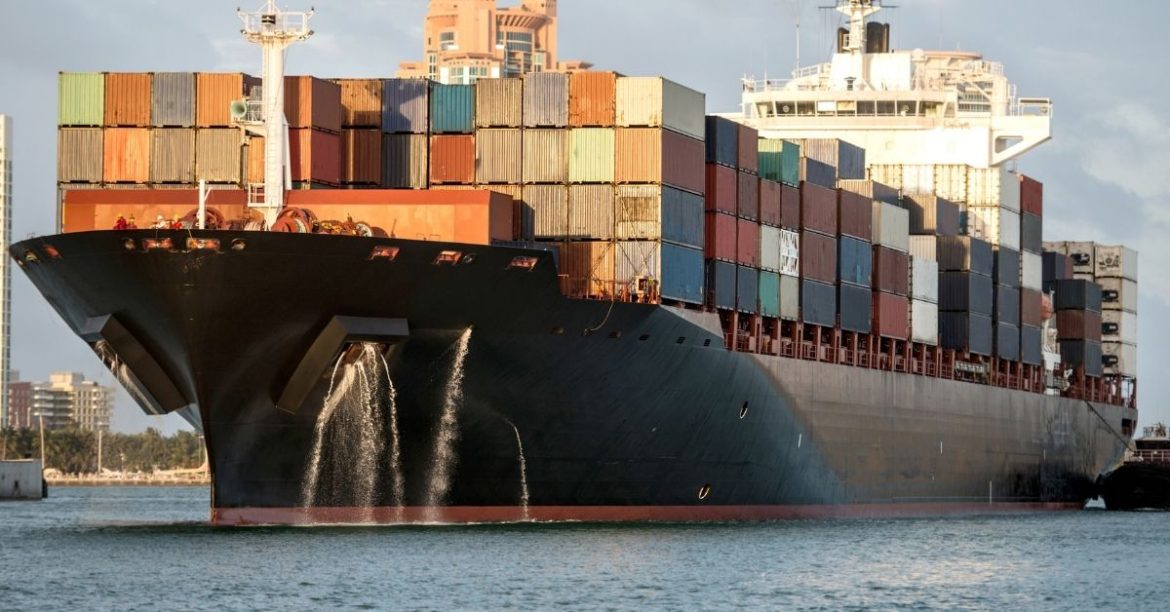
According to the report, continued improvements along major corridors contributed to total throughput rising to about 41 million tonnes in 2024–25, up from roughly 36 million tonnes the previous year, with container traffic exceeding two million twenty-foot equivalent units. These gains reflect years of work to reduce bottlenecks and improve coordination between transport infrastructure and border agencies. However, the report frames these outcomes less as an endpoint than as a platform for adjustment, as the cost of inefficiency is rising in a more rules-driven global trading environment.
Read also: The Dutch government invests $63 million into TradeMark Africa.
Ports illustrate this shift clearly. At Mombasa, upgrades to access roads and the introduction of digital traffic management systems have cut travel times around the port by nearly half, easing congestion and reducing fuel consumption. Inland, the Naivasha dry port is being positioned as a rail-linked logistics hub to support Kenya’s horticulture sector, where exporters face growing pressure to demonstrate lower emissions and reliable cold-chain management.
TradeMark Africa estimates that, for suitable products, shifting freight from air to sea can cut logistics emissions by up to 80 per cent while reducing costs sharply, provided temperature control and handling standards are maintained. For governments, such shifts have fiscal implications, as lower logistics costs can strengthen export earnings and customs revenues without additional subsidies.
Similar efforts are underway elsewhere. Rwanda’s newly launched Rubavu Port on Lake Kivu is designed to move trade away from congested road networks and onto water transport, reducing costs while strengthening links with neighbouring economies.
In Tanzania, a €15 million trade and transport programme under the EU’s Global Gateway framework targets efficiency and sustainability improvements at Dar es Salaam port, reflecting growing alignment between African infrastructure priorities and external climate-focused financing. For landlocked countries that depend on these gateways, reliability at ports directly affects prices, competitiveness and balance-of-payments outcomes.
Border management reforms remain central to these adjustments. One-stop border posts at crossings such as Elegu, Rusizi and Mahagi have combined physical infrastructure with process reform, bringing multiple agencies under one roof and digitising procedures. At Mahagi on the Uganda–DRC border, earlier upgrades helped double trade volumes between 2019 and 2022 while cutting clearance costs by more than a third. The report notes that such efficiency gains are particularly important for small-scale traders, many of them women, whose incomes are highly sensitive to delays, informal payments and unpredictability at borders.

Digital systems are increasingly being deployed to meet both efficiency and compliance demands. In Mozambique, the rollout of electronic phytosanitary certification has reduced processing times for agricultural exporters from around 12 days to two or three, lowering transaction costs in a sector that accounts for roughly a quarter of national output. Similar initiatives across East and Southern Africa aim to strengthen laboratory capacity, electronic certification and cargo tracking, as countries prepare for stricter sanitary, deforestation and traceability requirements in external markets.
According to the report, weak testing capacity or paper-based processes risk turning standards into de facto trade barriers, particularly for small and medium-sized enterprises.
Climate considerations now run through much of this work. During the reporting period, greenhouse gas baselines were established for major African trade corridors using international measurement frameworks, creating the first harmonised emissions profiles for these routes. These data are intended to inform corridor-level reduction plans aligned with national climate commitments rather than treating trade and climate as separate policy domains.
Read also: Afreximbank selects eight startups for inaugural accelerator programme to boost intra-african trade
The report points out that transport and logistics account for a significant share of trade-related emissions globally, and that failure to adapt could expose African exporters to higher costs or reduced market access as rules tighten.
Beyond infrastructure and systems, the report highlights the social and institutional dimensions of trade reform. Structured cross-border markets, solar-powered border facilities and access-to-finance programmes have been used to bring informal traders into more predictable systems, supporting income stability while broadening the tax base over time.
In Tanzania, targeted support for women-led enterprises helped improve access to credit, regional markets and public procurement, linking trade facilitation directly to livelihoods and inclusion rather than treating them as parallel objectives.
Overall, the report presents a picture of African trade policy moving toward integration rather than expansion alone. The emphasis is shifting from building individual assets to managing interconnected systems that link ports, borders, data and climate risk.
The challenge ahead, TradeMark Africa concludes, is consolidation: maintaining infrastructure, ensuring digital platforms remain interoperable, and applying standards consistently across regions. For African economies navigating tighter fiscal space and more demanding global markets, the ability of trade corridors to deliver lower costs, resilience and compliance will play an increasingly central role in shaping growth and development outcomes.