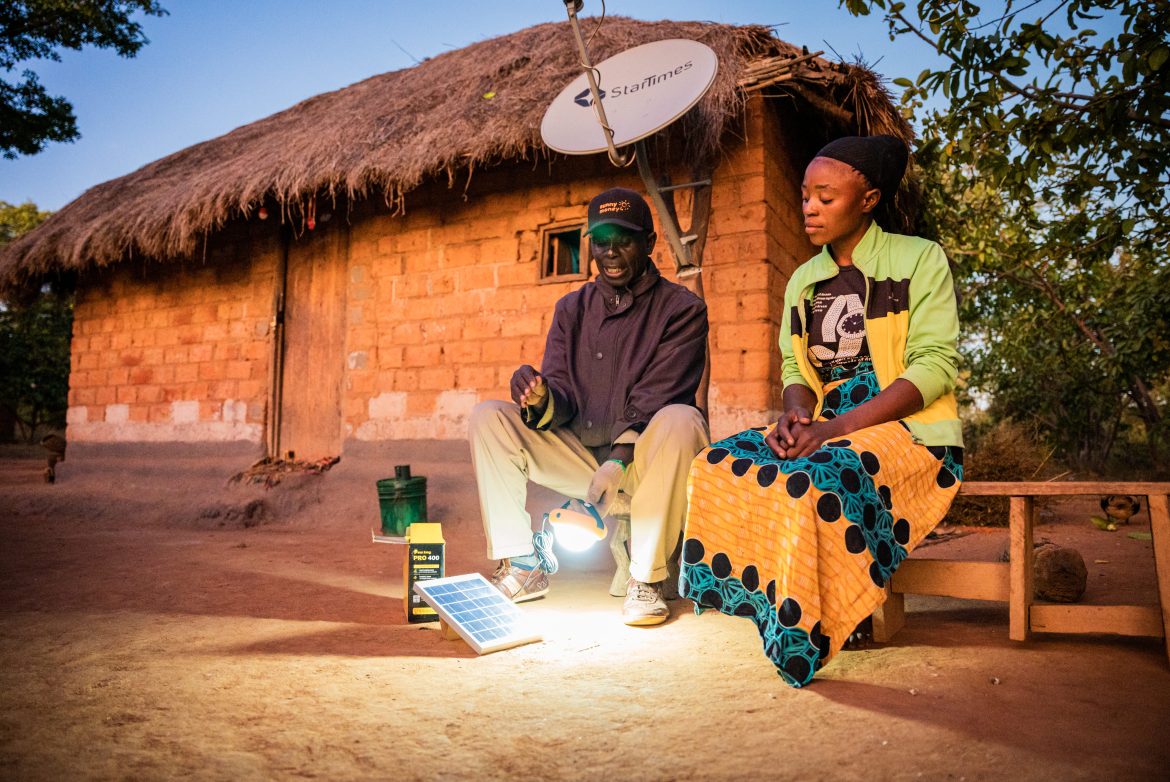
RS Group recently entered a three-year partnership with international development charity SolarAid, committing to raise £1 million to expand access to safe solar lighting for 150,000 people living without electricity in rural African communities.
The agreement, announced in Johannesburg on February 13, forms part of RS Group’s 2030 environmental, social and governance action plan and centres on accelerating access to affordable, off-grid renewable energy. The funds will be mobilised through a combination of corporate donations, matched employee contributions, product support, skills-based volunteering and fundraising initiatives across the company’s global operations.
Read also: Afreximbank selects eight startups for inaugural accelerator programme to boost intra-african trade
RS Group plc, listed on the London Stock Exchange, provides industrial product and service solutions to maintenance, repair and operations customers worldwide. SolarAid, is an international charity operating in sub-Saharan Africa, that works to build and scale solar distribution networks in remote communities through its social enterprise model. Under the partnership, the companies aim to address energy poverty in off-grid areas where households continue to rely on kerosene lamps, paraffin candles and battery-powered torches.
According to SolarAid, replacing a kerosene lamp with a solar light can cut household energy costs by up to 95 per cent while reducing dependence on fossil fuels. A single kerosene lamp can emit more than one tonne of carbon dioxide over three years, while paraffin candles emit several times their weight in carbon emissions.
Access to basic lighting has implications beyond energy savings. Solar lighting allows children to study after sunset, reduces indoor air pollution linked to respiratory illness and lowers fire risks associated with open flames.
SolarAid estimates that one solar light can reduce reliance on kerosene and candles by as much as 90 per cent within a household.
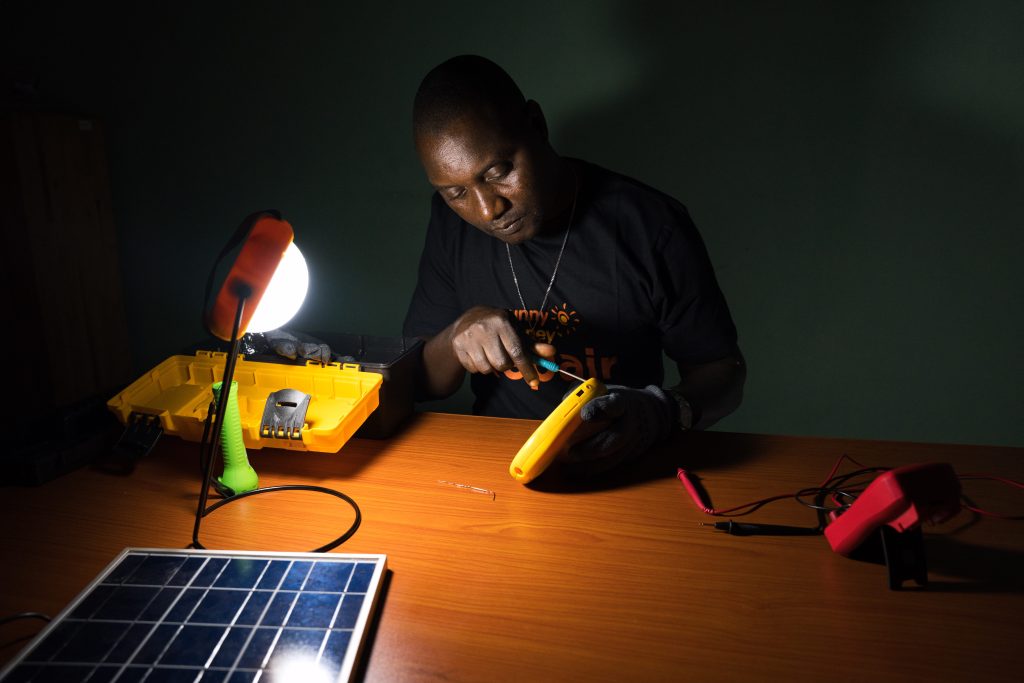
The partnership will also focus on strengthening repair and maintenance systems to extend product life and reduce electronic waste. RS engineers are expected to support SolarAid’s repair programmes, including improvements to a mobile Repair App designed to help local technicians diagnose faults and carry out simple fixes within communities. The approach is intended to build a circular solar economy in off-grid markets by prioritising durability and local capacity.
Employees across RS Group’s international markets will be encouraged to participate through volunteering, fundraising and technical engagement. The company provides staff with two paid volunteering days annually and has set a target of mobilising half of its workforce in support of community initiatives linked to the partnership.
SolarAid’s operational model has previously delivered full village electrification through decentralised solar distribution. In August 2025, the Light a Village initiative enabled 100 per cent of households, schools and a health clinic in Kasakula, Malawi, to gain access to solar lighting. The project has been cited by SolarAid as a proof of concept for scaling energy access in remote settlements.
Germany, the United Kingdom and other European markets remain key corporate donor bases for SolarAid’s programmes in Malawi and Zambia, where it operates through locally staffed enterprises. The RS partnership is expected to channel funding and technical capacity into these markets while expanding the charity’s reach.
Read also: New Electron Intelligence report finds $13.8bn flowed into Africa’s energy transition in 2025
The announcement comes at a time when energy access remains uneven across sub-Saharan Africa. According to international energy agencies, hundreds of millions of people on the continent still lack reliable electricity, with rural communities disproportionately affected. Off-grid solar products have become an increasingly significant component of electrification strategies, particularly where grid extension is economically unviable.
For RS Group, the collaboration extends its portfolio of social impact partnerships. The company has previously raised close to £1 million for The Washing Machine Project since 2020 through corporate and employee-led fundraising.
SolarAid’s leadership said the partnership would accelerate its mission to eradicate the kerosene lamp and expand clean energy access in underserved communities. RS executives described the initiative as aligning industrial capability with renewable energy deployment in low-income markets.
The three-year programme is scheduled to run through 2029, with both organisations stating that performance will be measured against fundraising targets, product distribution milestones and community-level energy access outcomes.