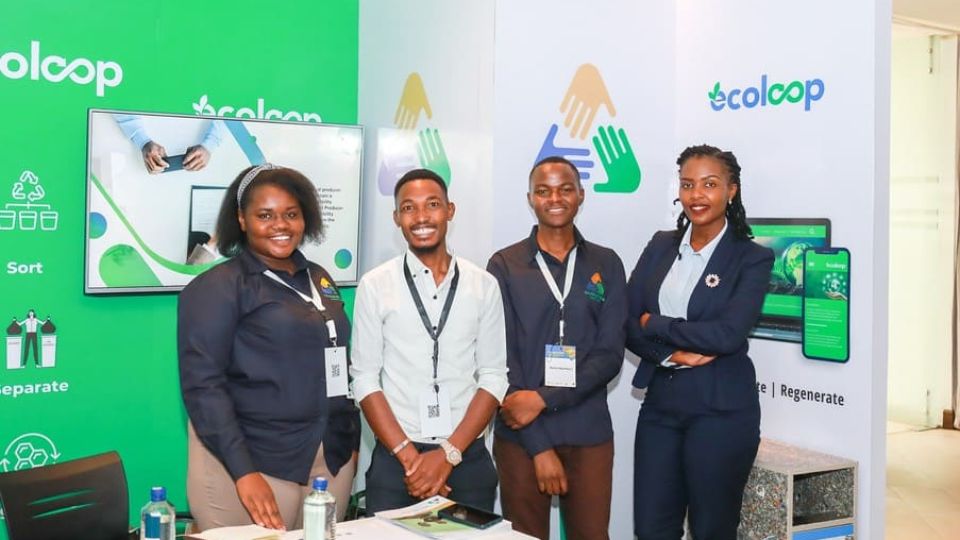
Kenya is taking a bold step toward modernising its waste management systems through a pioneering collaboration between local enterprise TakaTaka Ni Mali and India-based zero-waste technology company TrashCon. The partnership, facilitated by TRANSFORM, an impact accelerator led by Unilever, the UK Government’s Foreign, Commonwealth and Development Office (FCDO), and EY, aims to introduce the world’s first fully automated waste segregation solution, the TrashBot, to the country.
Designed to separate wet organic material from dry recyclables, the TrashBot allows counties to process mixed municipal waste safely and efficiently. Wet waste can be composted or converted into biogas, while dry materials are recycled or upcycled into construction boards.
The decentralised system can be deployed at county-level Material Recovery Facilities (MRFs), complementing manual waste collection rather than replacing it, while improving safety and operational efficiency.
The first TrashBot model was showcased during a side event on Waste Management and Circular Economy at the Kenya International Investment Conference (KIICO 2026) held 25–27 March, co-hosted by TakaTaka Ni Mali. Two additional machines are also slated for deployment in the coming months.
Read also: Kenya advances first nuclear power plant plans with 2000MW Siaya County project
Kenya’s commitment to a circular economy is underlined by the Sustainable Waste Management Act (2022), which mandates households to separate waste into recyclable, organic, and general categories. Yet, persistent mixed waste handling and low recovery rates indicate challenges in infrastructure, behaviour, and enforcement.
Evidence from organisations such as the Centre for Environment Justice and Development shows urban waste collection remains at just 20–30%, leaving informal waste workers to bridge the gaps.
By automating segregation, TrashBot addresses both safety and efficiency, reducing reliance on labour-intensive processes while recovering smaller fragments and low-value recyclables that manual sorting often misses. The technology also helps counties meet compliance and accountability targets under emerging Extended Producer Responsibility (EPR) requirements.
TakaTaka Ni Mali, whose name translates as “Waste is Wealth,” will serve as the local reseller for TrashBot, handling installation, maintenance, and integration with Kenya’s broader waste ecosystem. The enterprise has also deployed Ecomali, a digital traceability platform developed with TRANSFORM, to track waste collection and demonstrate the commercial viability of sustainable waste solutions.
“This collaboration is a powerful example of South-to-South knowledge transfer,” said Mary Ngechu, Founder and Patron of TakaTaka Ni Mali. “It shows that waste management should be treated as essential national infrastructure, integrated alongside energy, water, and transport systems.”
Diana Dalton, Deputy High Commissioner and Development Director at the British High Commission Nairobi, highlighted the partnership as a model for international cooperation. “This initiative solves infrastructure challenges at county and national levels, creates jobs, and helps protect our planet. We go far when we go together,” she said.
Nivedha RM, CEO and Founder of TrashCon, added: “Our partnership demonstrates how aligned purpose and shared expertise can accelerate progress. With TRANSFORM’s support, we are taking TrashBot from India to Kenya, bringing us closer to our mission of effective, life-changing waste management.”
Through this initiative, Kenya is demonstrating that innovation, collaboration, and technology can reshape waste management, creating safer, more efficient systems that underpin a sustainable circular economy across the region.