


Kenya Airways and Rubis Energy Kenya have signed a memorandum of understanding to develop what the companies describe as Africa’s first dedicated sustainable aviation fuel (SAF) refinery, positioning Kenya at the centre of emerging efforts to decarbonise African aviation and build local low-carbon fuel supply chains.
The planned refinery, announced during the Africa Forward Summit in Nairobi, is expected to produce 32,000 metric tonnes of sustainable aviation fuel annually, with estimated investment costs ranging between €60 million and €70 million ($70.5 million to $82.2 million).
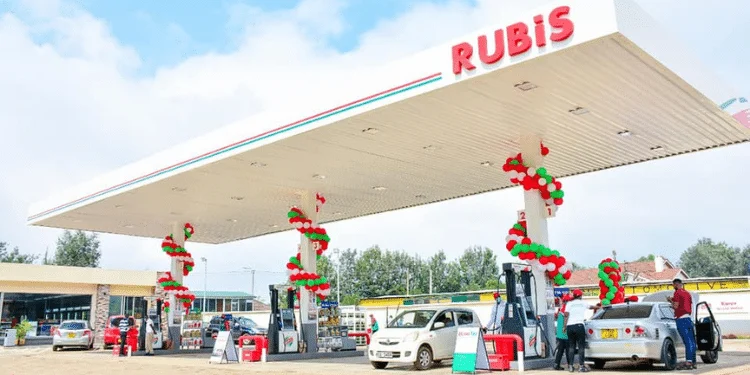
The agreement was formalised in the presence of Kenyan President William Ruto and French President Emmanuel Macron as part of a broader package of Kenya-France bilateral agreements covering transport infrastructure, renewable energy, logistics, digital transformation, agriculture and climate-related cooperation.
The refinery proposal marks the most significant expansion yet of Kenya Airways’ strategy to reduce aviation emissions amid intensifying global regulatory pressure on airlines to transition toward lower-carbon fuels.
Sustainable aviation fuel, produced from renewable feedstocks such as agricultural residues, waste oils and non-food energy crops, is viewed by the aviation industry as one of the few immediately scalable pathways for reducing emissions from long-haul air transport, a sector where electrification remains commercially limited.
Global aviation currently accounts for roughly 2% to 3% of worldwide carbon dioxide emissions, according to industry estimates, with regulators increasingly introducing mandates requiring airlines to incorporate SAF into their fuel mix.
The European Union’s ReFuelEU Aviation regulations, which entered implementation phases this decade, require progressively higher SAF blending levels for flights departing European airports. Similar policies are being adopted in other jurisdictions, reshaping fuel procurement strategies for international carriers.
For African airlines, however, SAF adoption has been constrained by limited production capacity, high costs and inadequate refining infrastructure across the continent.
Kenya Airways has emerged as one of Africa’s most active carriers in pursuing SAF integration. In 2023, the airline became the first African carrier to operate a long-haul flight using sustainable aviation fuel on its Nairobi-Amsterdam route using Biojet fuel supplied by Eni Sustainable Mobility.
The carrier subsequently expanded SAF usage domestically. From October 2025, Kenya Airways began operating selected international routes, including flights to Paris, London, Amsterdam and Cape Town, using blended SAF derived from non-food crops cultivated in Kenya’s Kwale County on land previously degraded by mining activity.
The airline has set a target for sustainable aviation fuel to account for 10% of its total fuel consumption by 2030.
Kenya Airways has also been selected as the sole African airline leading the International Air Transport Association’s SAF Registry initiative, a platform designed to allow airlines to purchase SAF credits regardless of where the fuel is physically produced and claim associated emissions reductions through a book-and-claim system.
The economics of SAF production remain one of the sector’s central challenges. Sustainable aviation fuel currently costs significantly more than conventional jet fuel because of limited production scale, feedstock supply constraints and complex refining requirements.
Industry analysts say the commercial viability of the proposed Kenyan refinery will likely depend heavily on concessional financing structures, blended finance mechanisms and regulatory recognition under international carbon compliance systems.
A key issue affecting African SAF projects involves European sustainability regulations requiring SAF to be physically delivered to aircraft at EU and UK airports for compliance purposes under blending mandates. African carriers and policymakers have argued that these rules disadvantage producers located outside Europe and weaken the commercial case for SAF production facilities in emerging markets.
Kenya Airways has been among airlines advocating for broader adoption of book-and-claim accounting systems that would allow SAF produced and consumed in Africa to count toward European emissions compliance obligations without requiring physical fuel delivery into European airports.
Kenya has increasingly been identified in International Civil Aviation Organization feasibility studies as a potentially competitive SAF production hub because of its agricultural feedstock availability, established aviation sector and strategic location along major international air routes linking Africa, Europe, Asia and the Middle East.
The proposed refinery also aligns with Kenya’s broader ambitions to position itself as a regional centre for green industrialisation and climate-related investment. The country has expanded renewable energy generation significantly over the past decade, with geothermal, wind and solar projects contributing a growing share of national electricity production.
For Rubis, which operates energy infrastructure across Africa, Europe and the Caribbean, the project strengthens its role within East Africa’s energy transition market at a time when French companies are expanding investments across Kenya’s infrastructure and clean energy sectors.
The refinery announcement coincided with additional Kenya-France investment agreements announced during President Macron’s Nairobi visit, including expansion of the Kipeto wind energy project and new port and logistics infrastructure partnerships.

https://www.aecweek-registration.com/2026/?repid=
If implemented, the refinery’s planned annual production capacity would represent one of the most significant SAF production initiatives on the African continent and could potentially supply not only Kenya Airways but also other African carriers operating routes subject to international emissions regulations.
Industry observers say the project could provide Kenya with an early competitive advantage in a market likely to become increasingly important as global aviation transitions toward stricter emissions standards and airlines face growing pressure from investors, regulators and consumers to decarbonise operations.
The project now moves into feasibility assessment and financing stages, with analysts noting that successful execution will depend on policy alignment, feedstock sustainability, international regulatory recognition and long-term investor confidence in Africa’s emerging sustainable aviation market.


