


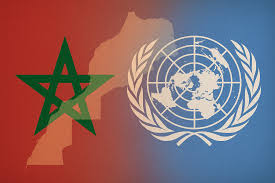
Morocco’s growing effort to position Western Sahara as a major tourism destination is attracting increasing international scrutiny, as expanding airline routes, hotel investments and tourism campaigns intensify debate over sovereignty, international law and the economic future of the disputed territory. The issue has resurfaced as European carriers, including Ryanair and Transavia France, market flights to the city of Dakhla as part of Morocco, despite the United Nations continuing to classify Western Sahara as a non-self-governing territory awaiting a political settlement.
 The expansion of tourism infrastructure in Dakhla and Laayoune reflects Morocco’s broader strategy to integrate Western Sahara economically into its national development agenda. According to Moroccan tourism data, visitor arrivals to the territory increased from about 490,000 in 2019 to more than 743,000 in 2025, driven partly by low-cost European air connections and new hospitality investments targeting water sports, eco-tourism and desert tourism markets.
The tourism drive comes as Rabat continues to consolidate administrative and economic control over roughly 80 percent of Western Sahara, a territory contested by the Algeria-backed Polisario Front since Spain withdrew from the former colony in 1976. Morocco considers the territory part of its sovereign land and refers to it as its “Southern Provinces”, while the Polisario Front continues to seek an independence referendum under UN supervision.
The dispute remains one of Africa’s longest unresolved geopolitical conflicts, carrying implications that extend beyond diplomacy into trade, investment governance, regional stability and international business compliance. Legal experts and advocacy groups argue that the increasing commercial normalization of Western Sahara as a Moroccan tourism destination risks complicating international legal frameworks surrounding self-determination and resource governance.
According to international human rights and legal analysts, companies operating in disputed territories face growing pressure to demonstrate due diligence over how destinations are labelled, marketed and economically integrated. Several travel booking platforms and airlines currently classify Dakhla and Laayoune as Moroccan destinations, despite the territory’s unresolved legal status under international law.
The debate highlights a broader challenge increasingly confronting African economies; how infrastructure investment and tourism development intersect with contested governance frameworks. Across the continent, tourism has become a critical source of foreign exchange, employment and infrastructure financing, particularly as governments seek to diversify revenues amid fiscal pressures and slowing commodity markets. Morocco itself has positioned tourism as a central pillar of its economic growth strategy, investing heavily in transport connectivity, hospitality and renewable energy-linked development corridors.
Dakhla has emerged as a focal point of that strategy. The city has seen rapid investment in hotels, roads and logistics infrastructure aimed at transforming it into a regional tourism and trade hub linking North and West Africa. Moroccan authorities have also promoted the territory as part of wider Atlantic economic initiatives designed to strengthen regional connectivity and attract international capital.
However, critics argue that economic development in disputed territories raises unresolved governance and consent issues. The Polisario Front maintains that large-scale commercial activity undertaken without the consent of the Sahrawi people undermines internationally recognized self-determination principles. Campaign groups have also warned that tourism expansion may create a perception of political normalization before a negotiated settlement is reached.
The dispute also illustrates the growing role of private sector actors in geopolitical and governance-sensitive environments. Airlines, hotel operators and digital booking platforms increasingly find themselves navigating legal and reputational risks linked to contested territories, supply chains and political recognition. Similar debates have emerged globally around tourism and investment activity in disputed regions where sovereignty claims remain unresolved.
At the diplomatic level, momentum has increasingly shifted in Morocco’s favour in recent years. In 2020, the United States formally recognized Morocco’s sovereignty claim over Western Sahara as part of a broader agreement linked to Morocco’s normalisation of relations with Israel. France and several Gulf states have also strengthened support for Morocco’s autonomy proposal, which Rabat presents as the basis for resolving the dispute.
The United Nations, however, continues to support a negotiated political process and maintains its peacekeeping mission in the territory. While the UN Security Council has described Morocco’s autonomy plan as a serious basis for negotiations, no final political settlement has been reached, and the proposed referendum on self-determination originally envisaged under the 1991 ceasefire agreement has never taken place.
For Africa, the Western Sahara dispute continues to test regional diplomacy and continental governance institutions. The African Union recognizes the Sahrawi Arab Democratic Republic as a member state, while Morocco rejoined the AU in 2017 after decades outside the bloc. The issue has periodically exposed divisions among African governments over sovereignty, regional alliances and approaches to conflict resolution.
 The rapid growth of tourism in Western Sahara therefore carries significance beyond visitor numbers. It reflects how infrastructure investment, commercial integration and global mobility are increasingly shaping contested political realities across Africa. As international tourism operators deepen their presence in the territory, pressure is likely to grow for clearer legal guidance, stronger corporate due diligence standards and renewed diplomatic engagement over one of the continent’s most enduring territorial disputes.


