


Morocco has emerged as Africa’s leading industrial economy, overtaking South Africa in the African Development Bank’s 2025 Industrialisation Index after years of expansion in automotive manufacturing, aerospace production and phosphate processing, underscoring a broader shift in the continent’s industrial geography and export competitiveness.
 The African Development Bank’s latest index, which assessed industrial performance across 54 African countries between 2010 and 2024, attributed Morocco’s rise to sustained industrial upgrading, export diversification and long-term state-backed industrial policy. The ranking reflects how the North African kingdom has positioned itself as a manufacturing and logistics hub linking Europe, Africa and the Middle East through integrated supply chains and export-oriented production.
According to the African Development Bank, Morocco’s industrial strategy has increasingly centered on high-value manufacturing sectors capable of attracting foreign investment, generating export earnings and creating industrial employment. The automotive industry has become the clearest example of that transition.
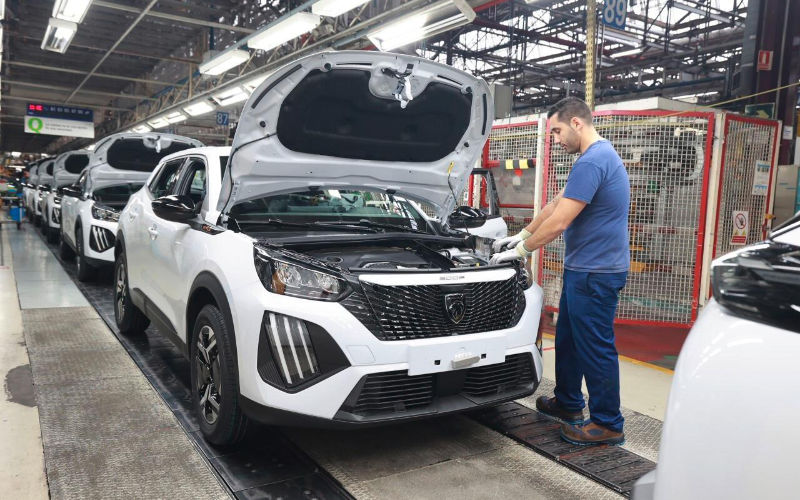
Morocco is now Africa’s largest vehicle producer, supported by major manufacturing facilities operated by French automaker Renault in Tangier and Stellantis in Kenitra. The sector has grown into one of the country’s largest export earners, supplying vehicles and components primarily to European markets while also supporting a growing ecosystem of local suppliers, logistics operators and industrial service providers.
The kingdom has simultaneously expanded its aerospace sector, attracting international manufacturers seeking lower-cost production bases with proximity to European markets. Aerospace clusters around Casablanca now host global firms involved in aircraft wiring systems, components assembly and maintenance services, positioning Morocco within global aviation supply chains that remain heavily concentrated outside Africa.
The industrial gains have also been reinforced by Morocco’s phosphate industry, where the country remains one of the world’s largest producers and exporters. Phosphates continue to provide strategic importance not only for export revenues but also for global agricultural supply chains, particularly as fertilizer security becomes increasingly linked to food production and geopolitical stability.
Morocco’s ascent in the rankings reflects a wider debate across Africa about the role of industrialization in economic transformation. While many African economies remain dependent on commodity exports, the Moroccan model highlights the growing importance of manufacturing capacity, logistics infrastructure and industrial policy in improving economic resilience.
According to development economists, industrialization remains central to Africa’s long-term fiscal and employment prospects because manufacturing sectors generally create broader value chains, higher productivity gains and more stable export revenues than raw commodity extraction alone. The challenge for many governments has been sustaining industrial competitiveness amid energy shortages, infrastructure gaps, currency volatility and limited access to long-term finance.
Morocco’s industrial strategy has benefited from substantial investment in ports, highways, rail systems and export processing zones over the past two decades. The Tangier Med Port complex, one of the largest maritime logistics hubs in Africa and the Mediterranean region, has become particularly significant in integrating Moroccan manufacturers into global trade networks.
The country has also increasingly positioned itself within the global energy transition. As European markets accelerate efforts to decarbonize industrial supply chains, Morocco’s investments in renewable energy infrastructure, including large-scale solar and wind projects, may strengthen its attractiveness to manufacturers seeking lower-carbon production bases.
This intersection between industrial policy and energy transition is becoming increasingly important across Africa. Governments are under pressure to expand industrial output while simultaneously responding to global climate-related trade requirements, including carbon border adjustment mechanisms being introduced in parts of Europe.
For South Africa, which previously dominated African industrial rankings, the shift highlights mounting structural pressures on its manufacturing economy. Persistent electricity shortages, logistics bottlenecks and slower industrial expansion have weighed on competitiveness despite the country retaining some of the continent’s most advanced industrial capabilities.
Analysts note that Morocco’s rise does not necessarily signal a decline in South Africa’s industrial relevance but rather reflects how industrial activity across Africa is becoming more geographically diversified as countries pursue specialized export sectors and regional manufacturing strategies.
The implications extend beyond rankings. Stronger industrial performance affects tax revenues, labour markets, foreign exchange earnings and economic stability. It also shapes Africa’s position within global supply chains at a time when international companies are reassessing production networks following geopolitical disruptions, rising transport costs and efforts to diversify manufacturing bases beyond Asia.
According to trade and development experts, Morocco’s experience may increasingly be viewed by policymakers across the continent as evidence that targeted industrial policy, combined with infrastructure investment and export integration, can accelerate structural economic transformation when sustained over long periods.
Yet broader continental industrialization challenges remain significant. Many African economies continue to face financing constraints, limited domestic manufacturing ecosystems and high import dependence for machinery, technology and intermediate goods. Regional trade integration under the African Continental Free Trade Area is expected to play an important role in determining whether industrial gains in countries such as Morocco can stimulate wider continental value chains rather than isolated national successes.
 As Africa seeks to strengthen economic resilience in an increasingly fragmented global economy, Morocco’s rise to the top of the African Development Bank’s industrialisation rankings signals both growing competition among African economies and the expanding importance of manufacturing-led growth within the continent’s development agenda.


