


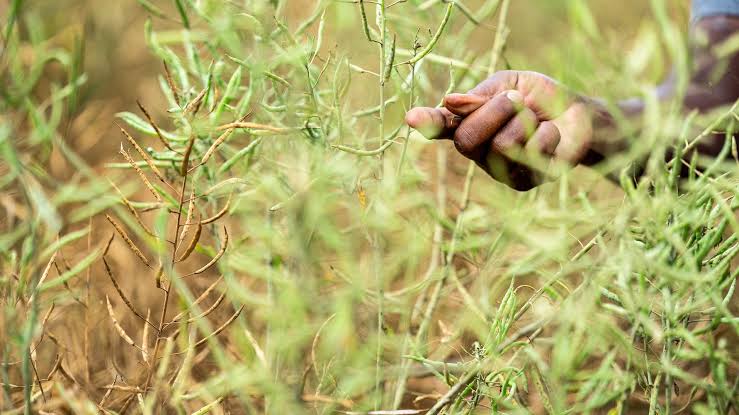
Swedish development finance institution Swedfund has committed $12 million to the Acumen Resilient Agriculture Fund II (ARAF II), expanding financing for agribusinesses that support climate resilience, market access and financial inclusion for millions of smallholder farmers across Sub-Saharan Africa. The investment seeks to strengthen agricultural value chains while helping farmers adapt to mounting climate risks that continue to threaten food production, rural incomes and economic stability across the continent.
The financing will support businesses providing essential services to smallholder farmers, including improved access to agricultural markets, affordable finance, digital technologies, quality farm inputs and post-harvest infrastructure. According to Swedfund, the investment is intended to strengthen the resilience of farming communities that remain highly vulnerable to climate variability while improving productivity and creating more stable sources of income.
Agriculture remains central to Africa’s economic and social development. According to the International Fund for Agricultural Development (IFAD), more than 30 million smallholder farmers operate across Sub-Saharan Africa, representing approximately 80 percent of all farms and producing nearly 70 percent of the region’s food supply. Despite their importance to food systems and rural employment, many continue to face persistent barriers to finance, reliable markets, storage facilities and agricultural extension services, limiting both productivity and long-term investment.
Climate change is further intensifying these structural challenges. Rising temperatures, prolonged droughts, irregular rainfall and more frequent extreme weather events continue to reduce crop yields and increase production risks, particularly for rain-fed agriculture that dominates much of the continent. These disruptions not only threaten household incomes but also increase pressure on national food systems, inflation and public spending on emergency food assistance.
Swedfund said its investment in ARAF II is designed to address these interconnected risks by supporting businesses capable of strengthening agricultural ecosystems rather than focusing solely on farm-level interventions. Helen Hagos, Investment Director for Food Systems and Strategic Investments at Swedfund, said improving farmers’ access to finance, markets and agricultural services will help build resilience while supporting more sustainable livelihoods.
The Acumen Resilient Agriculture Fund II targets enterprises operating across agricultural value chains, including companies addressing post-harvest losses, digital agriculture, financial services and market integration. By improving how agricultural products move from farms to consumers, the fund aims to reduce inefficiencies that continue to constrain food availability and rural incomes across African economies.
According to the fund’s investment strategy, portfolio companies are expected to reach approximately four million smallholder farmers while supporting broader efforts to improve climate adaptation and rural economic development. The fund also seeks to meet the criteria established under the global 2X Challenge initiative, which promotes investments that expand economic opportunities for women through entrepreneurship, employment and financial inclusion.
The investment reflects a broader shift in development finance towards strengthening food systems through private sector participation. Development finance institutions increasingly view agribusinesses as critical intermediaries capable of mobilising technology, capital and market access that smallholder farmers often struggle to obtain independently. Blended finance structures that combine concessional and commercial capital have become an increasingly important mechanism for addressing financing gaps that continue to constrain agricultural transformation across Africa.
Strengthening agricultural value chains also carries wider macroeconomic implications. Agriculture contributes significantly to employment, export earnings and industrial development in many African countries. Improving productivity, reducing post-harvest losses and expanding market access can enhance food security while supporting agro-processing industries, rural enterprise development and regional trade under the African Continental Free Trade Area (AfCFTA).
The investment arrives as governments across Africa continue seeking greater resilience within domestic food systems following repeated disruptions caused by climate change, geopolitical instability and supply chain shocks. Recent fluctuations in global commodity markets have reinforced the importance of increasing local agricultural productivity and reducing dependence on imported food products that expose economies to external price volatility.
 For investors, the transaction demonstrates continued confidence in climate-smart agriculture as an emerging asset class capable of delivering both measurable development outcomes and commercial returns. Development finance institutions are increasingly prioritising investments that simultaneously strengthen climate adaptation, generate employment and improve financial inclusion while supporting broader environmental, social and governance objectives.
As Africa confronts rising climate risks alongside growing food demand driven by population growth and urbanisation, investments such as Swedfund’s commitment to ARAF II illustrate how targeted development finance can strengthen agricultural resilience while supporting more inclusive economic growth. Expanding access to finance, technology and functioning markets for smallholder farmers will remain essential if the continent is to build food systems capable of withstanding future climate and economic shocks while sustaining long-term rural development.


