


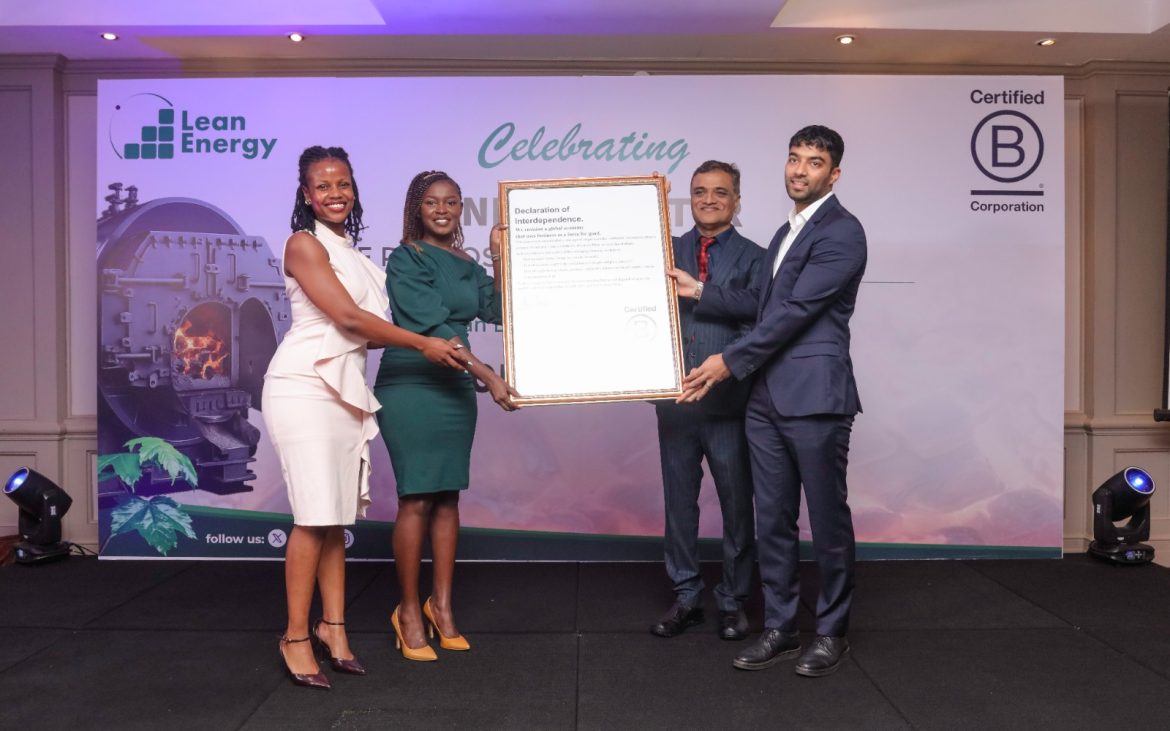
Nairobi-based clean energy company Lean Energy Solutions has earned B Corp Certification, becoming one of a growing number of African businesses recognised for meeting internationally verified standards of environmental, social and governance performance. The certification validates the company’s renewable biomass business model, which enables manufacturers in Kenya and Tanzania to replace imported fossil fuels with locally sourced agricultural waste while reducing energy costs, strengthening industrial competitiveness and lowering carbon emissions.
The certification comes at a time when manufacturers across Africa are facing mounting pressure from rising energy costs, foreign exchange volatility and increasingly stringent climate-related reporting requirements from investors, export markets and regulators. According to the company, Lean Energy’s Build-Own-Operate (BOO) model addresses these challenges by financing, installing, operating and maintaining biomass boiler systems for industrial clients, who pay only for the steam they consume rather than investing upfront in expensive thermal infrastructure.
The approach removes one of the largest barriers to industrial decarbonisation: capital expenditure. Many manufacturers, particularly in developing markets, continue to rely on heavy fuel oil or diesel-fired boilers because replacing existing thermal systems requires substantial investment and specialised operational expertise. By assuming ownership and operational responsibility for the assets, Lean Energy enables manufacturers to transition to cleaner energy while preserving capital for core business activities.
Unlike conventional biomass projects that simply replace one fuel source with another, Lean Energy manages the entire biomass value chain. Agricultural residues including maize cobs and coffee husks are collected, processed and converted into industrial fuel, transforming materials that would otherwise be discarded or openly burned into commercially valuable energy resources. This creates additional income opportunities within rural supply chains while reducing waste and supporting circular economy principles.
According to the company, its operations have prevented approximately 350,000 tonnes of carbon emissions, generated more than four million person-days of employment and delivered around $50 million in foreign exchange savings by reducing dependence on imported fossil fuels. The company currently operates more than 20 biomass boiler facilities across Kenya and Tanzania with a combined steam generation capacity of approximately 90 tonnes per hour.
The certification was awarded by B Lab after Lean Energy scored 87.5 points on the B Impact Assessment, exceeding the minimum threshold of 80 points required to qualify as a Certified B Corporation. The assessment evaluates organisations across governance, workforce practices, environmental management, community impact and customer value, providing an independent benchmark for responsible business performance.
Founder and Managing Director Dinesh Tembhekar said the certification reinforces the company’s long-term vision of supporting industrial growth without increasing environmental costs or dependence on imported energy. He noted that Africa’s manufacturing expansion must remain competitive while strengthening domestic value chains and reducing exposure to external energy price shocks.
Read more: https://econews.co.ke/2026/07/28/kenyan-clean-energy-firm-lean-energy-earns-b-corp-certification/
For African industry, the recognition extends beyond corporate reputation. Manufacturing remains central to the continent’s ambitions under the African Continental Free Trade Area (AfCFTA), yet energy costs continue to constrain industrial productivity and export competitiveness. According to the African Development Bank, unreliable and expensive energy remains one of the largest obstacles to industrialisation across much of Sub-Saharan Africa, while imported petroleum products continue to place pressure on national foreign exchange reserves.
Renewable biomass offers one pathway to address these structural constraints, particularly in countries with large agricultural sectors that generate substantial organic residues. Rather than importing thermal fuels, manufacturers can source locally available biomass, creating domestic supply chains that retain economic value within national economies while supporting rural employment.
The model also aligns with broader sustainability trends influencing global trade. International buyers increasingly require manufacturers to demonstrate lower carbon footprints, stronger environmental management and responsible sourcing practices as part of supply chain due diligence. Certifications such as B Corp complement these expectations by providing independent verification that sustainability considerations are embedded within business operations rather than treated solely as compliance exercises.
The certification arrives as African manufacturers face growing pressure to improve ESG performance while remaining commercially competitive. Access to sustainable finance is increasingly linked to measurable environmental and social outcomes, with lenders and investors placing greater emphasis on governance standards, emissions reduction and operational resilience. Companies able to demonstrate independently verified sustainability performance may therefore improve their ability to attract investment and participate in international value chains.
 According to B Lab Africa, the certification reflects a broader evaluation of how companies govern themselves, support employees, create community value and manage environmental impacts throughout their operations. Communications and Engagement Senior Associate Elizabeth Mutwiri noted that Lean Energy’s assessment demonstrates how responsible business practices can be integrated into industrial operations without compromising commercial growth.
The development highlights a wider transition underway across Africa’s industrial sector, where clean energy is increasingly being viewed not only as an environmental imperative but also as a driver of competitiveness, cost efficiency and economic resilience. As governments pursue industrialisation alongside climate commitments, business models that combine renewable energy, local resource utilisation and measurable social impact are likely to play an increasingly important role in strengthening African manufacturing while supporting sustainable economic development.


