


A Libreville court has convicted eight individuals and the operating company behind Gabon’s deadly Esther Miracle ferry disaster, nearly three years after one of the country’s worst maritime tragedies claimed at least 34 lives and left seven others missing. The ruling, delivered on Thursday, has reignited debate over maritime safety standards, regulatory enforcement and public accountability across Africa’s transport sector.
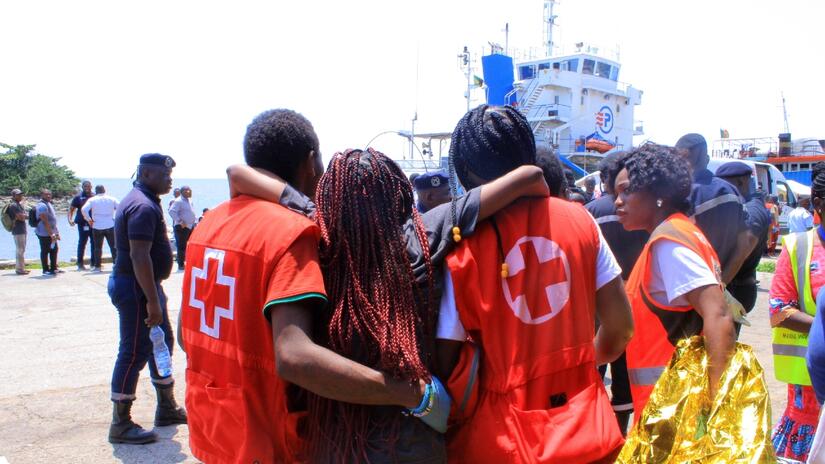 The Esther Miracle ferry sank during the night of March 8-9, 2023, while travelling between Libreville and Port-Gentil with 165 passengers on board. According to court findings, the operating company, Royal Coast Marine, and eight defendants were found guilty of endangering the lives of passengers. The court sentenced the individuals to 38 months in prison, including time already served for those detained, while each was fined approximately $1,774. Royal Coast Marine received a fine of nearly $8,900.
The ferry’s captain and another defendant were additionally convicted of involuntary manslaughter, reflecting the court’s position that negligence contributed directly to the scale of the disaster. However, the verdict has drawn sharp criticism from survivors and families of victims, many of whom argue that both the penalties and compensation awarded fall significantly short of the gravity of the tragedy.
Under the ruling, compensation was fixed at around $3,500 per shipwrecked passenger. Lawyers representing civil parties immediately announced plans to appeal the decision, arguing that the financial settlement failed to reflect the physical, emotional and economic losses suffered by families. Lawyer Calvin Job described the compensation as demonstrating “real disregard” for victims and the memory of those who died.
The case has become a broader test of institutional accountability in Gabon, where transport infrastructure and safety oversight have increasingly come under scrutiny. Maritime transport remains essential in Central Africa, particularly in countries where road and rail connectivity remain limited or uneven. In Gabon, ferry services linking Libreville and Port-Gentil play a critical role in moving workers, goods and families across the country’s coastal economy.
According to regional transport analysts, maritime accidents across parts of Africa are often linked to ageing fleets, overcrowding, weak enforcement of safety regulations and limited emergency preparedness capacity. While aviation safety standards have improved significantly across much of the continent over the past two decades, maritime transport regulation has not always received comparable levels of investment or institutional reform.
The Esther Miracle disaster also exposed the economic vulnerability that transport failures create for households and businesses. Port-Gentil, Gabon’s oil hub, depends heavily on reliable transport links with the capital. Disruptions to these routes affect labour mobility, commercial activity and public confidence in transport systems that underpin economic productivity.
The ruling arrives at a time when several African governments are attempting to strengthen infrastructure governance as part of wider economic diversification and investment strategies. International lenders and development finance institutions increasingly view transport resilience, safety compliance and regulatory transparency as critical factors influencing infrastructure financing and investor confidence.
 For Gabon, the disaster remains a sensitive national issue that extends beyond the courtroom. The lingering anger among survivors and bereaved families reflects wider public concerns over whether institutions are adequately equipped to enforce safety standards and deliver meaningful accountability after large-scale public tragedies.
The appeal process is expected to keep public attention focused on the case in the months ahead. Beyond the legal outcome, the Esther Miracle disaster continues to serve as a reminder of the governance challenges facing maritime transport systems across parts of Africa, where infrastructure gaps, regulatory weaknesses and constrained public resources continue to shape both economic opportunity and public safety.


