


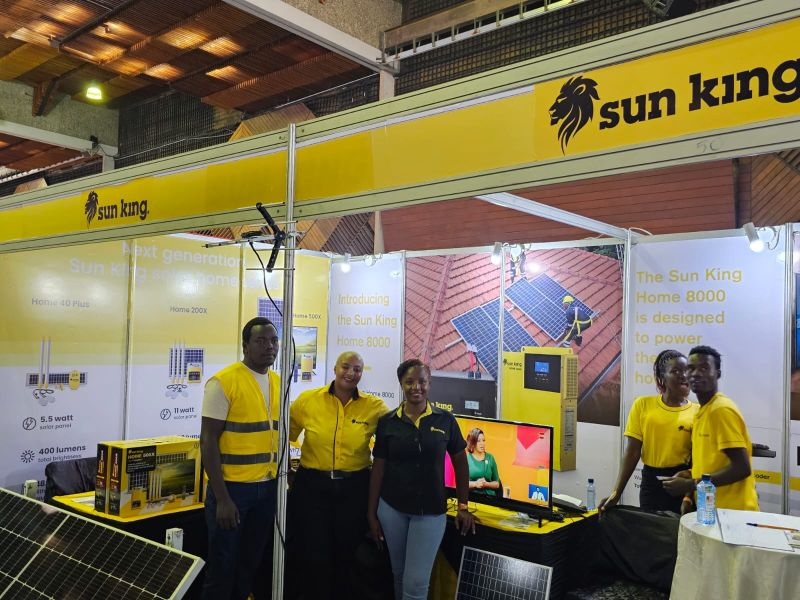
Sun King has secured a $4.5 million loan to expand the distribution of off-grid solar products across underserved communities in sub-Saharan Africa, underscoring the growing role of decentralized energy solutions in addressing the continent’s persistent electricity access gap.
The financing, announced on June 1, was provided by Hivos-Triodos Fund through Symbiotics’ bond issuance platform and will support the deployment of solar kits and related energy technologies in rural and remote areas where conventional grid infrastructure remains limited or unavailable.
The investment comes at a time when governments, development finance institutions and private investors are increasingly turning to off-grid energy systems as a practical and cost-effective means of accelerating electrification. For many African countries, extending national electricity grids to sparsely populated rural communities remains financially challenging, making standalone solar systems and mini-grids an increasingly important part of national energy strategies.
Sun King has emerged as one of the largest players in Africa’s off-grid solar market. Operating in 11 African countries and two Asian markets, the company designs, finances and distributes solar energy systems for households and small businesses that lack reliable access to electricity. Its business model combines product distribution with consumer financing, allowing customers to pay for solar systems in instalments over time.
According to the company, it distributes approximately 350,000 solar products every month through a network of 41,000 sales and service agents responsible for installation, maintenance and customer support. More than 90 percent of its products are sold through pay-as-you-go financing arrangements that typically run between 12 and 24 months.
Read also:https:Chinese Solar Panel Exports to Africa Jump 83 Percent as Renewable Energy Demand Surges Across Continent
This financing structure has become a defining feature of the off-grid energy sector across Africa, helping address one of the biggest barriers to clean energy adoption: affordability. Sun King says it has provided $1.9 billion in financing to more than 10 million customers, enabling households and businesses to access electricity without the high upfront costs traditionally associated with solar technology.
The latest funding reflects broader investor confidence in decentralized renewable energy systems as demand for affordable electricity continues to grow across the continent. Despite progress in recent years, hundreds of millions of Africans still lack access to reliable electricity, limiting economic opportunities, access to education, healthcare delivery and business development.

According to the International Energy Agency’s Financing Electricity Access in Africa report published in October 2025, mini-grids and standalone solar systems are among the most cost-effective solutions for expanding electricity access in rural and hard-to-reach regions. The agency noted that decentralized energy technologies can often be deployed more quickly and at lower cost than conventional grid extensions, particularly in areas with low population density.
However, the report also highlighted persistent structural challenges facing the sector. Many African countries have yet to fully integrate decentralized energy systems into national electrification strategies, while off-grid energy companies continue to face difficulties accessing long-term and affordable financing needed to scale operations.
These financing constraints remain a significant obstacle to achieving universal energy access across the continent. While demand for off-grid solutions continues to expand, the sector requires sustained investment to support manufacturing, distribution networks, customer financing and after-sales services.
Sun King’s latest financing builds on a series of recent capital raises aimed at supporting its expansion plans. In December 2025, the company secured $40 million from Lightrock to accelerate growth across Africa and Asia. Earlier this year, it announced plans to invest $150 million in Ethiopia by 2030, targeting the deployment of solar energy solutions to more than two million households and businesses.
https://www.aecweek-registration.com/2026/?repid=
The company’s expansion highlights the increasing importance of private-sector participation in Africa’s energy transition. While large-scale grid infrastructure remains essential for industrial growth and urban development, decentralized energy providers are playing a growing role in reaching communities that have historically been excluded from national power networks.
For African economies, the implications extend beyond household electrification. Improved access to reliable energy can support agricultural productivity, enable small enterprises to operate longer hours, reduce dependence on costly and polluting fuels, and strengthen resilience in underserved regions. As governments seek to balance energy access, climate objectives and fiscal constraints, investment in off-grid solar infrastructure is likely to remain an important component of the continent’s broader development agenda.


