By Christopher Burke Senior Advisor, WMC Africa
Kenya is systematically positioning itself as a competitive hub for gold and other strategic mineral opportunities. Government efforts to map natural resources, formalise small-scale operations and court international investors aim to unlock billions of shillings from developments such as the Lirhanda gold corridor in Kakamega long-running gold activity in Migori, and wider mineral occurrences in counties such as Turkana. This macroeconomic ambition parallels a global shift. International buyers, automotive manufacturers and development financiers increasingly condition their capital on stringent environmental, social and governance (ESG) compliance. ESG is transforming into more than a corporate reporting language, emerging as a set of principles and governance frameworks that help responsible producers connect with premium supply chains. Premium markets increasingly require supply chains to demonstrate credible safeguards against environmental degradation, human rights violations and local exploitation.
A critical blind spot exists at the very foundation of this strategy. Top-down corporate ESG models are designed for multinational conglomerates with vast compliance budgets. Replicating these heavy regulatory structures within local formalisation frameworks threatens to isolate the primary workforce driving Kenya’s artisanal and small-scale mining (ASM) sector.
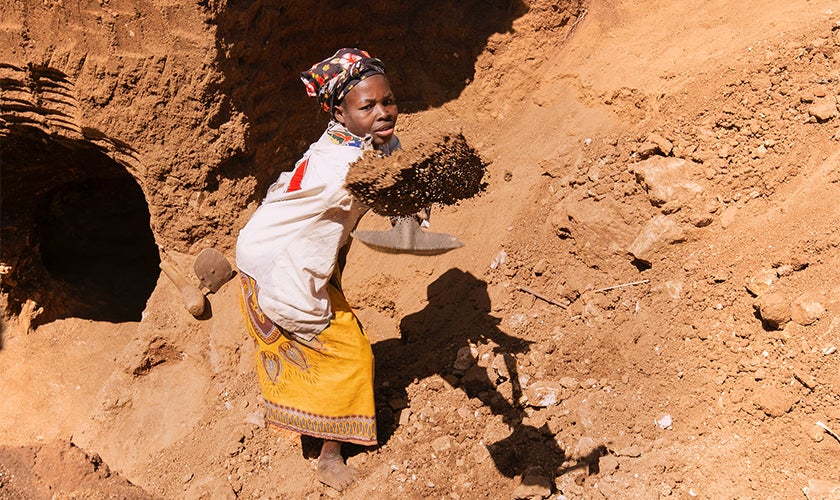
Precise data remains scarce, but a recent report by the Kenya Land Alliance suggests that women comprise approximately 40–45 percent of Kenya’s artisanal and small-scale mining workforce. The same report explains that many women enter mining not as corporate entrepreneurs, but as a basic economic safety net to secure daily household food and survival. Customary norms and severe capital constraints consistently relegate them to the lowest-paying, most mundane and hazardous stages of the value chain, including mineral processing, panning tailings and breaking rock.
The imposition of rigid, unadapted global sustainability standards onto this informal architecture is unlikely to succeed. Small-scale mining cooperatives and informal women-led syndicates cannot afford expensive third-party audits, advanced tailings management technologies or complex environmental impact reporting. Forcing unachievable compliance measures onto vulnerable operators acts as a trade barrier. The challenge is not ESG, but the risk of applying standards designed for large corporations without adapting them to local realities. It risks driving female miners out of the formal, visible economy and pushing them directly into the shadow market. Illegal smuggling networks thrive on non-compliant, undervalued minerals. This shift deprives the state of crucial royalty revenues and exacerbates the exploitation of women forced to accept lower prices from illicit buyers.
Securing Kenya’s export pipeline to premium international markets requires a completely different approach to sustainability. Global electronics and green-technology companies are increasingly risk-averse. The minerals they purchase carry not only technical and supply risks, but also reputational, legal and ESG risks linked to human rights abuses, conflict, corruption and environmental harm. As access to capital, insurance and high-value buyers becomes more closely linked to credible sustainability evidence, ESG can help Kenyan producers demonstrate reliability rather than simply absorb another compliance burden. If Kenyan minerals are associated with systematic gender exclusion, chemical poisoning or the displacement of rural communities, international capital may increasingly look elsewhere.
True social and environmental sustainability must be built from the ground up, beginning at the gold pans and processing pits. A constructive, localised framework is necessary to bridge the gap between global buyers and informal operators. The Ministry of Mining, Blue Economy and Maritime Affairs and National Environment Management Authority (NEMA) could explore ways to develop a simplified, progressive compliance system targeting artisanal operators. This could take the form of a tiered “Micro-ESG Passport” for local mining cooperatives. A tool of this nature could provide a practical interface between informal producers and global buyers, translating local progress into evidence that markets can recognise and quantify. Rather than demanding absolute compliance from day one, the framework could reward achievable milestones. Cooperatives could earn certified status by demonstrating a structured transition toward mercury-reduction technologies, including retorts and eventually mercury-free processing methods, integrating women into leadership roles and maintaining transparent financial tracking through local savings groups.
Spatial security remains an essential component of social sustainability. Minerals in Kenya are vested in the national government in trust for the people, but actual extraction occurs on community, private or customary land. Women have historically been marginalised within local land-governance institutions in Kenya. Pauline Musangi notes that, despite constitutional protections for gender equality, women “hardly sit” on Land Control Boards, partly due to traditional and cultural beliefs. She further observes that the Land Control Act does not specifically require women’s inclusion in these administrative structures.
When exploration or extraction licences are granted over areas already used by artisanal miners, women processors and other land-insecure workers can be displaced without adequate recourse or compensation. A Strategic Environmental and Social Assessment for Kenya’s mining sector notes that women are often excluded from land title deeds and may be left out of compensation packages. Recent reporting by the Kenya Human Rights Commission has also warned that artisanal miners in western Kenya fear the entry of large mining companies could erase long-standing livelihoods and trigger arbitrary displacement without clear rights-based resettlement protections.
Formally mapping and recording artisanal mining work areas through county-level land, mining or spatial planning systems could help protect the physical spaces used by female processors during large-scale concession negotiations. It would also convert otherwise invisible workspaces into auditable social-risk data, reducing uncertainty for buyers while strengthening local claims to recognition.
County governments, working with County Artisanal Mining Committees (AMCs) could allocate part of their mineral royalty share or related county mining revenues to fund common-use green technology processing hubs. Investing in shared, eco-compliant infrastructure would lower the entry cost for women-led groups and allow them to process minerals safely without handling toxic chemicals or incurring insurmountable debt. This would make sustainability a shared market-enabling infrastructure, not a private compliance burden shifted onto the poorest workers in the chain.
https://www.aecweek-registration.com/2026/?repid=
A sustainable global green transition cannot be built on an exploitative foundation. If Kenya intends to capture premium international markets and attract high-value foreign direct investment, sustainability cannot remain a corporate reporting exercise managed exclusively from offices in Nairobi. It must become a tangible, equity-driven economic framework that protects and empowers the women working at the absolute base of the supply chain. ESG possesses the potential to strengthen Kenya’s mineral strategy as a practical bridge between responsible global markets and the workers who make those supply chains possible.