By Carlton Oloo
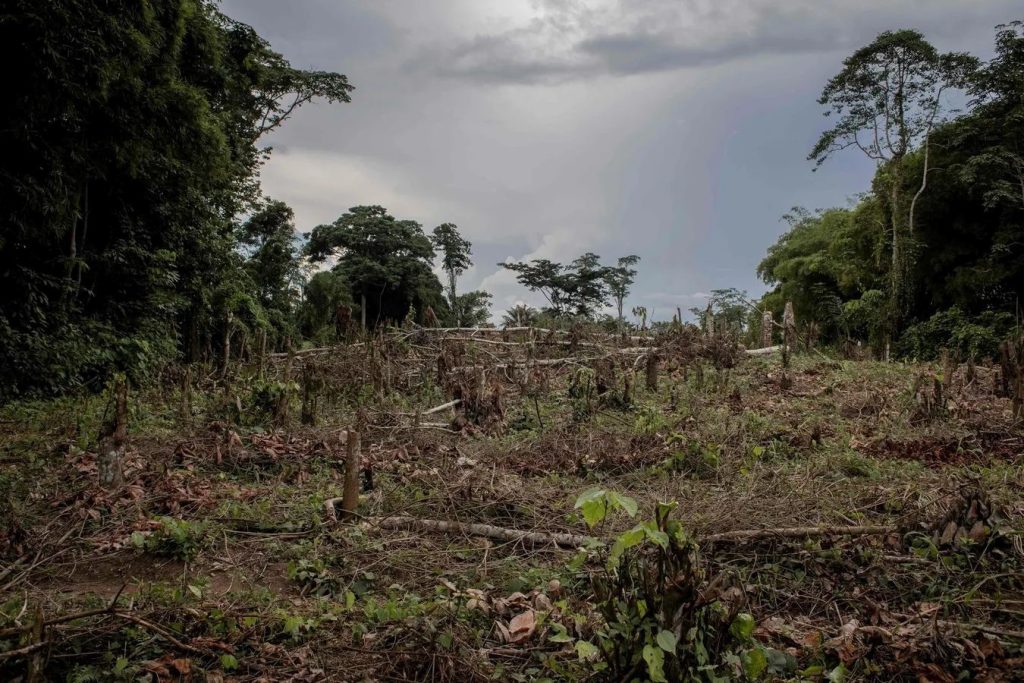 A general view of a deforested farm in Yanonge, 60 km from the town of Kisangani in Tshopo province, northeastern Democratic Republic of the Congo, August 31, 2022. (Photo by Guerchom Ndebo / AFP) (Photo by GUERCHOM NDEBO/AFP via Getty Images)
The Democratic Republic of the Congo (DRC) is currently managing a rapidly escalating public health crisis, as the 17th recorded Ebola outbreak in the country’s history continues to surge. As of late May 2026, health authorities have reported over 1,000 suspected cases of the Bundibugyo virus, with at least 246 suspected deaths linked to the disease. The virus has successfully crossed international borders, with neighboring Uganda confirming nine cases and one associated fatality.
Following the rapid geographic spread and the identification of cases across multiple provinces, including Ituri, North Kivu, and South Kivu, the World Health Organization officially designated the situation a Public Health Emergency of International Concern on May 17, triggering a massive mobilization of cross-border surveillance and containment protocols.
This outbreak presents a unique and hazardous challenge to African health security. Unlike the more common Zaire strain, for which effective vaccines exist, the Bundibugyo virus currently lacks an FDA-licensed or authorized vaccine.
This “technology blind spot” means responders cannot rely on the ring-vaccination strategies that successfully curtailed previous epidemics.
Consequently, containment relies entirely on the labor-intensive pillars of outbreak management: rigorous contact tracing, the isolation of suspected cases, safe burial practices, and sustained community engagement. However, in the epicenter of Ituri, these measures are being tested against a landscape defined by the volatile intersection of conflict, displacement, and extreme resource extraction.
While official reports focus on the mechanics of clinical containment, a fierce debate is unfolding on the ground regarding the ecological origins of the pathogen. Local advocates and grassroots organizations are pointing to a direct, causal correlation between the outbreak and the rapid, large-scale industrial activities currently carving through East and Central Africa’s remaining wilderness.
Critics argue that the destruction of pristine habitats, driven by mining expansion and massive infrastructure projects like regional crude oil pipelines, has shattered the ecological buffers that historically kept the virus contained within animal reservoirs. The hypothesis, supported by various ecological studies, is that as forests are felled, host species like fruit bats are forced into closer, more frequent contact with human settlements, creating the ideal conditions for a zoonotic spillover.
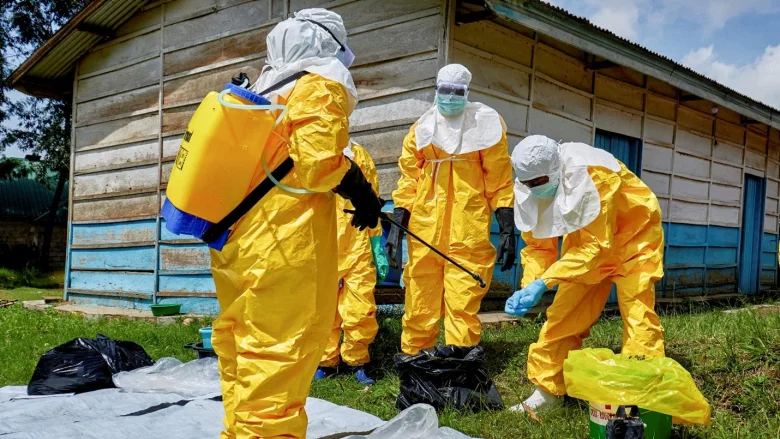
FAid agencies intensify efforts to contain a new Ebola outbreak involving the Bundibugyo strain, in Hoho commune of Bunia, Ituri province, Democratic Republic of Congo, May 21, 2026. Photo Credits: REUTERS/Gradel Muyisa Mumbere
Amidst this chaos, the international response has been met with both financial support and profound diplomatic friction. The United States, in an attempt to manage the risk to its own citizens, recently moved to establish a 50-bed quarantine facility at the Laikipia Air Base in Kenya. The proposal, intended to provide American personnel in the region with an emergency staging area for potential evacuation, triggered a firestorm of controversy.
Kenyan activists and medical unions successfully challenged the plan in the High Court, which suspended the facility, citing constitutional concerns over national biosecurity and public participation. The backlash was visceral: many Kenyans viewed the project as an “apartheid healthcare model” that treated their country as a “containment colony” for a pathogen it did not generate. This tension is further complicated by the recent dissolution of the United States Agency for International Development (USAID), which has left a significant vacuum in global health support.
Read also:DR Congo’s Ebola Response Struggles as Food Insecurity and Aid Cuts Deepen Humanitarian Crisis
With the agency effectively shuttered and development assistance now funneled through an evolving State Department framework, the perception of “America First” health policies, which prioritize the protection of U.S. citizens over integrated regional health infrastructure, has fueled deep skepticism across the continent.
This narrative highlights a dangerous tension in the information age. In a climate where misinformation can spiral as quickly as a virus, this assertion demands both transparency and scientific scrutiny. The risk is that legitimate ecological concerns might be oversimplified or weaponized to serve political agendas, potentially complicating the public health response by fueling distrust in established medical institutions.
Are we witnessing a genuine ecological wake-up call, or is this the misattribution of a complex, multifaceted crisis? The reality is likely somewhere in between: an environment already stressed by conflict and instability is being pushed to its breaking point by aggressive land-use changes, making the task of preventing future outbreaks infinitely more difficult.
If environmental degradation is indeed acting as a catalyst for viral transmission, the implications for the continent’s development model are profound. Africa is often forced to navigate a narrow path between the urgent need for industrialization and the long-term preservation of the ecosystems that provide essential disease regulation and climate stability. If the clearing of forests to facilitate trade and energy projects continues without deep-scale ecological scrutiny, the region may be locking itself into a recurring cycle of humanitarian and economic loss.
The current “aversion behavior”, where trade grinds to a halt and infrastructure projects are stalled by the threat of infection, proves that public health is not a secondary concern; it is the absolute bedrock of economic continuity.
Addressing this crisis requires shifting the lens from reactive, short-term emergency management to a “One Health” framework that recognizes the inextricable link between the health of our forests, our animals, and our people. Practical solutions are already taking root at the community level. Organizations like Let’s Act Together for Congo are proving that empowering local populations with sanitation infrastructure, nutritional support, and ecological education can create a barrier against disease that no pipeline can provide.
https://www.aecweek-registration.com/2026/?repid=
True sustainability will require holding multinational corporations and regional governments accountable for their ecological footprint, ensuring that industrial advancement does not come at the cost of the continent’s biological security.
As the world watches the unfolding situation in DRC, the lesson emerging is that if Africa does not integrate the preservation of its natural wild spaces into its core development strategy, it risks paying the price not just in lost forests, but in recurring, preventable human tragedies. The question for our leaders is no longer whether we can afford to protect our environment, but whether we can afford not to.