


The Democratic Republic of Congo’s latest Ebola outbreak is being intensified by acute food insecurity, funding shortages and growing public mistrust, humanitarian agencies warned this week, as health authorities struggle to contain a rapidly expanding epidemic in the country’s conflict-affected eastern provinces. According to the World Food Programme and the World Health Organization, more than 900 suspected Ebola cases and over 220 suspected deaths have now been recorded, while millions of people across the country continue to face severe hunger and weakened access to healthcare services.
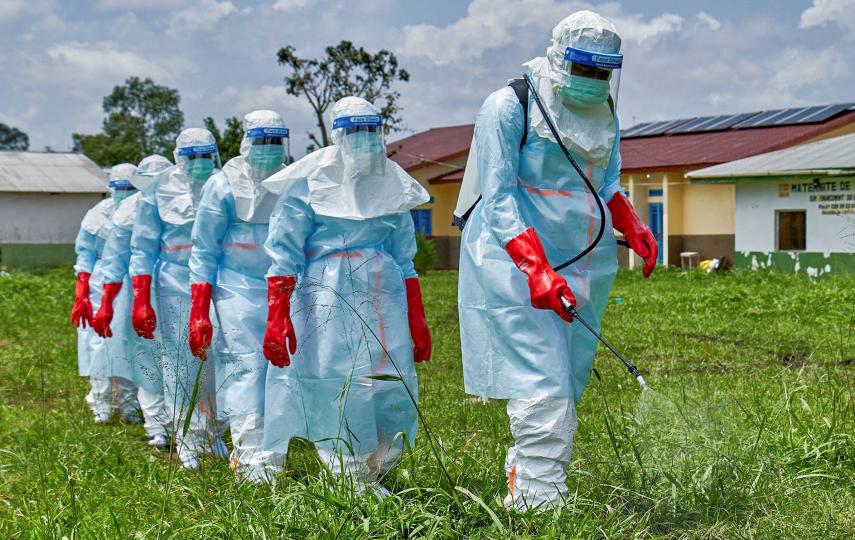 Health officials and aid agencies say the outbreak, centred in parts of Ituri province including Bunia, Rwampara, and Mongbwalu, has exposed the deep interconnection between public health emergencies, food systems and fragile governance structures in eastern Congo. The epidemic is being driven by the rare Bundibugyo strain of Ebola, which circulated undetected for weeks after health authorities initially tested for the more common Zaire strain and received negative results.
According to Olivier Nkakudulu, the World Food Programme’s bureau chief in Ituri, efforts to contain infected populations are increasingly being undermined by food shortages and economic desperation. There are health measures that suggest that people be contained in areas, but if these people are not receiving food assistance, they are not going to stay in the areas of containment,” Nkakudulu told the Associated Press. “They are going to look for food. They will have to go in the markets and by passing through the markets, they can infect other people.”
The situation highlights the broader challenge facing public health systems across fragile regions of Africa, where containment measures often collide with economic realities. In many affected communities, households rely heavily on daily informal trade and market activity for survival, making prolonged movement restrictions difficult to sustain without substantial humanitarian support.
According to UN-backed food security assessments, more than 26.5 million people in the DRC are currently experiencing acute hunger, making the country one of the world’s largest food insecurity hotspots. Armed conflict, displacement, inflation and disrupted agricultural production have continued to weaken household resilience across Eastern Congo, where years of insecurity have already strained public institutions and social services.
Aid agencies say those vulnerabilities are now directly affecting the Ebola response. Several organizations have flown emergency supplies into Bunia to support affected areas, but response operations remain constrained by limited funding, logistical difficulties and deteriorating public trust. In some towns, mistrust toward authorities and health workers has escalated into violence, with two Ebola treatment centres reportedly burned down by local residents.
The destruction of health infrastructure reflects longstanding tensions between communities and state institutions in Eastern Congo, where repeated cycles of conflict and underinvestment have weakened confidence in official responses to crises. Analysts note that misinformation and fear frequently emerge during outbreaks in regions where healthcare access is inconsistent and state presence is limited.
Funding shortages are further complicating containment efforts. According to Nkakudulu, the World Food Programme alone faces a financing gap of approximately $218 million for its operations this year. Humanitarian agencies say broader reductions in international development assistance, including aid cuts implemented last year by the United States and several other donor countries, have weakened Eastern Congo’s emergency response capacity.
Health workers operating in affected areas report shortages of essential equipment including testing kits, protective suits, face shields, body bags and safe burial materials. Such shortages increase risks for frontline medical staff and complicate efforts to safely manage highly infectious cases.
The outbreak is unfolding at a time when African health systems continue to confront rising pressure from overlapping crises, including climate shocks, armed conflict, displacement and declining humanitarian financing. Public health experts warn that underfunded epidemic responses can generate wider economic consequences through disrupted trade, reduced labour productivity, weakened investor confidence and additional strain on already fragile public finances.
For the DRC, the latest Ebola outbreak also underscores the broader governance and development implications of prolonged instability in eastern provinces rich in mineral resources but persistently affected by insecurity. Repeated humanitarian crises have diverted state resources, disrupted infrastructure development and weakened institutional capacity in areas central to regional trade and mining supply chains.
 According to regional analysts, the effectiveness of Congo’s Ebola response may increasingly depend not only on medical interventions, but also on whether humanitarian agencies and authorities can stabilize food access, rebuild public trust and secure sustained international financing. Without those parallel efforts, containment measures risk becoming harder to enforce as vulnerable households prioritise immediate survival over public health restrictions.
As aid agencies continue to scale emergency operations, the outbreak is emerging as another test of how African health systems and international humanitarian structures respond to complex crises where disease, poverty, conflict and institutional fragility intersect simultaneously.


