


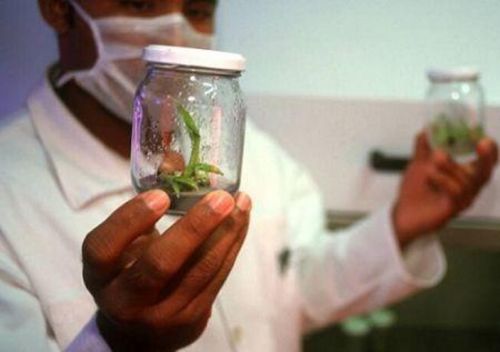
African countries invested $3.83 billion in agricultural research and development (R&D) in 2023, strengthening a two-decade trend of expanding scientific capacity as governments seek to improve food security, raise agricultural productivity and build resilience to climate-related shocks across the continent. New data released by the Food and Agriculture Organization of the United Nations (FAO) shows that Africa accounted for approximately 8% of global agricultural R&D spending in 2023, while recording the fastest growth in agricultural researcher numbers worldwide.
The findings, published in FAO’s Agricultural Science and Technology Indicators (ASTI) 2004–2023 report, highlight both progress and persistent structural disparities in Africa’s agricultural innovation landscape. While investment in agricultural research has increased steadily, the continent continues to face significant funding gaps compared with other regions, even as agriculture remains a critical source of employment, income and food supply for hundreds of millions of people.
According to the report, African agricultural R&D expenditure rose from $2.90 billion in 2004 to $3.83 billion in 2023, representing an average annual growth rate of 1.5%. The increase reflects sustained efforts by governments, universities and public research institutions to strengthen agricultural innovation systems, although growth has been uneven across regions.
North Africa accounted for the largest share of agricultural research spending in 2023, investing $1.26 billion, equivalent to nearly one-third of the continental total. East Africa followed with $1.05 billion, while West Africa invested $1.03 billion. Southern Africa allocated $386 million and Central Africa contributed $108 million. The distribution underscores the concentration of research resources in a limited number of countries and institutions, leaving many national agricultural systems with constrained capacity to address emerging challenges.
Globally, public agricultural R&D expenditure reached $50.42 billion in purchasing power parity terms in 2023, up from $35.85 billion in 2004. Asia dominated global spending with a 48% share, followed by the Americas at 22% and Europe at 20%. Africa’s 8% share highlights the gap between the continent’s agricultural importance and its relative level of research investment.
The report also points to a significant expansion of Africa’s agricultural research workforce. The number of agricultural researchers on the continent increased from 17,958 in 2004 to 41,022 in 2023, raising Africa’s share of the global research workforce from 9% to 13%. This represented an average annual growth rate of 4.4%, the highest among all world regions during the period under review.
Read also:FAO-UNDP report from COP30: National Adaptation Plans fail to match risk with funding
North Africa employed 17,344 agricultural researchers in 2023, ahead of East Africa with 11,587 researchers and West Africa with 9,334. Central Africa accounted for 1,911 researchers, while Southern Africa recorded 846. Although the growth in researcher numbers signals expanding scientific capacity, the regional disparities suggest that access to research expertise remains uneven across the continent.
For African economies, the findings carry important implications beyond the agricultural sector. Agriculture contributes significantly to gross domestic product and employment in many countries, while also serving as a foundation for agro-processing industries and export earnings. According to FAO, agricultural research plays a crucial role in reducing food prices, improving resource-use efficiency and enabling farmers to produce more with fewer inputs such as land, labour, fertilisers and crop protection products. Research also supports the development of crop varieties that can withstand changing environmental conditions and emerging pests and diseases.
The importance of agricultural innovation is growing as African countries confront rising food demand driven by population growth and urbanisation. According to OECD and FAO projections, Sub-Saharan Africa’s population is expected to continue expanding rapidly over the coming decade, increasing pressure on food systems, land resources and agricultural supply chains. Improving productivity through research and technology is therefore increasingly viewed as essential to avoiding greater dependence on food imports and strengthening domestic food production capacity.
The data also arrives at a time when climate variability is placing additional strain on African agriculture. More frequent droughts, floods and extreme weather events are affecting crop yields across several regions, creating pressure on governments to invest in climate-resilient farming systems. Agricultural research institutions are playing a growing role in developing drought-tolerant crops, improving water management practices and supporting adaptation strategies that can help farmers maintain productivity under changing climatic conditions.

https://www.aecweek-registration.com/2026/?repid=
Despite the gains, Africa’s share of global agricultural R&D spending remains modest relative to the sector’s economic importance. The continent employs 13% of the world’s agricultural researchers but accounts for only 8% of global expenditure, suggesting that many research systems continue to operate under financial constraints. FAO notes that substantial differences in investment intensity persist between countries, reflecting variations in income levels, agricultural sector size, trade structures and public financing capacity.
As governments seek pathways to strengthen food security, reduce import dependence and build resilience against climate and market shocks, the latest figures suggest that investment in agricultural science is becoming an increasingly important component of Africa’s development strategy. The challenge for policymakers will be translating growing research capacity into measurable improvements in farm productivity, rural incomes and sustainable food systems while narrowing the persistent gaps in funding and expertise across the continent.


