


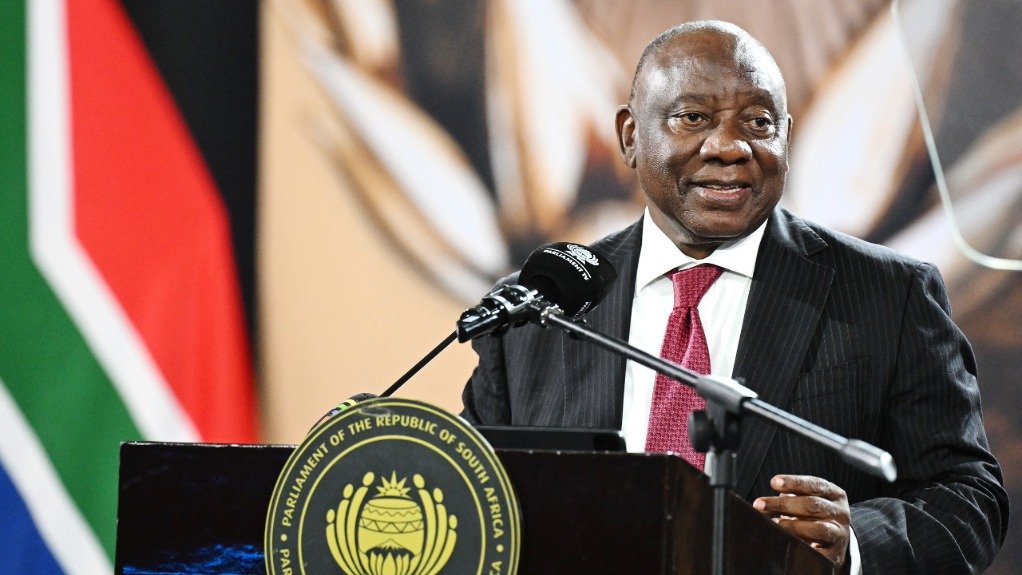
South African President Cyril Ramaphosa used a nationally televised address on Sunday to urge calm amid rising anti-immigrant tensions, as weeks of protests, violence and calls for mass deportations have heightened concerns over social cohesion, economic pressures and regional stability. Speaking as several African governments begin repatriating citizens from South Africa, Ramaphosa rejected claims that undocumented migrants are solely responsible for the country’s economic challenges, while pledging stronger enforcement of immigration laws and warning against vigilante actions targeting foreign nationals.
The address comes at a sensitive moment for Africa’s most industrialised economy, where persistent unemployment, slow economic growth and mounting pressure on public services have fuelled public frustration. Anti-immigrant groups have argued that undocumented foreign nationals contribute to competition for jobs, healthcare and education resources. However, Ramaphosa sought to reframe the debate, arguing that South Africa’s economic difficulties stem from broader structural challenges including weak growth, inadequate investment, infrastructure constraints and insufficient job creation.
 According to government figures, South Africa has deported more than 100,000 undocumented migrants over the past two years as authorities intensified border management and immigration enforcement efforts following the formation of the country’s coalition government in 2024. Ramaphosa acknowledged weaknesses in migration management systems and said state institutions, including the Department of Home Affairs, the Border Management Authority (BMA) and law enforcement agencies, would expand efforts to identify and remove individuals residing illegally in the country.
At the same time, the president warned that only authorised government institutions have the legal mandate to enforce immigration laws. His remarks reflected growing concerns that anti-migrant sentiment is increasingly accompanied by ethnic and tribal hostility, creating risks that extend beyond foreign nationals and into broader questions of national unity and social stability.
The unrest has already generated regional consequences. Governments including Ghana, Nigeria and Malawi have announced measures to assist citizens seeking to return home, while Mozambique has reported fatalities linked to what it described as xenophobic attacks. These developments underscore the extent to which migration has become a cross-border policy challenge with implications for labour mobility, regional integration and diplomatic relations.
For Africa, the debate unfolding in South Africa highlights the increasingly complex relationship between migration, economic performance and governance. Labour migration has historically played a significant role in supporting regional economies, particularly in Southern Africa, where workers move across borders to participate in mining, agriculture, construction and service industries. Restrictions on mobility or rising hostility toward migrants can disrupt labour markets, affect remittance flows and create additional pressures on neighbouring economies already facing fiscal and employment challenges.
The economic dimensions of migration are particularly significant at a time when many African countries are attempting to accelerate implementation of the African Union’s regional integration agenda and the African Continental Free Trade Area(AfCFTA). Greater economic integration depends not only on the movement of goods and capital but also on predictable frameworks governing labour mobility and human capital development. Rising anti-immigrant sentiment in one of the continent’s largest economies may complicate those efforts if tensions continue to escalate.
South Africa’s domestic economic context remains central to understanding the current unrest. Despite its relatively diversified economy and advanced financial sector, the country continues to struggle with high unemployment, particularly among young people, alongside persistent energy constraints, infrastructure backlogs and subdued investment levels. According to economists, these structural issues have contributed more significantly to economic stagnation than migration alone, though public perceptions often focus on visible competition for jobs and services.
Read also: https://www.aol.com/news/south-africas-president-unveils-crackdown-214409508.html
The situation also carries implications for public finances. Governments facing social tensions linked to migration frequently increase spending on border management, law enforcement and emergency interventions. Such expenditures can place additional strain on budgets already under pressure from debt servicing obligations, infrastructure needs and social protection programmes. At the same time, unmanaged social unrest can discourage investment and weaken confidence in local business environments.
From a governance perspective, the challenge confronting South African authorities lies in balancing legitimate immigration enforcement with constitutional protections, human rights obligations and regional diplomatic commitments. The effectiveness of that balance will influence not only domestic stability but also South Africa’s standing as a regional economic anchor and investment destination.
The country’s history provides an important reminder of the risks involved. Previous waves of anti-immigrant violence, including deadly attacks in 2008, demonstrated how quickly economic grievances can evolve into broader social conflict. While current government efforts aim to contain tensions through a combination of enforcement and public messaging, analysts note that long-term stability is likely to depend on addressing underlying economic frustrations alongside migration management reforms.
 For policymakers across Africa, South Africa’s experience illustrates how migration governance is increasingly intertwined with economic resilience, labour market performance and social cohesion. As demographic growth, urbanisation and climate-related displacement continue to shape population movements across the continent, governments will face growing pressure to develop policies that balance security concerns with economic realities.
Ramaphosa’s intervention may help reduce immediate tensions, but the broader issues driving public frustration remain unresolved. The outcome of South Africa’s response will be closely watched across the continent, where migration is becoming an increasingly important factor in discussions about economic development, regional integration and long-term social stability.


