


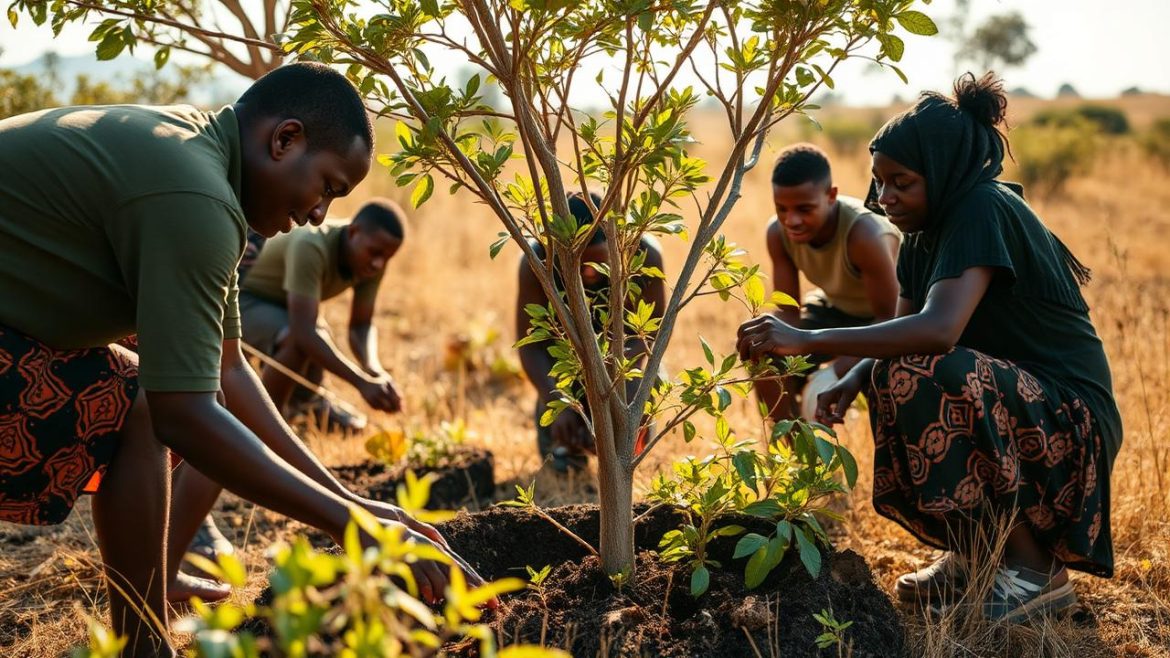
Namibia has advanced its efforts to build climate resilience and strengthen local food systems through a community-based fruit tree distribution programme in the Northern Kavango West Region, where the Governor’s Office recently donated 100 fruit trees to residents of Nkurenkuru Constituency. The initiative, implemented in early June 2026, seeks to improve household nutrition, support environmental restoration and encourage community participation in sustainable land management at a time when climate-related pressures are increasingly affecting rural livelihoods across southern Africa.
The programme reflects a growing recognition among policymakers that nature-based solutions can serve multiple development objectives simultaneously. By promoting the cultivation of fruit-bearing trees, local authorities aim to enhance food availability, diversify household income opportunities and increase vegetation cover in areas vulnerable to environmental degradation. Officials involved in the initiative noted that species such as mango, guava and citrus can provide long-term nutritional benefits while creating small-scale economic opportunities through the sale of surplus produce.
 The effort comes as Namibia continues to confront the effects of climate variability, including recurring droughts, erratic rainfall patterns and land degradation. These challenges have placed increasing pressure on agricultural production, particularly in rural communities where livelihoods remain closely linked to natural resources. According to development practitioners, integrating tree planting into local food systems can improve resilience by providing alternative food sources while strengthening ecosystem health.
Beyond food production, fruit trees contribute to broader environmental objectives. Increased vegetation cover can support soil conservation, reduce erosion, improve water retention and enhance biodiversity. In semi-arid regions such as Kavango West, these ecological benefits carry economic significance, helping communities maintain productive land and reduce vulnerability to climate shocks that can disrupt agricultural output and household incomes.
The initiative also aligns with Namibia’s wider sustainability agenda and its commitments to environmental stewardship under national development frameworks. Across Africa, governments are increasingly incorporating ecosystem restoration and climate adaptation measures into development planning as they seek to balance economic growth with environmental sustainability. Programmes that combine agricultural productivity with ecological restoration are gaining attention as practical approaches to addressing food insecurity while preserving natural capital.
The economic rationale behind such interventions extends beyond individual households. Food security remains a critical component of economic stability, particularly in regions where agricultural performance influences employment, local markets and public welfare. Investments that strengthen local food production can help reduce dependence on external supply chains, improve community resilience and lessen exposure to fluctuations in food prices and import costs.
According to regional development experts, community-led tree planting initiatives often deliver cumulative benefits when replicated across multiple locations. While a single distribution of 100 fruit trees may appear modest in scale, the long-term value lies in establishing a culture of environmental responsibility and sustainable resource management. Successful implementation can encourage further participation, leading to expanded planting efforts that generate broader environmental and socio-economic outcomes over time.
The programme also illustrates the growing role of local governance institutions in advancing sustainability objectives. Rather than relying solely on large-scale infrastructure or externally funded interventions, local authorities are increasingly deploying low-cost, community-focused initiatives that directly connect environmental conservation with household welfare. Such approaches can offer practical and scalable models for addressing climate adaptation challenges, particularly in rural regions where financial resources remain constrained.
 Across the continent, similar efforts are emerging as African countries seek to strengthen food systems against the backdrop of climate change, population growth and increasing pressure on natural resources. Tree-based agricultural systems, including agroforestry and community orchard programmes, are becoming important components of broader strategies aimed at improving food security, restoring degraded landscapes and supporting rural economic development.
For Namibia, the Kavango West initiative demonstrates how environmental sustainability and food security can be pursued through integrated local action. While the immediate impact will be measured by the successful cultivation of the donated trees, the broader significance lies in reinforcing the connection between ecosystem health, community resilience and long-term development. As climate-related risks continue to shape Africa’s agricultural future, locally driven solutions that combine environmental restoration with practical economic benefits are likely to play an increasingly important role in strengthening resilience across vulnerable communities.


