


KCB Group strengthened its position as one of East Africa’s leading sustainable finance institutions in 2025 after disbursing KSh48.8 billion in green loans to support environmentally sustainable projects across the region, helping the bank exceed its strategic green financing target while advancing climate resilience, financial inclusion and economic development.
The achievement, detailed in the KCB Group Sustainability Report 2025 themed “Transitioning Economies,” reflects the growing role of financial institutions in mobilising capital towards low-carbon development pathways and supporting businesses, households and communities in adapting to climate-related challenges. According to the report, the green financing portfolio supported investments in renewable energy, sustainable agriculture, green buildings, clean transportation, water management and other climate-smart initiatives. Of the total amount disbursed, KSh9.9 billion was independently verified as climate-eligible under the Climate Assessment for Financial Institutions (CAFI) framework, reinforcing the credibility of the bank’s sustainable finance commitments.
The lender also applied its Environmental and Social Due Diligence framework to transactions valued at KSh587.9 billion across Kenya, Uganda, Tanzania and Rwanda. The screening process forms part of KCB’s broader strategy to ensure that financed projects align with environmental and social sustainability standards while mitigating climate and operational risks. The expanded green lending activity enabled the bank to surpass its sustainability financing target ahead of schedule. Green assets accounted for 25.84 percent of KCB’s loan portfolio in 2025, exceeding the institution’s strategic goal of allocating 25 percent of its lending book to sustainable finance. The figure represents a significant increase from 21.6 percent recorded in the previous year.
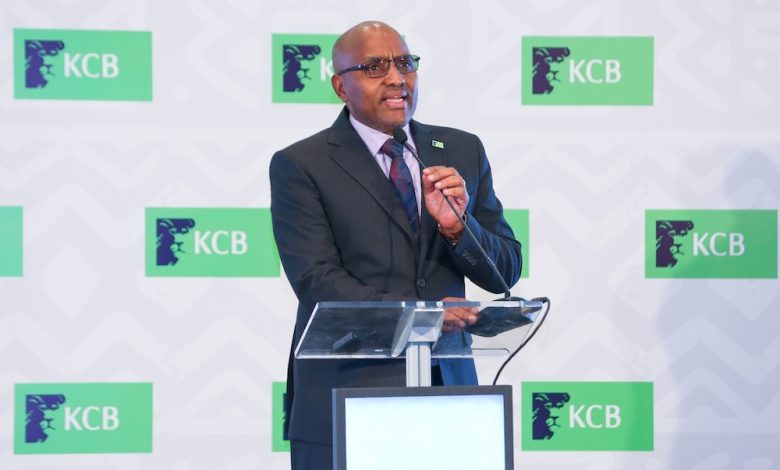
The milestone comes as financial institutions across Africa face increasing pressure from investors, regulators and development partners to integrate climate considerations into lending decisions and support the transition toward more resilient economies. KCB Group Chief Executive Officer Paul Russo said the bank is intentionally aligning its business strategy with sustainability objectives to drive long-term economic value while strengthening resilience across East African markets.
“KCB seeks to be a bigger player in shaping a robust and sustainable financial ecosystem throughout East Africa by continuously developing tailored green financing solutions for MSMEs, households and corporates to support the adoption of sustainable practices across key sectors,”Russo said.
He added that stronger partnerships with global climate financiers, product innovation and scaled-up capital mobilisation would accelerate the transition to a low-carbon and climate-resilient economy across the region. Beyond financing activities, KCB continued to expand its environmental conservation initiatives through a large-scale tree-growing programme aimed at supporting ecosystem restoration and climate mitigation efforts.
In 2025, the Group exceeded its annual target of planting 1.5 million trees by more than double, reaching over 3.5 million trees through more than 200 tree-planting activities conducted across East Africa. The initiative was implemented in collaboration with 1,778 schools and a range of community and institutional partners. The programme contributes to Kenya’s national climate objectives while supporting biodiversity conservation, watershed protection and carbon sequestration efforts. KCB also accelerated clean energy adoption within the education sector through its Learning Institutions Customer Value Proposition programme. During the year, the bank provided KSh782.5 million in financing to support 266 schools transitioning to cleaner cooking technologies. The initiative is designed to reduce dependence on traditional biomass fuels such as firewood and charcoal while helping educational institutions lower energy costs and improve environmental performance.
Renewable energy adoption within the bank’s own operations also expanded significantly. Solar energy systems are now operational in 16 KCB branches across the region, including facilities in Maasai Mara, Wajir, Mandera, Watamu, Lamu, Loitoktok, Kakuma, Namanga and the Karen Leadership Centre. The Group plans to extend solar installations to an additional 30 branches as part of its broader commitment to reducing operational emissions and enhancing energy efficiency. These interventions contributed to measurable environmental gains during the reporting period. KCB reported a two percent reduction in fuel and electricity consumption alongside a 13 percent decline in overall carbon emissions across its operations.
The sustainability report also highlights the growing connection between climate action and inclusive economic development. Through programmes implemented by the KCB Foundation, more than 265,300 jobs were supported during the year, demonstrating the role financial institutions can play in expanding economic opportunities alongside environmental objectives. Workforce readiness and skills development initiatives reached 16,549 young people, equipping participants with employability and entrepreneurship skills designed to improve labour market outcomes and business creation. At the same time, the Foundation’s flagship 2Jiajiri Young Africa Works programme provided business development support to 38,635 youth-led enterprises. Overall, KCB reported supporting more than 67,000 businesses through various financing and enterprise development initiatives.
Women’s economic empowerment remained another major focus area. During the year, KCB disbursed KSh149 billion to women-led enterprises through its Female-Led and Made Enterprise programme, significantly advancing its five-year commitment to unlock KSh250 billion in financing for female entrepreneurs.The programme seeks to address longstanding financing gaps faced by women-owned businesses and promote greater participation of women in economic development across the region. Financial inclusion efforts were also expanded to reach displaced and underserved populations. KCB enabled 20,299 refugees to access formal banking services through the recognition of identification documents issued by the United Nations High Commissioner for Refugees.
Through this initiative, refugee entrepreneurs received KSh71.4 million in financing to support business activities and strengthen economic participation within host communities. The publication of the Sustainability Report 2025 marks the third consecutive year that KCB’s sustainability disclosures have received limited assurance, reflecting increasing maturity in the bank’s environmental, social and governance reporting practices.
https://www.aecweek-registration.com/2026/
The report was prepared with reference to the International Financial Reporting Standards Sustainability Disclosure Standards, specifically IFRS S1 and IFRS S2, and was released alongside the Group’s Integrated Report 2025. By aligning with internationally recognised reporting frameworks ahead of their mandatory implementation in 2027, KCB is positioning itself among the early adopters of global sustainability disclosure requirements.
The report underscores a broader shift occurring across Africa’s financial sector, where sustainable finance is increasingly viewed not only as a climate response mechanism but also as a strategic driver of economic transformation, resilience and long-term competitiveness.As governments, businesses and investors seek pathways to achieve climate goals while supporting economic growth, KCB’s expanding green finance portfolio illustrates how regional financial institutions are becoming central players in financing East Africa’s transition to a more sustainable and inclusive future.


