


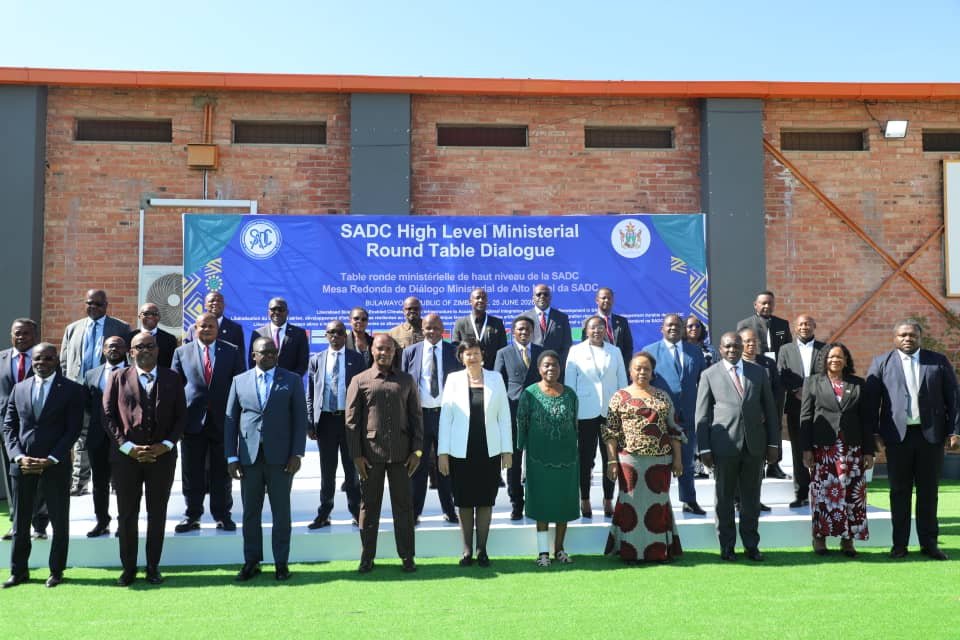
The Southern African Development Community (SADC) has intensified efforts to modernise regional transport systems by advancing liberalised air transport, climate-resilient infrastructure and digital innovation, as ministers and policymakers meeting in Bulawayo, Zimbabwe, called for faster implementation of reforms designed to strengthen economic integration across Southern Africa.
The high-level ministerial dialogue, convened on 25 June on the margins of the SADC Cluster Meeting of Ministers Responsible for Transport, Information and Communication Technologies (ICT), Information and Meteorology, brought together government ministers, regulators, development partners, private-sector leaders and technical experts to examine how aviation liberalisation, artificial intelligence (AI) and climate adaptation can collectively improve regional connectivity and long-term economic resilience.
 Held under the theme “Liberalised Skies and Artificial Intelligence (AI)-Enabled Climate-Resilient Infrastructure to Accelerate Regional Integration and Sustainable Development in SADC“, the meeting reflected growing recognition that infrastructure development must simultaneously address trade competitiveness, climate risks and digital transformation if the region is to achieve sustainable growth.
According to SADC officials, discussions focused on accelerating implementation of the Single African Air Transport Market (SAATM), the African Union flagship initiative intended to create a unified continental aviation market by removing restrictions on air services between participating countries. Although the initiative has been under development for several years, implementation has progressed unevenly across Africa, limiting the expansion of regional air connectivity and increasing transport costs for businesses and travellers.
Speaking during the dialogue, South Africa’s Minister of Transport, Barbara Creecy, urged Member States to deepen cooperation by liberalising African airspace, investing in modern transport infrastructure and strengthening regional coordination on climate resilience. She argued that improving aviation connectivity would support trade, tourism, investment and labour mobility while helping build more resilient economies capable of adapting to climate-related disruptions.
Her remarks come as many African governments seek to reduce the cost of intra-African trade under the framework of the African Continental Free Trade Area (AfCFTA), where transport inefficiencies remain among the largest barriers to economic integration. Limited direct air connections across the continent continue to increase logistics costs, lengthen travel times and reduce the competitiveness of regional supply chains.
Zimbabwe’s Minister of State for Bulawayo Provincial Affairs and Devolution, Judith Ncube, emphasised that transport infrastructure remains fundamental to SADC’s regional integration agenda. She noted that efficient, reliable and climate-resilient transport networks are essential for facilitating cross-border commerce, improving industrial competitiveness and lowering the cost of doing business throughout Southern Africa.
The dialogue also highlighted the growing intersection between digital technologies and infrastructure management. Ministers examined how Artificial Intelligence and Digital Public Infrastructure could improve transport operations, optimise logistics systems, strengthen interoperability between Member States and enhance public service delivery. Participants also explored the role of AI in predictive maintenance of infrastructure, allowing governments to identify system failures before they occur and reduce long-term maintenance costs.
Climate resilience emerged as a central theme throughout the discussions. Southern Africa has experienced increasingly frequent climate-related disasters, including cyclones, floods and prolonged droughts, which have damaged transport corridors, airports, communication networks and energy infrastructure. These disruptions have imposed significant fiscal costs on governments while interrupting regional trade and economic activity.
According to SADC Deputy Executive Secretary for Regional Integration, Angele Makombo N’tumba, stronger aviation connectivity should be viewed not only as a mechanism for passenger mobility but also as an enabler of regional value chains, investment flows and the movement of goods, services and technical skills across borders.
Participants also underscored the importance of strengthening meteorological services, climate information systems and early warning mechanisms. More accurate climate forecasting, supported by AI technologies, could improve aviation safety, support disaster preparedness and protect critical infrastructure against increasingly volatile weather patterns. Such investments are becoming increasingly important as governments seek to reduce the economic losses associated with climate-induced disruptions.
From a sustainability perspective, the discussions reflect a broader shift in infrastructure planning across Africa, where resilience is increasingly becoming an economic rather than solely environmental consideration. Climate-resilient infrastructure reduces maintenance costs, protects public investment, safeguards commercial activity and strengthens investor confidence by improving the reliability of transport and logistics systems.
The emphasis on digital infrastructure also aligns with growing international investment trends. Development finance institutions have increasingly prioritised projects that integrate digital technologies with physical infrastructure, recognising that intelligent transport systems can improve operational efficiency while lowering emissions and supporting more sustainable urban and regional development.
For Southern Africa, improved air transport connectivity could have wider implications for economic diversification. Better regional aviation networks would strengthen tourism recovery, facilitate higher-value exports, improve access to regional markets for small and medium-sized enterprises, and enhance supply chain integration across manufacturing, mining and agricultural sectors.
 The outcomes of the Bulawayo dialogue will inform deliberations at the subsequent SADC Cluster Meeting, where ministers are expected to consider policy recommendations on aviation liberalisation, digital transformation, climate-resilient infrastructure and regional meteorological cooperation. According to SADC, the dialogue’s conclusions have been consolidated into a summary report outlining priorities for implementing SAATM, expanding AI-enabled infrastructure, strengthening Digital Public Infrastructure and improving climate information systems across the region.
The discussions underscore the increasingly interconnected nature of Africa’s infrastructure agenda, where transport, digital innovation, climate adaptation and economic integration are no longer viewed as separate policy areas but as mutually reinforcing pillars of sustainable development. As Southern African economies seek to improve competitiveness within continental and global markets, the pace of implementation will determine whether these policy commitments translate into tangible improvements in regional connectivity, trade efficiency and long-term economic resilience.


