


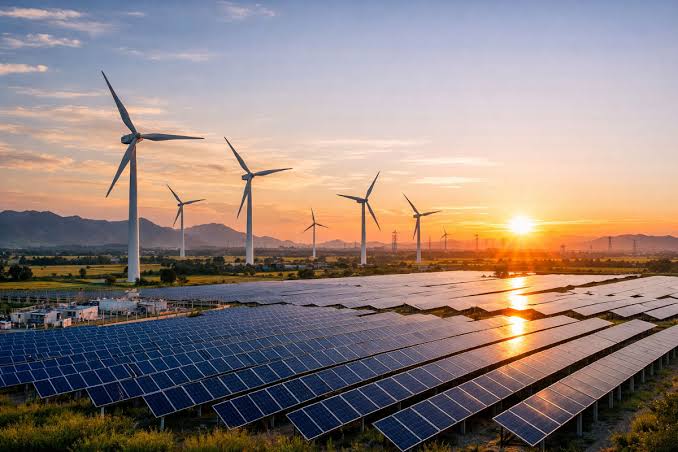
The Parliament of the Economic Community of West African States (ECOWAS) has urged its 12 member states to allocate at least 5% of their national budgets to renewable energy and rural development, signalling a renewed push to tackle chronic electricity shortages while accelerating the region’s transition toward more resilient and diversified power systems.
The recommendation was adopted during the meeting of the ECOWAS Parliament’s Joint Committee on Energy, Mines, Infrastructure, Agriculture, Environment and Natural Resources held in Dakar from June 15 to June 19. The proposal comes as governments across West Africa grapple with widening energy access gaps, increasing electricity demand, fiscal constraints and mounting climate risks that threaten existing power infrastructure. Although the recommendation is not legally binding, it represents one of the strongest regional calls yet for sustained domestic financing of renewable energy. The move also reflects growing recognition that reliance on external development finance alone will be insufficient to achieve universal electricity access and meet the region’s climate and economic development objectives.
According to ECOWAS estimates, more than half of West Africa’s population continues to face unreliable or no access to electricity, particularly in rural communities where energy poverty remains a significant barrier to agricultural productivity, industrialisation, healthcare delivery and education. Expanding investment in renewable energy is increasingly viewed not only as a climate imperative but also as a strategic economic priority capable of improving energy security, reducing fuel import dependence and supporting long-term growth. The recommendation also comes against the backdrop of rising pressure on public finances across many African economies. Governments are balancing debt servicing obligations, infrastructure deficits and social spending demands while simultaneously seeking resources to finance the clean energy transition. By recommending that countries dedicate a defined share of national budgets to renewable energy and rural development, ECOWAS is encouraging greater domestic ownership of the region’s energy transition rather than relying predominantly on donor-funded projects.
Current renewable energy deployment across the bloc illustrates both the progress achieved and the structural challenges that remain. Data compiled from national energy compacts indicate that only five ECOWAS member states—Nigeria, Ghana, Côte d’Ivoire, Guinea and Senegal—have installed renewable electricity generation capacity exceeding 500 megawatts, highlighting the uneven pace of energy transition across the region. Nigeria remains the largest renewable energy producer within ECOWAS, with approximately 2,950 megawatts (MW) of installed renewable energy capacity recorded in 2023. Renewable sources account for nearly one-quarter of the country’s installed electricity generation capacity, with hydropower continuing to dominate production through major facilities including the Kainji, Jebba and Shiroro dams. In recent years, solar photovoltaic deployment has expanded through mini-grids and off-grid rural electrification programmes designed to improve access in underserved communities, although its contribution to the national energy mix remains relatively modest.
Ghana follows with an estimated 1,820 MW of installed renewable capacity in 2024, representing around 38% of total installed generation capacity. The country’s renewable electricity sector is overwhelmingly supported by hydropower generated from the Akosombo, Kpong and Bui dams, while utility-scale solar projects have begun contributing incremental capacity as the government seeks to diversify electricity sources. Côte d’Ivoire ranks third within the regional bloc, with between 901 MW and 910 MW of installed renewable energy capacity by the end of 2023, accounting for approximately 31% of national electricity generation capacity. Hydropower remains the backbone of the country’s renewable sector through facilities such as Ayamé, Kossou, Taabo and Soubré, while solar, biomass and wind technologies continue to represent only a relatively small proportion of installed generation.
Guinea occupies fourth position with approximately 817 MW of renewable capacity, the highest proportional reliance on renewable energy among the leading countries. Renewables account for about 62% of the country’s installed electricity generation capacity, driven entirely by hydropower projects including Kaléta, Souapiti and Garafiri. However, recognising the risks associated with dependence on a single renewable resource, Guinea has announced plans to substantially expand solar energy deployment before 2030.
Senegal rounds out the top five with approximately 553 MW of installed renewable energy capacity, representing 29% of total installed electricity generation. Unlike many of its regional counterparts, Senegal has made notable progress in diversifying its renewable energy portfolio. According to the country’s Ministry of Energy, solar power contributed nearly 49% of renewable electricity generation in 2023, while wind power accounted for approximately 29% and hydropower 22%. The country’s investment in utility-scale solar parks and wind farms has positioned it among West Africa’s most diversified renewable energy markets.
Despite these advances, the regional energy landscape remains characterised by heavy dependence on hydropower. While hydropower has historically provided reliable, low-carbon electricity across West Africa, increasing climate variability is exposing significant vulnerabilities within electricity systems. Changing rainfall patterns, prolonged droughts and declining reservoir levels are increasingly affecting hydropower generation across the continent. These disruptions have already contributed to electricity shortages and power rationing in several African countries, demonstrating how climate change can directly threaten energy security even within renewable energy systems.
For ECOWAS member states, expanding solar and wind generation therefore represents more than a strategy for reducing greenhouse gas emissions. Diversification offers an opportunity to improve the resilience of electricity networks by reducing dependence on rainfall-dependent generation and creating more balanced energy portfolios capable of withstanding climate-related shocks. The proposed increase in domestic investment also aligns with broader continental priorities under the African Union’s Agenda 2063 and the African Single Electricity Market initiative, both of which seek to strengthen regional energy integration and expand reliable electricity access across Africa.
Improved renewable energy infrastructure could generate multiple economic benefits beyond electricity supply. Increased energy availability has the potential to stimulate manufacturing, support digital economies, improve agricultural processing, reduce operating costs for businesses and expand employment opportunities. Reliable electricity also strengthens healthcare systems, education services and water infrastructure, particularly in rural communities that continue to experience some of the lowest electrification rates globally. The ECOWAS recommendation additionally highlights the growing role of domestic public finance in achieving Africa’s energy transition ambitions. While international climate finance remains essential, regional policymakers increasingly recognise that sustained national budget allocations can provide greater policy certainty, attract private investment and improve the long-term bankability of renewable energy projects.
https://www.aecweek-registration.com/2026/
As electricity demand continues to rise alongside rapid urbanisation, population growth and industrial development, West Africa’s ability to diversify beyond hydropower will become increasingly important. Expanding investment in solar, wind, battery storage and decentralised energy systems could strengthen regional energy security while reducing exposure to both climate risks and volatile global fossil fuel markets.
The ECOWAS Parliament’s proposal therefore represents more than a fiscal recommendation. It reflects an emerging regional consensus that renewable energy has become central to economic competitiveness, infrastructure resilience and sustainable development. Whether member states translate that commitment into national budget priorities will likely shape the pace of West Africa’s energy transition over the coming decade.


