


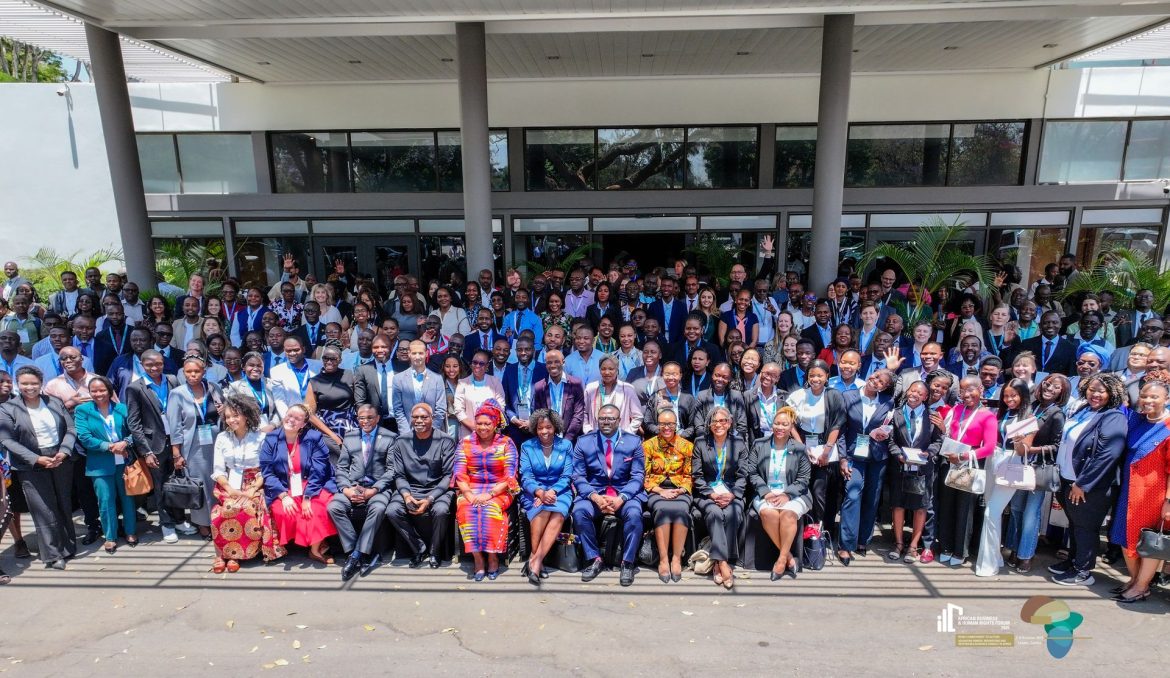
As African economies accelerate industrialisation, mining expansion and energy transition projects, the United Nations Global Compact is set to convene governments, businesses, investors and civil society in Dakar, Senegal, from 29 September to 1 October 2026 to assess how corporate activities are affecting environmental sustainability and human rights across the continent.
The fifth Africa Business and Human Rights Forum (ABHR), organised under the theme “Realizing the Right to a Clean, Healthy and Sustainable Environment through Responsible Business Conduct,” will focus on strengthening the implementation of the United Nations Guiding Principles on Business and Human Rights (UNGPs) while advancing corporate accountability for environmental and social impacts.
 The forum comes at a time when African governments are seeking to attract greater investment into strategic sectors including mining, renewable energy, infrastructure, manufacturing and agriculture, even as communities increasingly demand stronger environmental safeguards and more equitable distribution of economic benefits.
According to the United Nations Global Compact, the event will bring together policymakers, regulators, businesses, national human rights institutions, civil society organisations, Indigenous people, development partners and affected communities to identify practical approaches for integrating environmental protection into responsible business conduct across Africa.
The gathering builds on the fourth Africa Business and Human Rights Forum, held in Lusaka, Zambia, in 2025, which attracted more than 600 participants and focused on advancing remedy, reparations and responsible business practices within Africa’s evolving regulatory environment. This year’s edition expands the conversation by placing environmental rights at the centre of business governance.
According to the United Nations Global Compact, Africa continues to lose an estimated USD195 billion annually through environmental degradation, illicit financial flows and unsustainable natural resource exploitation. These losses reduce public revenues, weaken environmental resilience and constrain governments’ capacity to finance essential infrastructure, healthcare, education and climate adaptation programmes.
The forum will review progress made over the past five years in implementing the UN Guiding Principles on Business and Human Rights, including the adoption of National Action Plans by Kenya, Uganda, Nigeria, Liberia and Ghana. While these policy developments represent important institutional progress, implementation gaps remain across much of the continent, particularly in sectors where environmental degradation and community displacement continue to generate social tensions.
Central to this year’s discussions will be the integration of environmental considerations into human rights due diligence. Participants are expected to examine how companies can better identify, prevent, mitigate and account for adverse environmental and human rights impacts throughout their operations and supply chains.
The agenda also reflects growing international recognition that access to clean water, healthy ecosystems and a safe climate are increasingly becoming material business risks. Investors, regulators and financial institutions are placing greater emphasis on environmental governance, with corporate disclosure expectations continuing to expand under global sustainability reporting standards.
Another major area of discussion will focus on water, sanitation and hygiene, alongside land rights and community access to natural resources. Across Africa, competition over water availability, agricultural land and mineral-rich territories has intensified as population growth, climate change and commercial investment reshape rural economies. These pressures often affect women, Indigenous communities and other vulnerable populations disproportionately.
The forum will also examine the concept of a just transition as African countries pursue low-carbon economic development. Home to approximately 30 per cent of the world’s known critical mineral reserves, Africa is expected to play an increasingly important role in supplying minerals required for electric vehicles, renewable energy technologies and battery manufacturing. Speakers are expected to explore how governments and businesses can ensure that the transition generates employment, local value addition and environmental protection while safeguarding community rights.
Access to remedy remains another central pillar of the discussions. Participants will assess mechanisms for improving legal, administrative and non-judicial processes available to communities affected by business-related human rights abuses. Strengthening grievance mechanisms and ensuring affected stakeholders participate meaningfully in decision-making are expected to feature prominently throughout the three-day programme.
Beyond legal compliance, the forum reflects broader shifts in global investment expectations. International financiers, export credit agencies and institutional investors increasingly assess environmental, social and governance (ESG) performance when allocating capital. Strong human rights governance and environmental stewardship are becoming important indicators of investment resilience and long-term competitiveness.
For Africa, these developments carry significant economic implications. Improved governance frameworks can reduce project-related conflicts, strengthen investor confidence and support more sustainable infrastructure and industrial development. Conversely, weak environmental oversight and inadequate community engagement continue to expose projects to legal disputes, operational disruptions and reputational risks.
 The discussions also align closely with the African Union’s Agenda 2063, which calls for accountable institutions, sustainable natural resource management and inclusive economic transformation. As governments seek to accelerate industrialisation and climate-resilient development, integrating responsible business conduct into national economic strategies is becoming increasingly important for balancing investment attraction with social and environmental sustainability.
The fifth Africa Business and Human Rights Forum is expected to conclude with recommendations aimed at accelerating implementation of business and human rights commitments across the continent, strengthening environmental governance and supporting responsible investment that contributes to long-term sustainable development. As African economies continue expanding their role in global supply chains and the green transition, the effectiveness of corporate accountability frameworks will increasingly influence both economic competitiveness and public trust in development outcomes.


