


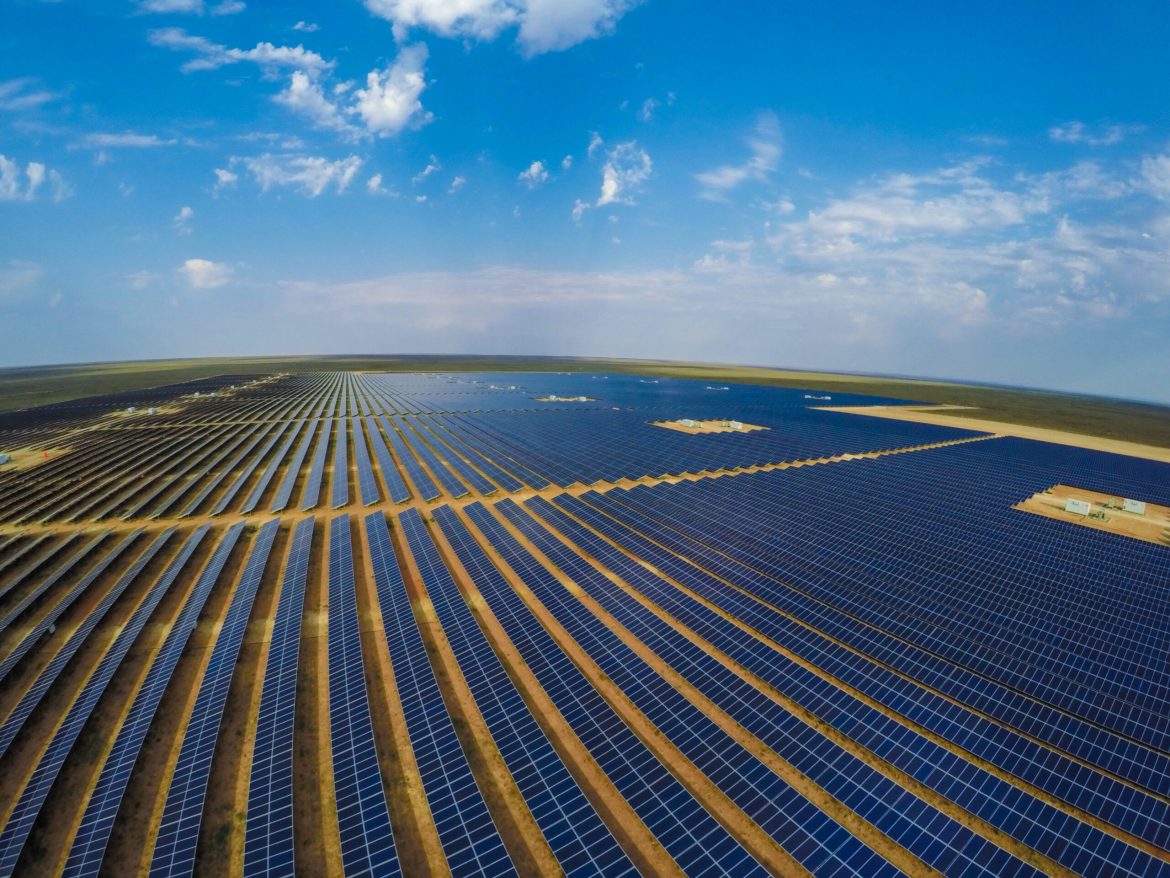
Infinity Power has signed engineering, procurement and construction (EPC) agreements for two utility-scale solar projects in South Africa with a combined capacity of 773.6 megawatts peak (MWp), strengthening the country’s renewable energy pipeline and highlighting the growing role of private sector investment in Africa’s energy transition.
The agreements were announced during the Africa Energy Forum (AEF) in Cape Town and cover the 285.6-MWp Highveld Solar PV project in Mpumalanga province and the 488-MWp Negwedi solar cluster in the Free State province. Together, the projects are expected to supply electricity to more than 450,000 households while avoiding nearly 1.8 million tonnes of carbon dioxide emissions annually once operational. According to Infinity Power, the developments form part of its broader strategy to expand renewable energy generation across the continent and support South Africa’s efforts to diversify its energy mix.
The Highveld Solar PV project was awarded under the seventh bidding window of South Africa’s Renewable Energy Independent Power Producer Procurement Programme (REIPPPP), one of the continent’s most successful renewable energy procurement frameworks. Infinity Power selected Sterling and Wilson Renewable Energy as its preferred EPC contractor for the project, while PowerChina Guizhou Engineering was chosen to deliver EPC services for the Negwedi solar cluster.
The company estimates that the Highveld facility alone will provide electricity to approximately 167,000 households and prevent more than 660,000 tonnes of carbon emissions each year. The larger Negwedi cluster is expected to supply power to nearly 289,000 households and reduce emissions by more than 1.14 million tonnes annually. Combined, the projects represent one of the largest solar development announcements in South Africa this year. While Infinity Power has not disclosed the capital expenditure, financing arrangements or construction timelines for the projects, the agreements underscore continued investor confidence in South Africa’s renewable energy market despite broader economic and infrastructure challenges.
South Africa remains Africa’s largest electricity market and one of its most active destinations for renewable energy investment. Although coal still accounts for the majority of electricity generation, years of supply constraints, load-shedding disruptions and rising electricity demand have accelerated investment in alternative energy sources. Government procurement programmes, corporate power purchase agreements and electricity wheeling reforms have collectively transformed the country’s renewable energy landscape.
According to industry data, South Africa continues to lead renewable energy deployment across Africa, with utility-scale solar, wind and battery storage projects increasingly attracting domestic and international capital. The country has also emerged as a testing ground for new electricity trading models, including wheeling arrangements that allow renewable energy producers to sell power directly to industrial and commercial customers through the national grid. The latest Infinity Power announcement reflects this broader market evolution. Growing demand from mining companies, manufacturers, data centres and large commercial consumers is driving a new wave of renewable energy projects designed to provide reliable and competitively priced electricity. Many energy-intensive industries are increasingly seeking long-term renewable energy contracts to reduce exposure to Eskom tariff increases while advancing corporate decarbonisation targets.
For Africa, the significance of these investments extends beyond electricity generation. Renewable energy infrastructure is becoming an increasingly important source of economic growth, industrial development and job creation. Utility-scale solar projects generate employment during construction and operation while supporting local supply chains, engineering services and skills development. The projects also align with South Africa’s climate commitments and broader efforts to reduce the carbon intensity of its economy. As one of the world’s most coal-dependent major economies, South Africa faces the dual challenge of maintaining energy security while reducing greenhouse gas emissions. Renewable energy projects such as Highveld and Negwedi provide an avenue for expanding electricity supply without increasing dependence on fossil fuels.
Infinity Power’s expansion strategy reflects growing confidence in Africa’s renewable energy market. Jointly owned by Infinity and Masdar, the company has set a target of achieving 10 gigawatts of operational renewable energy capacity across Africa by 2032. Over the past two years, it has expanded its development pipeline through projects in South Africa, Egypt and Côte d’Ivoire, adding substantial solar, wind and battery storage capacity. According to the company, recent additions include 1.28 gigawatts of solar projects awarded under South Africa’s REIPPPP Bid Window 7 programme, alongside large-scale developments in Egypt and West Africa.
The South African projects also highlight the increasing importance of international partnerships in Africa’s energy transition. Engineering firms from India and China continue to play a central role in delivering large-scale renewable energy infrastructure across the continent, bringing technical expertise, supply chain capabilities and project execution experience. For policymakers, the announcement reinforces the importance of maintaining stable regulatory frameworks that can attract long-term capital. Africa’s energy transition will require hundreds of billions of dollars in investment over the coming decades, and private sector participation is expected to remain a critical component of that financing mix.
https://www.aecweek-registration.com/2026/
As countries across Africa seek to expand electricity access, strengthen energy security and support industrialisation, large-scale renewable energy developments are increasingly becoming part of mainstream economic planning rather than niche climate initiatives. The Highveld and Negwedi projects demonstrate how renewable energy investment is evolving into a strategic infrastructure asset capable of supporting economic growth, reducing emissions and enhancing the resilience of power systems.
If successfully delivered, the projects will add substantial clean energy capacity to South Africa’s grid while contributing to the broader transformation of Africa’s energy sector. At a time when electricity demand is rising across the continent, the ability to mobilise capital and execute large-scale renewable energy projects will be a key determinant of future economic competitiveness and sustainable development.


