


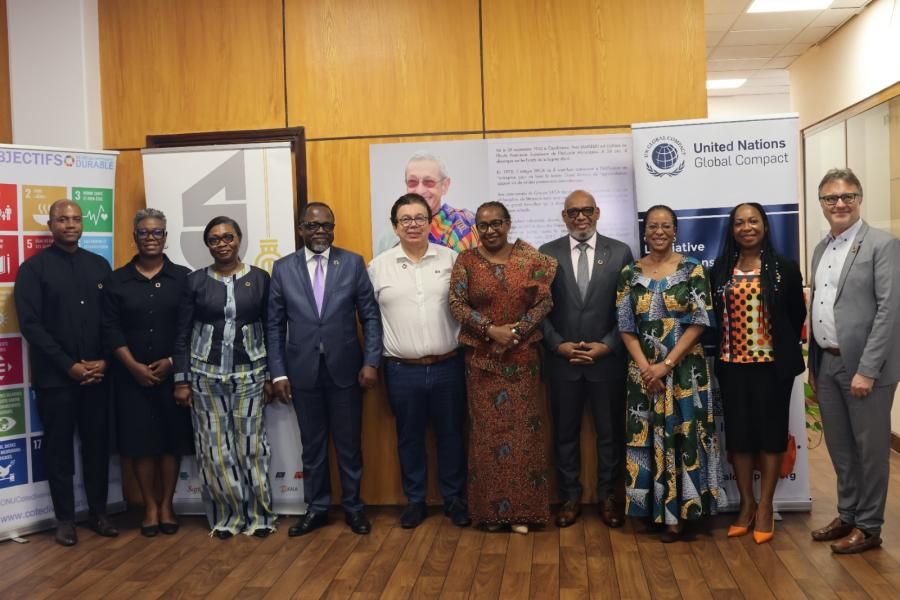
Côte d’Ivoire’s largest agro-industrial companies are increasingly positioning sustainability as a core business strategy, with the SIFCA Group formally joining the United Nations Global Compact as the country seeks to strengthen private sector participation in achieving the Sustainable Development Goals (SDGs).
The membership, announced in Abidjan on 22 January 2026, makes SIFCA one of nearly 40 companies participating in Côte d’Ivoire’s rapidly expanding Global Compact initiative. Operating across strategic agricultural value chains including oil palm, natural rubber and sugar, the group’s decision reflects growing recognition among African corporates that environmental, social and governance (ESG) performance is becoming increasingly linked to competitiveness, investment attractiveness and long-term business resilience.
 According to the United Nations Global Compact, the initiative encourages companies to align their operations with ten universally recognised principles covering human rights, labour standards, environmental protection and anti-corruption while contributing to the achievement of the 17 Sustainable Development Goals. Since its launch by former United Nations Secretary-General Kofi Annan in 2000, the Global Compact has grown into the world’s largest corporate sustainability initiative, bringing together more than 25,000 businesses and non-profit organisations across 167 countries.
For Côte d’Ivoire, SIFCA’s membership reinforces a broader national effort to embed sustainability within private sector development. The United Nations System has increasingly positioned businesses as essential partners in supporting the country’s economic transformation agenda, recognising that achieving national development priorities will require greater mobilisation of private investment alongside public policy.
SIFCA employs approximately 33,000 people across its operations and remains one of West Africa’s largest agribusiness groups. According to the company’s Director of Communication and Sustainable Development, Henriette Billon, the business seeks to balance commercial growth with environmental stewardship and social inclusion through investments that benefit employees, surrounding communities and local economies.
Chairman Alassane Doumbia said joining the Global Compact demonstrates the company’s intention to strengthen responsible business practices while contributing to solutions addressing climate, social and economic challenges affecting the region.
The development comes as sustainability expectations continue to evolve across global agricultural markets. Export-oriented producers increasingly face stricter requirements relating to supply chain transparency, deforestation, biodiversity protection, labour standards and climate disclosures. Companies able to demonstrate credible ESG performance are expected to improve access to international markets, sustainability-linked finance and long-term commercial partnerships.
Côte d’Ivoire occupies a strategically important position within global agricultural supply chains as the world’s largest cocoa producer and a major exporter of palm oil, rubber and other agricultural commodities. As global investors and buyers increasingly incorporate sustainability criteria into procurement and financing decisions, responsible production practices are becoming central to maintaining export competitiveness.
The Global Compact’s expansion within Côte d’Ivoire has been particularly rapid. Since officially launching operations in the country in October 2023, membership has increased from five companies to around 40, laying the foundation for the establishment of an official Global Compact Country Network expected during 2026.
According to United Nations Resident Coordinator Hélène N’Garnim-Ganga, integrating sustainability into business strategy has become both an ethical responsibility and an economic necessity. She noted that companies embracing responsible business models are demonstrating how the private sector can contribute directly to achieving the Sustainable Development Goals while strengthening long-term economic performance.
Membership of the Global Compact provides participating companies with access to international sustainability expertise, executive training through the Global Compact Academy, peer-learning platforms and specialised accelerator programmes supporting implementation of the SDGs. These resources are increasingly viewed as valuable tools for strengthening corporate governance, improving ESG reporting and responding to growing regulatory expectations across international markets.
Dominique Kadja, Country Director of the Global Compact in Côte d’Ivoire, said SIFCA’s participation strengthens the emerging national sustainability ecosystem by providing the company with structured support to enhance sustainability management, improve transparency and contribute to broader advocacy initiatives promoting responsible business conduct.
The significance of SIFCA’s membership extends beyond corporate governance. Agriculture remains one of Côte d’Ivoire’s largest employers and a major contributor to export earnings, making sustainable production practices critical for economic stability, environmental conservation and rural livelihoods. Large agribusinesses possess considerable influence over farming systems, natural resource management and value chain standards that affect thousands of producers across the country.
Across Africa, private sector engagement is increasingly recognised as a central pillar of sustainable development financing. Public resources alone remain insufficient to deliver the continent’s climate adaptation, infrastructure and social development objectives, prompting governments and multilateral institutions to encourage greater corporate participation in national development priorities.
 The expansion of the Global Compact in Côte d’Ivoire aligns closely with the African Union’s Agenda 2063, particularly aspirations to build diversified economies, strengthen industrial competitiveness, promote sustainable natural resource management and enhance partnerships between governments and the private sector.
As African economies face mounting pressure to reconcile economic growth with climate resilience and social inclusion, initiatives such as the Global Compact are becoming an increasingly important mechanism for aligning business investment with broader development objectives. SIFCA’s decision illustrates how large African corporations are beginning to view sustainability not as a compliance exercise, but as a strategic component of long-term competitiveness within evolving global markets.


