


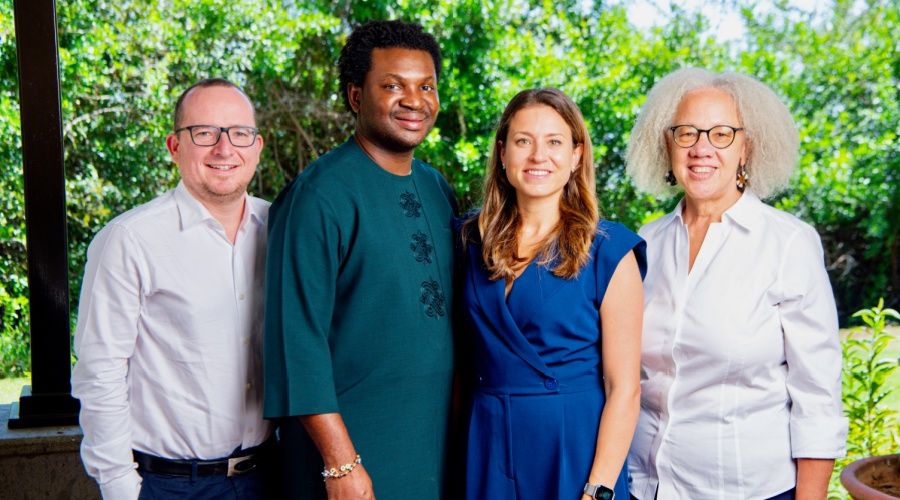
Africa-focused venture capital firm Catalyst Fund has raised $30 million at the second close of its inaugural Catalyst Climate Resilience Fund I, strengthening financing for early-stage climate technology companies developing solutions to some of the continent’s most pressing adaptation challenges. The latest commitments, announced this week, come from a coalition of development finance institutions, philanthropic organisations and private investors seeking to accelerate commercially viable innovations in agriculture, financial services, energy, water and mobility as climate risks intensify across Africa.
The Nairobi-based investor, established in 2016, said the new capital will target startups from pre-seed through Series A, combining equity financing with operational support designed to help young businesses strengthen products, attract customers and secure follow-on investment. According to Catalyst Fund, the financing arrives at a time when climate shocks are increasingly disrupting food production, infrastructure, energy access and supply chains across the continent, creating growing demand for technologies that improve resilience rather than simply mitigate emissions.
 The fund reflects a broader shift in African climate finance, where adaptation is beginning to receive greater attention after years in which investment largely favoured renewable energy generation and carbon reduction projects. While Africa contributes only a small share of global greenhouse gas emissions, it remains among the regions most exposed to climate-related economic losses, including prolonged droughts, destructive floods, declining agricultural productivity and increasing pressure on already fragile public infrastructure.
Catalyst Fund said its investment strategy focuses on businesses capable of delivering practical solutions that respond directly to these vulnerabilities. Its portfolio already includes Kenya-based Keep It Cool, which uses solar-powered cold-chain infrastructure to reduce post-harvest food losses; Tanzania’s MazaoHub, which applies artificial intelligence and soil analytics to improve agricultural decision-making; and Egypt-based Bekia, a digital recycling marketplace connecting households with waste collection services.
Unlike conventional venture capital models, Catalyst Fund combines financial investment with venture-building support delivered through its general partner, BFA Global. According to the firm, startups receive technical assistance across strategy development, product refinement, recruitment, commercial partnerships, fundraising preparation and operational scaling. The approach seeks to address one of the structural weaknesses facing African technology ecosystems, where promising companies often struggle to access specialised business support after receiving initial capital.
Read also: https://www.esgtoday.com/catalyst-fund-raises-30-million-to-back-climate-tech-startups-in-africa/
Founder and General Partner Maelis Carraro said climate adaptation is emerging as one of the defining investment themes for Africa over the coming decade because communities are already experiencing the economic consequences of changing weather patterns. She said the latest fundraising milestone would allow the firm to expand support for entrepreneurs developing scalable responses to climate-related challenges while continuing to provide hands-on operational assistance alongside financing.
The second close attracted commitments from the International Finance Corporation (IFC), FASA, Shell Foundation, Trafigura Foundation, Speedinvest, Blink Impact and the Women Entrepreneurs Finance Initiative (We-Fi), illustrating the increasingly blended nature of climate finance in Africa. Rather than relying on traditional venture capital alone, many adaptation-focused funds now combine development finance institutions, philanthropic investors and commercial capital to absorb early-stage risk while attracting additional private investment over time.
The IFC said its participation reflects growing recognition that climate resilience and private sector development are becoming increasingly interconnected across emerging markets. According to IFC Global Director for Disruptive Technologies, Services and Funds Farid Fezoua, investments through Catalyst Fund are helping entrepreneurs strengthen livelihoods, expand access to essential services and create employment opportunities in underserved communities while building businesses capable of attracting further private capital.
The financing also highlights changing priorities within Africa’s startup ecosystem. Climate technology has historically represented a relatively small share of venture investment on the continent compared with fintech, e-commerce and digital payments. However, investors are increasingly recognising that climate resilience intersects directly with sectors already central to African economic development, including agriculture, logistics, financial inclusion and urban infrastructure.
According to the Global Center on Adaptation and several international development institutions, Africa faces an annual climate adaptation financing gap measured in tens of billions of dollars. While public finance remains essential for large-scale infrastructure and disaster resilience, private investment is expected to play an increasingly important role in supporting technologies that improve productivity, reduce resource losses and strengthen household resilience against climate shocks.
 The expansion of adaptation-focused venture financing may also contribute to strengthening Africa’s broader innovation ecosystem. By supporting locally developed technologies designed around African operating conditions, investors can help reduce dependence on imported solutions while encouraging businesses capable of responding to local environmental and economic realities. Such investments also create opportunities for new markets in climate-smart agriculture, distributed energy, circular economy services and water management.
Catalyst Fund said it expects to reach a final close for the Climate Resilience Fund later this year. If achieved, the fund would further reinforce growing investor confidence that climate adaptation is becoming not only a development priority but also an emerging commercial opportunity, with African entrepreneurs increasingly positioned to build technologies that respond to some of the continent’s most immediate climate and economic challenges.


