


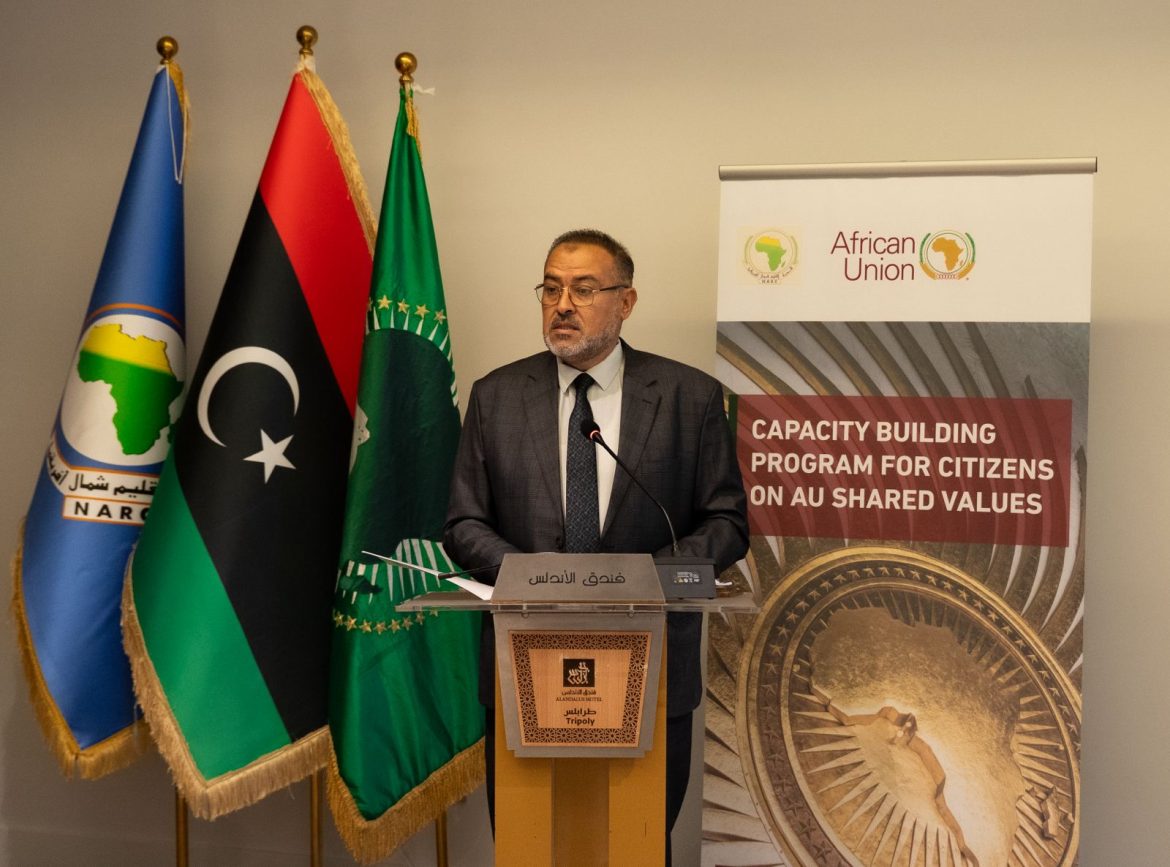
The African Union Peace and Security Council (PSC) has renewed its support for a Libyan-led political transition, urging the country’s rival institutions to accelerate national reconciliation, reunify state institutions and create conditions for credible elections, while warning that prolonged instability continues to undermine economic recovery, regional security and development across North Africa and the Sahel. The position was adopted during the PSC’s 1351st meeting held on 9 June 2026, where African and United Nations officials reviewed progress and persistent challenges facing Libya more than a decade after the country’s political fragmentation began.
In its communiqué, the Council acknowledged progress made through ongoing diplomatic engagement, including the adoption of Libya’s Charter for Peace and National Reconciliation, while encouraging remaining stakeholders to formally endorse and implement the agreement. According to the PSC, the Charter provides an important foundation for rebuilding political legitimacy, strengthening social cohesion and establishing institutions capable of supporting long-term stability. The Council reaffirmed that the 2015 Libyan Political Agreement, the 2020 Libyan Political Dialogue Forum roadmap and the United Nations’ 2025 political roadmap remain the principal frameworks for resolving the country’s political crisis through inclusive dialogue rather than military confrontation.
 The Council also welcomed recent confidence-building measures between Libya’s rival security institutions, including the joint military exercise held in Sirte in March 2026 involving forces from Eastern and Western Libya. According to the communiqué, these engagements demonstrate growing cooperation between previously divided military structures and reinforce the importance of continuing the work of the 5+5 Joint Military Commission. The PSC emphasised that reunifying defence and security institutions under legitimate civilian authority remains essential for sustaining the ceasefire, implementing disarmament and restoring national governance.
Economic governance emerged as another central concern. The Council welcomed the April 2026 agreement on a unified national budget reached between representatives of the House of Representatives and the High Council of State under the auspices of the Central Bank of Libya, urging rapid implementation to improve public services and living conditions. At the same time, it expressed concern that institutional fragmentation continues to weaken fiscal management, calling for greater transparency and accountability in managing Libya’s economy and public finances.
The economic implications extend beyond Libya itself. Despite possessing Africa’s largest proven oil reserves, recurring institutional disputes have periodically disrupted hydrocarbon production and exports, affecting government revenues and contributing to uncertainty in regional energy markets. Stable oil production remains important not only for Libya’s fiscal recovery but also for neighbouring economies that depend on cross-border trade, labour mobility and commercial links with the country. Restoring institutional coherence could improve investor confidence while creating more predictable conditions for infrastructure rehabilitation and private sector investment.
The PSC also reiterated its rejection of foreign interference in Libya’s internal affairs, calling for the orderly withdrawal of all foreign forces, mercenaries and foreign fighters in accordance with existing ceasefire arrangements. According to the Council, sustained external military involvement continues to complicate national reconciliation and delays the restoration of fully sovereign national institutions. The PSC requested continued political support from the African Union and the international community for implementing the ceasefire and advancing security sector reforms.
Beyond political reconciliation, the Council drew attention to wider structural drivers of instability. It called for greater investment in youth employment, economic diversification and community-based peacebuilding, recognising that durable peace requires broader socioeconomic transformation alongside political agreements. According to the communiqué, strengthening local reconciliation initiatives can complement national political processes by rebuilding trust at community level while reducing incentives for renewed conflict.
Migration and humanitarian protection also featured prominently during the discussions. The Council expressed concern over continued reports of arbitrary detention, abuse and gender-based violence affecting African migrants and refugees transiting through Libya. It called on Libyan authorities to strengthen protection measures while requesting the African Union, United Nations and European Union to reactivate their Tripartite Task Force on Migration. The PSC further reiterated earlier proposals for appointing an African Union Special Envoy on Migration to strengthen continental coordination on migration governance.
In a notable expansion of its policy focus, the Council also highlighted climate resilience as an emerging peace and security issue. It called for greater investment in water management, climate adaptation and sustainable resource governance across Libya and the wider North African and Sahel regions, recognising that environmental degradation, water scarcity and climate pressures increasingly interact with conflict, displacement and economic vulnerability. Integrating climate resilience into peacebuilding strategies reflects growing recognition across Africa that environmental risks are becoming inseparable from long-term governance and development planning.
The PSC further welcomed cooperation with the United Nations Support Mission in Libya and reaffirmed the importance of stronger coordination between the African Union, United Nations and international partners. It requested continued support for preparations toward national elections and reiterated plans for a future Peace and Security Council field mission to Libya aimed at strengthening engagement with national stakeholders and assessing progress on the ground.
 For Africa, Libya’s transition carries significance beyond national borders. The country occupies a strategic position linking North Africa, the Sahel and the Mediterranean, making its stability central to regional trade, migration management, energy security and transnational security cooperation. Progress toward unified governance and accountable institutions could improve economic integration, strengthen border management and reduce pressures associated with irregular migration and organised crime. Conversely, prolonged instability would continue to generate spillover risks affecting neighbouring economies and wider continental development objectives.
The latest communiqué signals that the African Union intends to maintain an active role in Libya’s transition while reinforcing African ownership of the peace process. Whether the recent political, military and economic agreements evolve into lasting institutional reforms will ultimately determine Libya’s capacity to restore stability, rebuild investor confidence and contribute more fully to regional economic development.


