


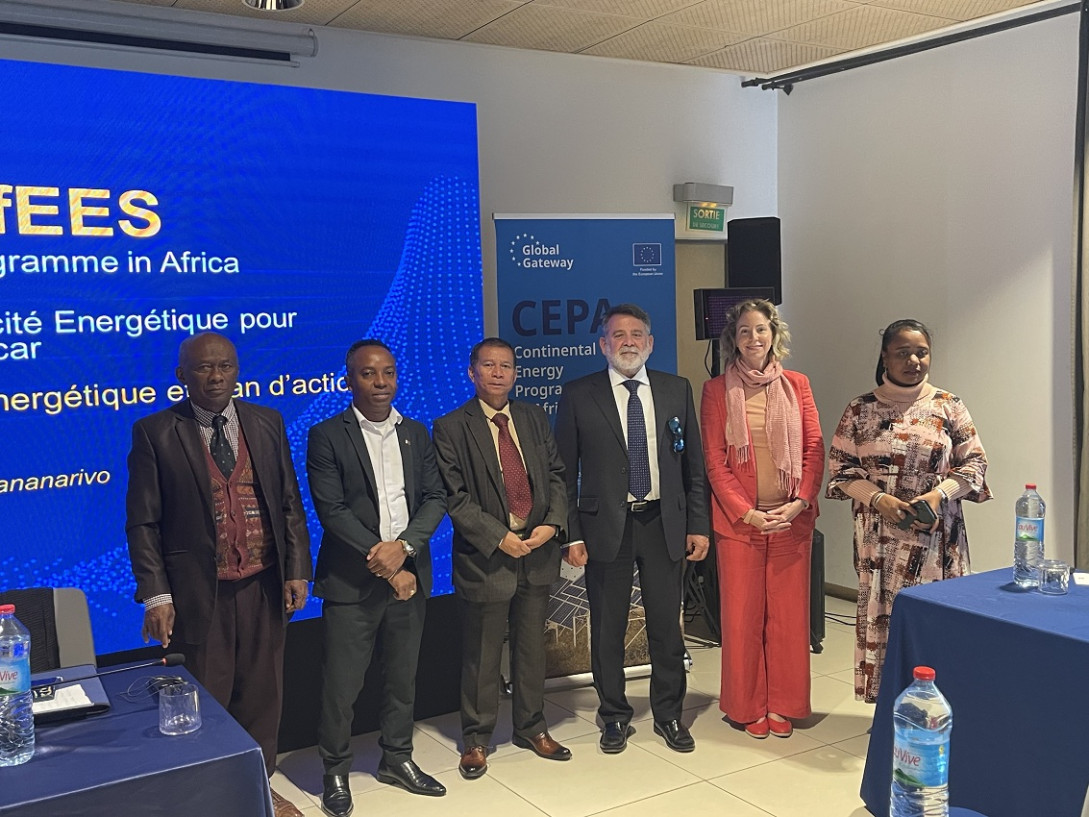
Madagascar has validated its National Energy Efficiency Strategy and Action Plan (NEESAP) and new Energy Performance in Buildings (EPB) Guidelines, becoming the first country among the European Union-supported Continental Energy Programme in Africa (CEPA) pilot countries to complete this stage of the energy-efficiency planning process. The validation, conducted on 30 June 2026 in Antananarivo, brings together the Malagasy government, the African Energy Commission (AFREC), the European Union and national stakeholders as the country moves towards implementing measures aimed at reducing energy consumption, improving infrastructure efficiency and creating new investment opportunities.
The milestone comes as African economies face growing pressure to expand energy access while managing rising demand, fiscal constraints and climate-related risks. For Madagascar, where energy supply challenges have constrained economic activity and household welfare, improving efficiency represents an opportunity to reduce pressure on electricity systems, lower operational costs for businesses and strengthen energy security. The validation workshop, held at Hôtel ibis Antananarivo Ankorondrano, brought together approximately 60 representatives from government institutions, the National Energy Efficiency Committee, the national utility JIRAMA, private sector organisations, financial institutions, development partners, civil society and academia. The discussions focused on moving energy efficiency from policy design into implementation and investment.
According to the African Energy Commission (AFREC), the specialised energy institution of the African Union responsible for advancing continental energy efficiency objectives, Madagascar’s progress represents an important step in translating Africa-wide energy ambitions into country-level strategies. The country is among four CEPA AfEES pilot countries, alongside Senegal, Burundi and Zimbabwe, receiving technical support to develop national energy efficiency frameworks. The programme is implemented under the African Energy Efficiency Strategy (AfEES) pillar of CEPA, the European Union’s technical assistance programme supporting Africa’s energy transformation agenda. CEPA works alongside other continental initiatives, including the African Single Electricity Market (AfSEM) and the Continental Power System Master Plan (CMP), with the objective of strengthening integrated, resilient and sustainable energy systems across Africa.
Madagascar’s energy efficiency framework was developed through collaboration between the Ministry of Energy and Hydrocarbons, AFREC, the European Union Delegation to Madagascar and the Stantec-led CEPA AfEES consulting consortium. The process included technical modelling, stakeholder consultations and policy assessments designed to identify opportunities across key economic sectors. The strategy introduces measures covering industrial energy use, commercial and public buildings, household appliances, clean cooking, transport and electricity supply systems. It also includes Energy Performance in Buildings Guidelines and minimum energy performance standards designed to establish technical requirements for improving building efficiency.
Buildings represent a growing area of focus in Africa’s energy transition as urbanisation accelerates and demand for cooling, lighting and appliances increases. Establishing energy performance standards can help reduce long-term energy costs, improve construction practices and support more efficient use of electricity infrastructure. One of the key outcomes of the validation process was the introduction of a public-building certification tool through Minimum Energy Performance Requirements (MEPRs) and an Energy Performance Building Scorecard. The initiative provides Madagascar with its first structured approach for assessing and improving energy performance in public facilities.
The strategy is also linked to wider investment opportunities under the European Union’s Global Gateway initiative. Through Global Gateway, the European Union aims to mobilise public and private investment in sustainable infrastructure between 2021 and 2027, including significant financing support for Africa through the Africa–Europe Investment Package. For Madagascar, the connection between energy efficiency planning and financing mechanisms will be critical. Developing strategies and standards is only the first step; implementation will require access to capital, institutional coordination and private sector participation. Energy efficiency projects often require upfront investment but can generate long-term savings through reduced energy consumption and improved system performance.
 https://www.aecweek-registration.com/2026/
The country’s experience also reflects a broader continental challenge. African nations are seeking to increase energy access while transitioning towards lower-carbon and more resilient systems. Improving efficiency can reduce the amount of additional generation capacity required to meet demand growth, helping governments manage infrastructure costs while supporting economic expansion. The role of utilities such as JIRAMA will be central during implementation. Improving grid efficiency, reducing technical losses and integrating demand-side management measures could support more reliable electricity services for households and businesses. The validation of Madagascar’s NEESAP and EPB Guidelines therefore represents a shift from planning towards execution. The next phase will involve translating policy commitments into bankable projects, developing financing structures and strengthening coordination among government agencies, investors and development partners.
As African countries advance their energy transition strategies, Madagascar’s approach provides an example of how national reforms can connect with continental frameworks and international financing mechanisms. The effectiveness of the strategy will ultimately depend on implementation capacity, investment mobilisation and the ability to deliver measurable improvements in energy efficiency across the economy.


