


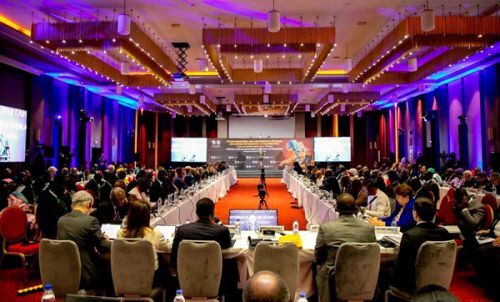
Africa’s critical mineral resources could become a foundation for industrial transformation if countries move beyond exporting raw materials and develop domestic processing, manufacturing and energy systems, according to U.S. Treasury Deputy Assistant Secretary for Investment, Energy and Infrastructure Jeremy Wiggins. Speaking at the Ministerial Forum on Critical Minerals, Value Chains and Beneficiation held in Abidjan on July 10, Wiggins argued that Africa must capture a larger share of the economic value generated by minerals essential to the global energy transition.
The forum, organised by the African Development Bank (AfDB), brought together African ministers responsible for mining, energy and industry, alongside representatives from the African Union Commission, the African Continental Free Trade Area (AfCFTA) Secretariat, regional financial institutions and private investors. Discussions focused on how African economies can convert mineral wealth into industrial capacity, employment opportunities and stronger participation in global supply chains.
Africa holds nearly 30% of the world’s critical mineral reserves, including cobalt, lithium, graphite, copper and other resources required for batteries, electric vehicles, renewable energy technologies, semiconductors and digital infrastructure. However, the continent currently captures less than 1% of the global value generated from the manufacturing of energy technologies linked to these minerals.
“For too long, the dominant model has been to extract the ore, export it in raw form and process it elsewhere,”Wiggins said, highlighting a longstanding structural challenge in Africa’s resource economy.
The issue reflects a broader pattern across many African mining economies, where mineral exports generate foreign exchange but often create limited domestic industrial capacity. While mining contributes significantly to government revenues in several countries, limited refining, processing and manufacturing capacity means much of the higher-value activity takes place outside the continent. The push for beneficiation processing minerals closer to where they are extracted has become a central theme in Africa’s economic transformation agenda. Countries such as the Democratic Republic of Congo, Zambia, Zimbabwe and Namibia have increasingly focused on developing local value chains around strategic minerals rather than relying solely on exports of unprocessed resources.
The global competition for critical minerals has intensified as countries seek secure supplies for clean energy technologies. China currently dominates several stages of global mineral processing and refining, accounting for a significant share of strategic mineral refining capacity. This concentration has raised concerns among governments and industries about supply chain resilience. Wiggins said the United States supports a model where African countries expand processing capacity through investment partnerships, improved regulation and infrastructure development. Rather than discouraging foreign participation, he argued that international investment should contribute to stronger local industrial ecosystems.
Washington’s approach is built around three priorities: addressing infrastructure constraints, improving regulatory transparency and creating partnerships that support industrial development. The African Development Bank estimates that the continent faces an annual infrastructure financing gap of between $68 billion and $108 billion, limiting the ability of economies to develop manufacturing and processing industries. Infrastructure remains one of the most significant barriers to mineral industrialisation. Processing facilities require reliable transport networks, ports, power systems and digital infrastructure. Without these foundations, countries often struggle to compete in global value chains even when they possess significant mineral resources.
Several initiatives are already targeting these constraints. The United States has supported infrastructure financing linked to the Lobito Corridor, including a $550 million loan from the U.S. International Development Finance Corporation. The rail corridor connects mineral-producing regions in Central Africa with Atlantic export routes and is expected to improve trade connectivity. Energy access is another critical factor shaping Africa’s ability to industrialise mineral resources. Wiggins noted that no economy has achieved industrial development without access to abundant, reliable and affordable energy. For mineral processing industries, electricity availability directly influences competitiveness and investment decisions.
Africa’s energy challenge is therefore closely linked to its industrialisation ambitions. While countries are expanding renewable energy deployment, many industrial projects require consistent power supply at competitive prices. Policymakers increasingly face the challenge of balancing energy transition objectives with the immediate infrastructure requirements of economic growth. The discussion also highlighted the importance of governance and investment frameworks. Wiggins argued that strong regulatory systems are not barriers to investment but essential foundations for sustainable capital flows. Transparent licensing processes, predictable policies and effective institutions remain important factors influencing investor confidence.
African Development Bank President Sidi Ould Tah also called for critical minerals to become drivers of industrial development and employment creation rather than remaining primarily export commodities. He said the bank would continue strengthening financial guarantees, supporting project preparation and mobilising African capital through initiatives such as the New African Financial Architecture for Development. For African economies, the critical minerals opportunity extends beyond mining revenues. Developing local processing industries could support manufacturing growth, create skilled employment and strengthen participation in sectors linked to the global energy transition.
However, achieving this transformation will require coordinated action between governments, investors, development institutions and regional trade frameworks. Mineral-rich countries will need to address infrastructure gaps, develop technical skills, strengthen environmental governance and create investment conditions that encourage long-term industrial commitments.
https://www.aecweek-registration.com/2026/
The Abidjan forum reflects a changing global conversation around Africa’s role in the energy transition. The continent’s challenge is no longer only attracting investment into resource extraction but ensuring that mineral wealth contributes to domestic economic transformation. As demand for critical minerals continues to grow, Africa’s strategic advantage will depend on whether it can move from being a supplier of raw materials to becoming a competitive participant across the full value chain — from extraction and processing to manufacturing and innovation.


