


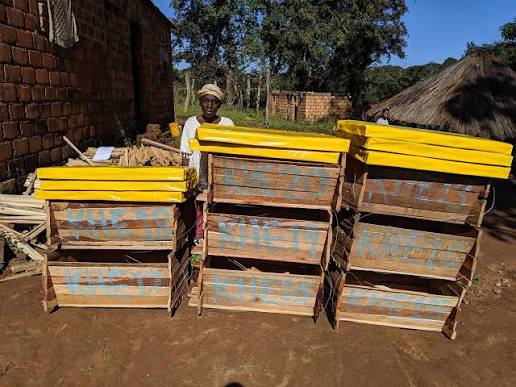
Castel Malawi has expanded its environmental and community investment programme by providing modern beekeeping equipment to communities surrounding the Lunyangwa catchment in Mzuzu, Northern Malawi, as part of a broader effort to strengthen rural livelihoods while supporting the long-term protection of one of the region’s most important water catchments. The initiative seeks to promote sustainable income generation through apiculture while creating economic incentives for communities to conserve forests and biodiversity that underpin both honey production and local water security.
The intervention reflects a growing recognition across Africa that conservation and economic development are increasingly interdependent. Rather than relying solely on regulatory protection of environmentally sensitive areas, governments, businesses and development partners are increasingly supporting livelihood models that encourage communities to derive economic value from healthy ecosystems. Sustainable beekeeping has emerged as one such nature-based enterprise because it generates household income without requiring forest clearance or intensive land conversion, while simultaneously supporting pollination and ecosystem health.
 According to Castel Malawi, the donated equipment will enable beneficiary households to establish or expand honey production as a sustainable source of income. Unlike extractive land uses that contribute to environmental degradation, beekeeping depends on the preservation of forests, flowering vegetation and healthy biodiversity. As a result, communities become direct stakeholders in protecting natural habitats that sustain bee populations and maintain agricultural productivity.
The Lunyangwa catchment plays a strategically important role in Northern Malawi by supplying water to Mzuzu’s growing urban population while supporting surrounding ecosystems and agricultural activities. However, increasing population growth, changing land-use patterns and pressure on forest resources have heightened concerns over catchment degradation, threatening both water availability and ecological stability. Protecting such catchments has therefore become an increasingly important component of climate adaptation and natural resource management strategies.
Nature-based livelihood initiatives such as beekeeping are being promoted as practical mechanisms for reducing dependence on activities that accelerate deforestation, including unsustainable charcoal production, fuelwood harvesting and agricultural encroachment. By providing alternative income opportunities, these programmes can help reduce environmental pressures while strengthening household resilience to economic and climate-related shocks.
According to development practitioners, modern apiculture has gained increasing policy support across Malawi because of its contribution to both rural development and environmental conservation. Government agencies and development organisations have invested in training, improved production techniques and market access to strengthen the sector, recognising that healthy bee populations also contribute significantly to crop pollination, food production and ecosystem restoration. These multiple environmental and economic benefits position beekeeping as an important component of broader landscape restoration efforts.
Castel Malawi indicated that the initiative forms part of its wider corporate sustainability programme, which combines environmental stewardship with community development. In recent years, private sector participation in conservation initiatives has expanded as companies increasingly integrate environmental considerations into long-term business strategies while responding to growing stakeholder expectations around sustainability and corporate responsibility.
The programme also illustrates the evolving role of private capital in supporting sustainable development objectives. Across Africa, businesses are increasingly partnering with local communities, governments and development organisations to implement projects that contribute to climate resilience, biodiversity conservation and inclusive economic growth. Such investments are becoming increasingly relevant as public resources alone remain insufficient to finance the scale of environmental restoration and adaptation required across the continent.
For Malawi, strengthening community-based conservation initiatives carries broader economic significance. Healthy catchments reduce long-term water treatment costs, support agricultural productivity and improve resilience to climate variability, while diversified rural livelihoods help reduce poverty and strengthen local economies. Protecting ecosystem services that underpin water supply and food production also contributes to national development objectives by safeguarding critical natural assets upon which multiple sectors depend.
 The initiative aligns with wider regional efforts to integrate biodiversity conservation into economic planning, recognising that Africa’s natural capital represents an important foundation for long-term development. As governments pursue greener growth pathways, community-centred approaches that combine conservation with income generation are increasingly viewed as essential for balancing environmental protection with social and economic priorities.
By supporting sustainable beekeeping around the Lunyangwa catchment, Castel Malawi is contributing to a model of conservation that links environmental stewardship directly with local economic opportunity. As climate pressures and resource constraints intensify across Africa, similar approaches may play an increasingly important role in strengthening rural resilience while preserving ecosystems that support water security, agricultural production and sustainable development.


