


French agro-industrial group SOMDIA is investing CFA100 billion ($173.8 million) over five years in Côte d’Ivoire as the company expands its agricultural footprint beyond sugar production into maize processing and industrial value-chain development. The investment programme, implemented through its subsidiary Sucrerie africaine de Côte d’Ivoire (SUCAF-CI), is expected to strengthen national sugar production, expand alcohol processing capacity and establish a structured maize value chain.
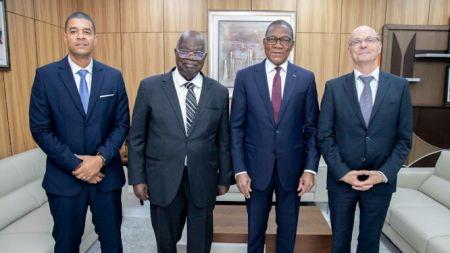
The agreement was presented during a July 10 meeting between Côte d’Ivoire’s Minister of Agriculture Bruno Koné and SOMDIA Chief Executive Officer Olivier Parent. While specific project timelines and technical details have not yet been disclosed, Ivorian authorities said the investment forms part of efforts to increase domestic agricultural production, support industrial processing and improve value addition within the country’s food economy. The investment reflects Côte d’Ivoire’s broader strategy of developing agro-industrial capacity as the country seeks to move beyond the export of agricultural commodities and strengthen domestic manufacturing. Agriculture remains a central pillar of the Ivorian economy, with major exports including cocoa, coffee, rubber and cashew, but policymakers have increasingly prioritised processing industries that retain more economic value locally.
For SOMDIA, the latest commitment expands an existing presence in Côte d’Ivoire’s sugar sector while introducing a new focus on maize production and processing. The company’s approach reflects a growing trend among African agricultural investors to develop integrated value chains combining farming, processing, logistics and market access. The maize component builds on earlier plans by SOMDIA to establish industrial maize production capacity in Côte d’Ivoire. In 2019, SUCAF-CI announced the creation of the Ivorian Farming Company (CFI), an initiative aimed at developing commercial maize production. The group later included maize processing among its strategic priorities under its “Cap 2027” development programme.
In 2024, SOMDIA announced plans to develop a maize processing plant in Côte d’Ivoire with an expected annual capacity of 15,000 tonnes. The project had reportedly been under development for several years but experienced delays, partly due to disruptions caused by the Covid-19 pandemic. The renewed focus on maize is supported by SOMDIA’s existing industrial experience elsewhere in Africa. In Cameroon, the group operates Compagnie Fermière Camerounaise (CFC), which runs a maize processing facility inaugurated in 2021. The plant produces maize gritz for breweries, food-grade flour and products used in animal feed.
This experience could provide a foundation for SOMDIA’s expansion into Côte d’Ivoire’s maize sector, where demand for processed agricultural products continues to grow alongside population growth, urbanisation and changing consumption patterns. The investment also reinforces SUCAF-CI’s role in Côte d’Ivoire’s sugar industry. Established in 1997 and acquired by SOMDIA in 2010, SUCAF-CI operates two sugar complexes in Ferkessédougou in northern Côte d’Ivoire and remains the country’s largest sugar producer. The company produces more than 120,000 tonnes of commercial sugar annually under the “Princesse Tatie” brand. Its operations provide an example of an integrated agricultural model where primary production is linked with industrial processing and consumer markets.
In May 2026, SUCAF-CI expanded its industrial capacity with the inauguration of a distillery at its Ferké 2 sugar complex in the Hambol region. The facility required CFA18 billion ($32 million) in investment and has the capacity to produce 12 million litres of extra-neutral alcohol annually. The distillery uses molasses, a by-product of sugar production, to manufacture alcohol for local industries. By converting agricultural waste streams into industrial products, the facility also supports greater resource efficiency within the sugar value chain. The new five-year investment programme indicates SOMDIA’s ambition to create a broader agro-industrial platform in Côte d’Ivoire. Rather than focusing solely on agricultural production, the company is expanding into processing activities that can generate additional economic value and strengthen links between farmers, manufacturers and consumers.
For Côte d’Ivoire, attracting investments of this scale is closely linked to national goals around food security, industrialisation and employment creation. Developing processing capacity can help reduce dependence on imported products, improve market opportunities for farmers and strengthen domestic supply chains. However, successful agro-industrial expansion depends on several factors, including reliable infrastructure, access to finance, skilled labour and efficient logistics networks. Agricultural processing requires consistent supplies of raw materials, meaning stronger relationships between commercial producers and smallholder farmers will be critical.
The investment also comes at a time when African governments are seeking to increase private sector participation in agriculture. Across the continent, policymakers are focusing on value addition as a pathway to increase rural incomes, create manufacturing jobs and improve competitiveness within regional markets under the African Continental Free Trade Area. Climate resilience will also remain an important consideration for long-term agricultural investment. Changing rainfall patterns, water availability challenges and land management pressures are increasingly influencing agricultural productivity across Africa. Sustainable farming practices and efficient resource management will be important components of future agro-industrial strategies.
https://www.aecweek-registration.com/2026/
SOMDIA’s expansion in Côte d’Ivoire demonstrates how agricultural investment is increasingly shifting from commodity production towards integrated industrial models. The impact of the programme will depend on its ability to create competitive value chains that connect farmers, processors and markets while contributing to broader economic transformation. As African economies seek to strengthen food systems and industrial capacity, investments that combine agriculture, manufacturing and technology are likely to play a growing role in shaping the continent’s next phase of economic development.


