


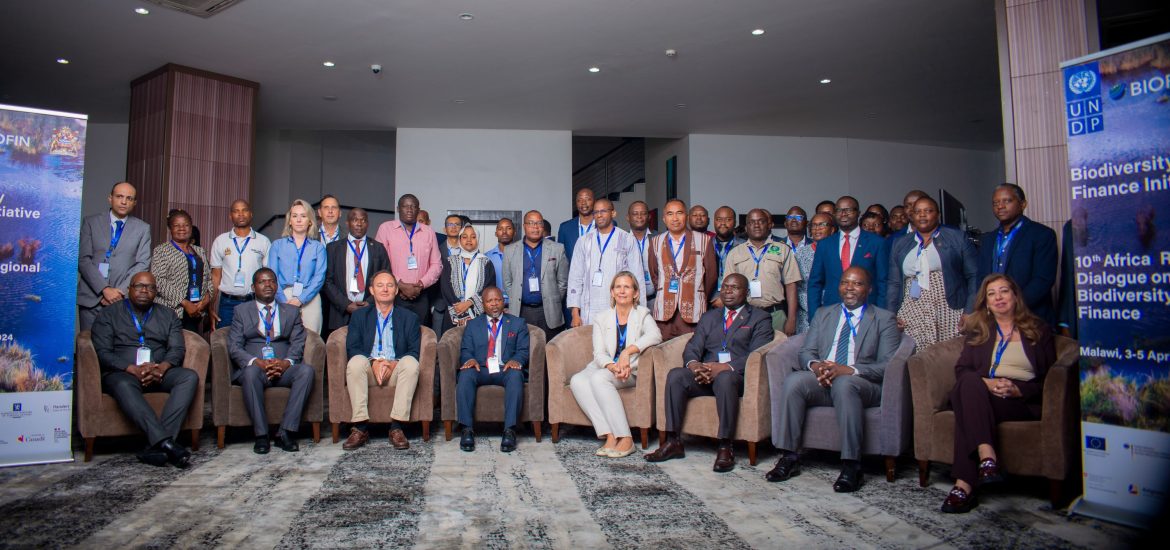
Togo has begun a comprehensive review of its biodiversity financing framework as it prepares to develop the country’s first national biodiversity finance plan, marking a significant step towards strengthening conservation investment and integrating natural capital into long-term economic planning. The process, launched during a two-day workshop in Lomé on 8 July 2026 under the United Nations Development Programme’s Biodiversity Finance Initiative (BIOFIN), brings together government institutions, financial sector representatives, development partners, researchers, civil society organisations and private sector stakeholders to identify financing gaps, evaluate existing funding mechanisms and design a more sustainable investment strategy for biodiversity protection.
The initiative reflects a broader shift across Africa towards recognising biodiversity conservation as an economic priority rather than solely an environmental obligation. As countries confront accelerating biodiversity loss, climate change and increasing pressure on natural resources, governments are seeking new financing models capable of supporting ecosystem restoration while strengthening economic resilience. According to the United Nations Development Programme, BIOFIN assists countries in assessing biodiversity finance needs, identifying funding shortfalls and mobilising both public and private capital to support conservation objectives. The programme has already been implemented in around 40 countries globally, helping mobilise approximately US$2.7 billion for biodiversity conservation initiatives.
 The review underway in Togo extends beyond validating existing policy and institutional assessments. According to Dr Nabédé Piyabalo, Chief of Staff at the Ministry of Environment, the exercise evaluates national biodiversity policies, institutional arrangements, financing mechanisms and the broader economic framework governing conservation while examining recommendations developed by technical experts to strengthen biodiversity governance. The process will also identify economic activities and subsidy structures that may be contributing to biodiversity degradation and propose reforms that improve both environmental outcomes and financing efficiency.
According to Amouzouvi Kokouvi, National Coordinator of BIOFIN–Togo, the assessment covers five strategic pillars, including biodiversity policies, ecosystem trends, financing flows, institutional responsibilities and the prioritisation of sustainable financing solutions. Together, these components are expected to provide the analytical foundation for a national finance strategy capable of attracting greater investment into ecosystem protection while supporting broader development objectives.
The initiative comes as African governments increasingly acknowledge that conventional public financing alone cannot meet the scale of investment required to halt biodiversity loss. Across the continent, ecosystems continue to face mounting pressures from agricultural expansion, infrastructure development, urbanisation, illegal resource extraction and climate-related impacts. At the same time, healthy ecosystems remain central to agricultural productivity, water security, disaster risk reduction and the livelihoods of millions of people, making biodiversity conservation an important contributor to long-term economic stability.
Developing more diversified financing mechanisms has therefore become an important policy objective. Governments are increasingly exploring blended finance, biodiversity credits, conservation trust funds, green bonds, payment for ecosystem services and private-sector participation to complement constrained public budgets. By broadening financing sources, countries can reduce dependence on traditional government expenditure while creating stronger incentives for sustainable resource management across multiple sectors of the economy.
Togo’s review also aligns with international efforts to strengthen biodiversity finance following the adoption of the Kunming-Montreal Global Biodiversity Framework, which calls for significantly increasing financial resources dedicated to protecting ecosystems and reversing biodiversity loss. Integrating biodiversity considerations into national financial systems also supports implementation of climate adaptation strategies, recognising the close relationship between ecosystem health, climate resilience and sustainable economic growth.
For Togo, the development of a national biodiversity finance plan has implications that extend beyond environmental policy. Better protection of forests, wetlands, agricultural landscapes and coastal ecosystems can strengthen food production, improve water resource management, reduce climate-related vulnerabilities and preserve ecosystem services that underpin rural livelihoods. These outcomes also contribute to fiscal resilience by lowering the long-term costs associated with environmental degradation, disaster recovery and declining natural resource productivity.
 The initiative further supports the African Union’s Agenda 2063, which identifies sustainable natural resource management and environmental resilience as key foundations for inclusive economic transformation. By creating a clearer framework for biodiversity investment and encouraging stronger collaboration between government institutions, financial organisations, development partners and private investors, Togo is positioning itself to strengthen natural capital management while improving its attractiveness to international conservation and sustainable finance initiatives.
As governments across Africa seek to balance economic development with environmental sustainability, Togo’s biodiversity finance review illustrates the growing recognition that protecting ecosystems increasingly depends not only on environmental policy but also on building financial systems capable of valuing and investing in nature as a productive economic asset.


