


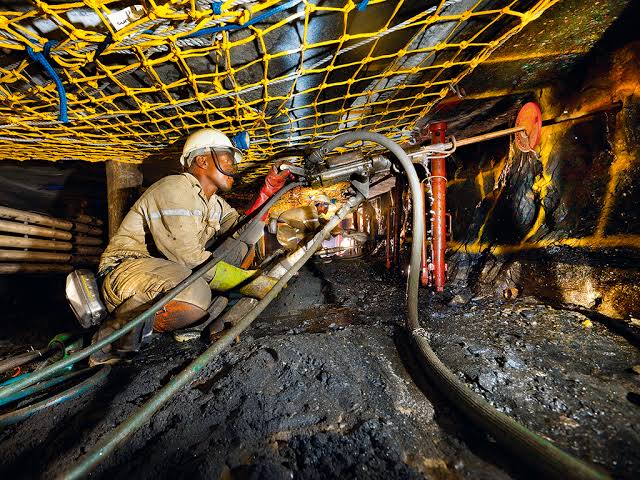
Southern Africa’s mining industry is placing greater emphasis on technical knowledge transfer, workforce development and inclusive participation as professional engineering and mining organisations expand educational programmes alongside one of the region’s leading mining exhibitions. Industry bodies, including the Southern African Institute of Mining and Metallurgy (SAIMM), the Society for Automation, Instrumentation, Mechatronics and Computer Engineering (SAIMC), the South African Institution of Mechanical Engineering (SAIMechE), and Women in Mining South Africa (WiMSA), will deliver a series of seminars, technical workshops and career initiatives designed to strengthen industry capabilities while supporting the sector’s long-term sustainability and competitiveness.
The programme extends beyond the exhibition floor by providing free access to technical presentations focused on industry best practice, emerging technologies and operational innovation. According to organisers, the initiative seeks to create opportunities for professionals, students, engineers and mining companies to engage directly with evolving technologies and practical solutions that address productivity, safety and sustainability challenges facing the sector.
The expanded technical agenda reflects broader changes taking place across Africa’s mining industry, where digital transformation, decarbonisation and responsible resource management are increasingly reshaping operational priorities. Mining companies are under growing pressure to improve productivity while reducing environmental impacts, strengthening governance standards and developing the technical skills required to manage increasingly complex operations. Knowledge-sharing platforms have therefore become an important mechanism for accelerating technology adoption and supporting continuous professional development.
The SAIMM Seminar Theatre will provide presentations on operational excellence, engineering practice and technological innovation, enabling participants to exchange experiences on practical solutions that can be implemented across mining operations. By making these sessions freely accessible, organisers aim to broaden participation and encourage the dissemination of technical expertise beyond individual companies.
Automation and digitalisation are expected to feature prominently in discussions. The workshops hosted by SAIMC highlight the growing importance of automation, instrumentation and advanced engineering systems in improving operational efficiency across mines and mineral processing facilities. According to industry analysts, digital technologies, including automation, predictive maintenance, remote monitoring and industrial data analytics, are becoming central to improving productivity while enhancing worker safety and reducing operational risks.
Mechanical engineering capabilities also remain critical to maintaining resilient mining operations. Throughout the event, SAIMechE’s Skills and Career Hub will connect students, early-career professionals and employers, reinforcing the industry’s focus on developing future technical talent. Skills shortages continue to present a structural challenge for many African mining jurisdictions, particularly as technological innovation increases demand for specialised engineering expertise. Strengthening technical education and creating clearer pathways into the profession are therefore becoming increasingly important for maintaining industrial competitiveness.
The programme also recognises the importance of improving diversity within the mining workforce. Women in Mining South Africa will host a half-day workshop dedicated to advancing the participation of women across the mining value chain. Although representation has improved over the past two decades, women remain underrepresented in many technical, operational and leadership positions within the sector. Expanding professional networks, mentorship opportunities and leadership development initiatives has become an important component of broader industry transformation strategies.
From an ESG perspective, workforce development and knowledge transfer increasingly complement environmental and governance objectives. Investors now evaluate mining companies not only on emissions reductions and environmental compliance but also on human capital development, occupational safety, diversity and institutional resilience. Building technical capability supports safer operations, strengthens governance systems and enables more effective implementation of emerging sustainability standards.
The emphasis on technical collaboration also reflects Africa’s growing role in supplying minerals required for the global energy transition. Demand for critical minerals used in renewable energy technologies, battery manufacturing and electrification is increasing international attention on African mining jurisdictions. Maintaining competitiveness will require not only resource availability but also a highly skilled workforce capable of operating increasingly sophisticated technologies while meeting international environmental and governance expectations.
 Professional institutions have an important role in supporting this transition. By providing independent technical platforms, facilitating professional accreditation and encouraging the exchange of engineering knowledge, organisations such as SAIMM, SAIMC and SAIMechE contribute to stronger institutional capacity across the mining ecosystem. This strengthens the industry’s ability to respond to evolving regulatory requirements, technological disruption and changing investor expectations.
For Africa’s mining sector, investment in technical knowledge and workforce capability is becoming as important as investment in new equipment and infrastructure. As sustainability becomes increasingly integrated into operational performance, the industry’s long-term competitiveness will depend not only on access to mineral resources but also on its ability to develop skilled professionals, adopt innovative technologies and build institutions capable of supporting responsible, resilient and inclusive mining growth.


