


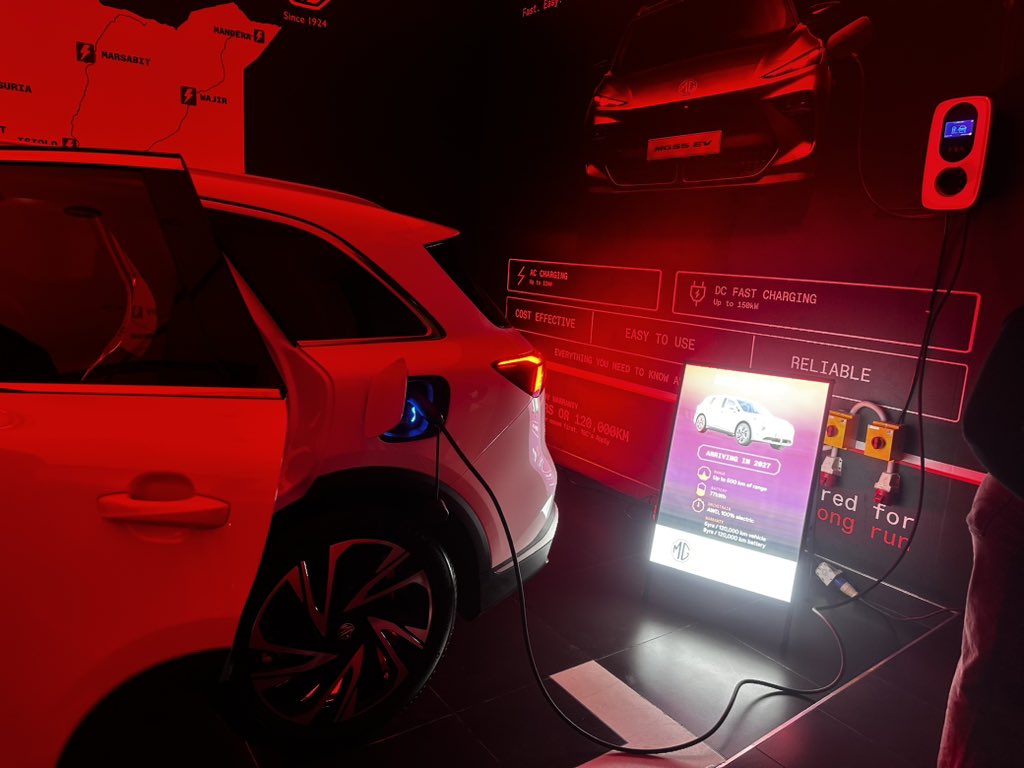
Simba Corporation plans to invest KSh1 billion in a dedicated electric vehicle assembly line at Associated Vehicle Assemblers (AVA) in Mombasa, as the company seeks to expand Kenya’s electric mobility market into private passenger cars and reduce the cost of locally assembled vehicles. The initiative, which is expected to begin in 2027 subject to sufficient sales volumes, will cover electric and petrol-powered Morris Garages (MG) models distributed by Simba Corporation in Kenya.
The investment comes as Kenya’s electric mobility market continues to expand, largely driven by electric motorcycles, public transport vehicles and commercial fleets. Private passenger electric cars have remained a smaller segment, with affordability, access to charging infrastructure and ownership costs continuing to shape consumer adoption. Simba’s planned assembly programme is intended to address part of that gap by leveraging local manufacturing incentives and existing vehicle assembly capacity.
Simba Corporation, MG’s exclusive distributor in Kenya, said local assembly could reduce vehicle prices by up to 20%, depending on production economics and the incentives available to locally assembled vehicles. The company plans to begin assembly once market demand reaches volumes sufficient to support production, meaning MG vehicles will continue to be imported as fully built units in the interim.
The proposed KSh1 billion investment will establish a dedicated electric vehicle assembly line within AVA’s existing operations in Mombasa. Rather than constructing a new manufacturing facility, Simba will leverage the infrastructure of an established vehicle assembler, potentially reducing the initial capital and operational requirements associated with entering local production.
AVA has an annual production capacity of 30,000 vehicles and has assembled passenger cars, pickups, trucks and buses. According to information published by Simba Corporation, the facility has produced more than 150,000 vehicles since its establishment. The planned MG programme will add private passenger electric vehicles to an assembly ecosystem that has increasingly attracted investment in electric mobility.
The facility also has an existing technical workforce supporting electric vehicle operations. TechMoran reported that 60 technicians at the Mombasa facility have undergone training in battery handling and electrical systems, while the production line is already assembling electric vehicles for public transport and ride-hailing operators. The MG programme would therefore build on existing technical capabilities, although the scale and requirements of private passenger vehicle assembly may differ from those of fleet-focused production.
AVA’s broader role in Kenya’s electric mobility sector is also reflected in other investments. Rideence Africa, for example, has been associated with a KSh320 million assembly project targeting electric taxis and high-roof matatus. These developments point to growing activity at the Mombasa facility, although the projects serve different vehicle segments and their production volumes should not be treated as a combined measure of output.
The expected reduction in MG vehicle prices is closely linked to Kenya’s tax treatment of imported and locally assembled vehicles. Fully built petrol and diesel vehicles attract 35% import duty and 25% excise duty, while fully built electric vehicles are subject to the same import duty and a 10% excise duty under the tax structure cited in the source. Locally assembled vehicles benefit from exemptions on import duty and excise duty under applicable incentives, providing a potential cost advantage over imported finished vehicles.
However, the extent to which these incentives translate into lower retail prices will depend on production volumes, component sourcing, assembly costs, logistics, exchange rates and pricing decisions. Local assembly does not automatically guarantee a uniform price reduction across vehicle models, but it creates an opportunity for distributors to restructure costs and potentially make electric passenger vehicles more accessible to buyers.
The investment also aligns with Kenya’s wider policy push to establish electric mobility as part of its industrialisation, transport and climate strategy. The National Electric Mobility Policy, launched in February 2026, provides a broader framework for supporting electric vehicle adoption and developing local manufacturing capacity. Government figures cited in the source put cumulative electric vehicle registrations at 39,324 by the end of 2025, compared with 1,378 in 2022.
The rapid increase in registrations reflects growing uptake across multiple vehicle categories, particularly motorcycles and commercial transport. Private electric passenger cars, however, remain a comparatively small part of the market, highlighting the importance of pricing, financing, infrastructure and consumer support in expanding adoption beyond fleet operators.
For Simba Corporation, local assembly represents a potential shift from vehicle distribution towards manufacturing, with the investment dependent on achieving the sales volumes required to sustain production. The approach also allows the company to build on AVA’s existing infrastructure and workforce rather than developing a standalone facility.
The commercial outcome will depend on whether demand for MG vehicles can reach the threshold required to justify assembly, and whether the resulting cost savings are reflected in retail prices. As Kenya’s electric mobility sector moves beyond motorcycles and commercial fleets, local assembly could become an important mechanism for widening access to private electric cars while strengthening the country’s automotive manufacturing base.