


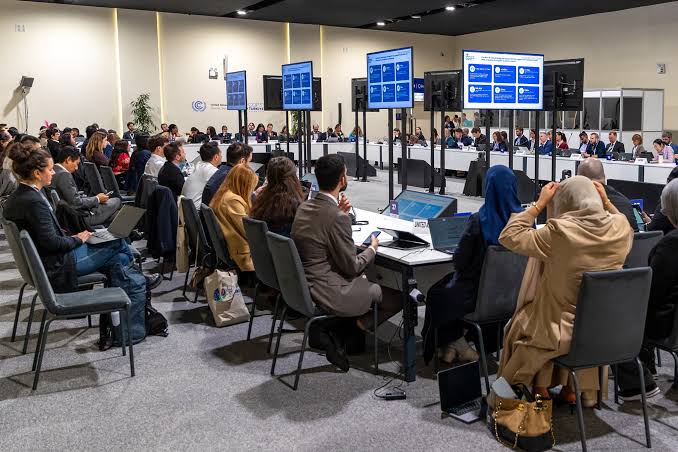
The Organization of the Petroleum Exporting Countries (OPEC) defended the continued role of fossil fuels in global energy systems at COP31 in Antalya, Türkiye, on November 18, arguing that expanding electricity infrastructure and advancing electrification remain dependent on petroleum products and diesel-powered machinery. The remarks came as climate negotiators debated stronger language on transitioning away from fossil fuels, highlighting the persistent divide between energy security priorities and efforts to accelerate decarbonisation.
OPEC Secretary General Haitham Al Ghais made the argument during a session involving observer organisations at the United Nations climate summit, where governments were negotiating the conference’s political outcome. Al Ghais said the expansion of electricity networks, including transmission infrastructure and associated construction, would continue to require petroleum-derived materials and fuel-powered equipment.
“Grid expansion requires more petroleum-derived products and diesel-powered heavy machinery,” Al Ghais said, arguing that electrification should not be treated as the sole response to global environmental challenges.

He also emphasised the role of different energy sources in meeting national development priorities, maintaining that energy systems would need to accommodate varying economic conditions, infrastructure capacities and energy security requirements. According to Al Ghais, a broader energy mix would remain necessary to support the Sustainable Development Goals and respond to differing national circumstances.
The remarks reflected OPEC’s longstanding position that climate policies should prioritise reducing emissions rather than targeting individual energy sources. The organisation has consistently argued that oil and other fossil fuels will remain part of the global energy system even as countries expand renewable energy, improve efficiency and electrify transport, industry and other sectors.
The debate at COP31, however, has evolved around proposals that initially sought to strengthen the language on fossil fuel transition. On November 16, the conference presidency circulated an early draft political decision containing a call for “accelerated action to phase out fossil fuels”. The proposal was framed alongside a reaffirmation of the commitment made at COP28 in Dubai to transition away from fossil fuels in energy systems in a just, orderly and equitable manner.
The earlier draft represented a potentially stronger formulation than the language agreed in Dubai in 2023, when countries adopted a commitment to transition away from fossil fuels without establishing a binding phaseout timetable. The proposed wording at COP31 raised the possibility of renewed political pressure for a more explicit direction on fossil fuel use, although it was not an agreed decision and remained subject to negotiations.
That position subsequently changed as negotiations progressed. A revised draft published on November 19 removed references to ending fossil fuel use, including the proposed language on accelerating the phaseout. The updated text reflected the divisions among participating governments over the pace, financing and scope of climate action. Negotiations remained ongoing ahead of the summit’s scheduled conclusion on November 20.
The removal of the language illustrated the difficulty of translating earlier global commitments into more specific political decisions. Countries remain divided over whether climate agreements should establish clearer pathways for reducing fossil fuel dependence or focus on emissions reductions, technology deployment and national implementation strategies.
OPEC’s position was also reinforced through institutional engagement during the summit. On November 18, the organisation and the Gas Exporting Countries Forum (GECF) held their fifth round of coordination talks in Antalya. The meeting was co-chaired by Al Ghais and GECF Secretary General Philip Mshelbila, with discussions covering energy policy and climate-related issues.
The engagement underscored the continued coordination between major oil and gas-producing organisations as international climate negotiations address the future of energy systems. Both organisations have maintained that energy security, economic development and emissions reduction efforts should be pursued through a range of energy sources and technologies rather than through a singular focus on eliminating fossil fuels.
The argument has broader implications for developing economies, including African countries, where energy access, industrialisation, infrastructure investment and affordability remain central policy considerations. Many countries across the continent are simultaneously expanding renewable energy capacity, strengthening electricity transmission networks, developing gas infrastructure and seeking to reduce reliance on imported fuels. The policy challenge lies in balancing these priorities with long-term climate commitments, financing requirements and the risks associated with carbon-intensive infrastructure.
The debate over electrification has also exposed differing interpretations of how the global energy transition should be measured. Expanding electricity access and consumption does not automatically translate into lower emissions if additional demand is met through fossil fuel-based generation. The effectiveness of electrification in reducing emissions therefore depends on the composition of power generation, grid investment, energy efficiency and the pace at which cleaner energy sources are integrated into electricity systems.
OPEC’s intervention at COP31 is consistent with its position during previous climate negotiations. At COP28, the organisation urged its member countries to oppose negotiating language that specifically targeted fossil fuel use, favouring provisions centred on emissions reduction instead. The Dubai conference ultimately agreed to language on transitioning away from fossil fuels, but without establishing a specific timeline for their elimination.
As COP31 negotiations approach their conclusion, the disagreement over fossil fuels remains a central test of the conference’s ability to deliver a political outcome that balances climate ambition with the competing priorities of governments. The evolving draft texts demonstrate that the debate is no longer limited to whether countries support a transition, but increasingly concerns how that transition should be defined, financed and implemented across economies with different energy needs and development trajectories.


