


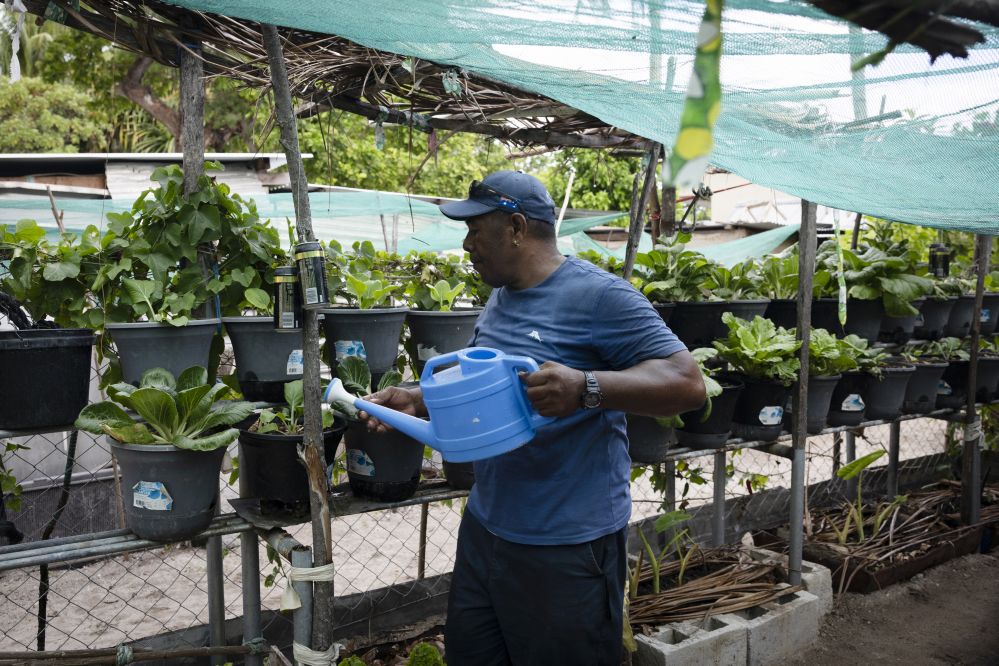
Eritrea has taken a significant step towards strengthening climate resilience and restoring degraded landscapes following the approval of an US$8.4 million investment by the Global Environment Facility (GEF). The funding will support a comprehensive five-year programme designed to improve sustainable land management, enhance biodiversity conservation and build resilience among rural communities facing the growing impacts of climate change, land degradation and food insecurity. The initiative will be implemented by Eritrea’s Ministry of Land, Water and Environment with technical support from the United Nations Development Programme (UNDP), reinforcing national efforts to safeguard natural resources while improving livelihoods across vulnerable farming communities.
The programme, titled Promoting Sustainable Land Management to Achieve Land Degradation Neutrality, Enhance Livelihoods, and Strengthen Farming Communities, adopts an integrated approach that combines ecosystem restoration, climate-resilient agriculture and strengthened governance systems. By addressing the interconnected challenges of declining soil fertility, biodiversity loss and increasing climate vulnerability, the project seeks to improve both environmental and socio-economic outcomes while supporting Eritrea’s national development priorities. The investment reflects growing international recognition that restoring degraded landscapes is essential for enhancing food security, protecting biodiversity and increasing resilience to future climate shocks.
According to the United Nations Development Programme Resident Representative, Pa Lamin Beyai, the initiative represents a strategic investment in Eritrea’s natural capital and rural communities. He noted that restoring ecosystems and promoting sustainable livelihoods would strengthen food security, improve resilience to climate change and support long-term environmental sustainability and inclusive development. His remarks underscore the importance of integrating environmental restoration with economic opportunities that directly benefit local populations while reducing pressures on fragile ecosystems.
A major component of the project focuses on strengthening governance and institutional capacity for sustainable land and water management. This includes developing integrated land-use plans, establishing gender-responsive community management committees and enhancing the technical capabilities of government institutions, agricultural extension services and local communities. By promoting inclusive decision-making and strengthening local institutions, the initiative aims to ensure that sustainable land management practices become embedded within national and community planning processes, enabling long-term environmental stewardship beyond the project’s implementation period.
On the ground, the project will restore approximately 6,294 hectares of degraded land while promoting improved land management practices across an additional 11,851 hectares of agricultural land, forests and grazing areas. These interventions are expected to enhance soil and water conservation, increase agricultural productivity and improve carbon sequestration, contributing to both local climate adaptation efforts and global environmental objectives. Improved ecosystem services will also help communities better withstand droughts and other climate-related risks that increasingly threaten agricultural production across the region.
Community development remains a central pillar of the programme. More than 25,000 people, nearly half of them women, are expected to benefit from improved ecosystem services, diversified climate-resilient livelihoods and expanded value chains in agriculture, livestock production and beekeeping. The initiative will also introduce climate-smart farming techniques and alternative income-generating activities designed to reduce dependence on degraded natural resources while strengthening household incomes and economic resilience. Such measures demonstrate the growing importance of integrating environmental restoration with inclusive rural development strategies that leave no one behind.
In addition to practical field interventions, the project will strengthen Eritrea’s national knowledge systems through improved monitoring, reporting and learning mechanisms covering land degradation, biodiversity conservation and climate-related outcomes. These systems will help government institutions track progress, document lessons learned and scale up successful approaches across the country, ensuring that evidence-based decision-making supports future environmental policies and investments. The initiative also aligns with Eritrea’s commitments under the United Nations Convention to Combat Desertification, the Kunming–Montreal Global Biodiversity Framework and national climate policies.
The programme has also mobilised more than US$30 million in co-financing from the Government of Eritrea, communities and development partners, reflecting strong collaboration in addressing environmental challenges through integrated investment. By bringing together national institutions, international organisations and local communities, the initiative illustrates how coordinated partnerships can accelerate sustainable development while strengthening resilience against climate change. As environmental pressures continue to intensify across many parts of Africa, investments of this nature provide an important model for balancing ecosystem restoration, agricultural productivity and inclusive economic development in support of both national priorities and continental sustainability ambitions.


