


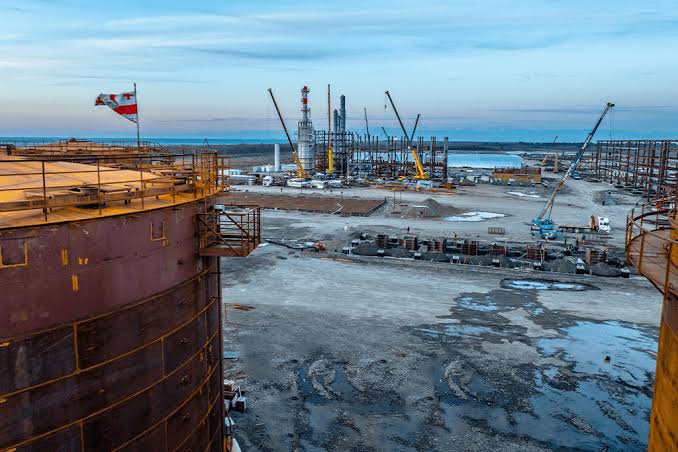
Georgia’s only oil refinery is accelerating its transition away from Russian crude after securing a long-term supply agreement with a Libyan supplier, highlighting how European Union sanctions are reshaping global energy trade while creating new commercial opportunities for African oil exporters. The agreement, which runs through the end of 2027, will see the Kulevi refinery receive its first shipment of Libyan crude between 20 and 30 August as it seeks to comply with EU sanctions requiring it to end the processing of Russian oil before January 2027.
Black Sea Petroleum (BSP), owner of the Kulevi refinery, confirmed that the agreement was signed on 3 July with an unnamed Libyan supplier. Although financial terms were not disclosed, the contract includes an option for extension beyond 2027, signalling the company’s intention to establish Libya as a long-term component of its crude procurement strategy.
The move comes as the refinery undertakes a broader diversification programme aimed at reducing its overwhelming dependence on Russian crude. According to official trade data, Russia previously supplied approximately 99 percent of Georgia’s crude oil imports. BSP has already begun sourcing crude from Kazakhstan, importing and processing Kazakh oil during July while planning further purchases in August. Together, Libya and Kazakhstan are expected to replace Russian supplies as the refinery restructures its procurement portfolio.
The transition has been driven largely by geopolitical developments. On 23 July, the European Union included the Kulevi refinery in its 21st sanctions package against Russia following continued imports of Russian crude. According to the Centre for Research on Energy and Clean Air (CREA), the refinery received six cargoes of Russian crude between October 2025 and late May 2026 while exporting refined petroleum products worth approximately €811 million (US$936 million) to the European Union and the United States during the same period.
Under the sanctions framework, BSP must demonstrate that it has ceased processing Russian crude before 25 January 2027 or face restrictions that could significantly affect its access to European export markets. The company has indicated that it remains engaged with the European Commission and is providing documented evidence of its transition towards alternative crude sources.
For Libya, the agreement represents another indication of the country’s continued importance within global oil markets despite years of political instability. Possessing Africa’s largest proven oil reserves and producing high-quality light sweet crude sought by international refiners, Libya has increasingly benefited from efforts by European and regional buyers to diversify energy supplies following sanctions imposed on Russian exports.
The agreement also illustrates the evolving role of African hydrocarbon producers in maintaining global energy security during a period of geopolitical uncertainty. As refiners seek reliable alternatives to sanctioned crude supplies, African producers are positioned to strengthen their market presence provided they maintain production stability, export reliability and investment in upstream capacity.
The refinery itself remains relatively new but has ambitious expansion plans. Its first processing unit, with annual capacity of 1.2 million metric tonnes, entered commercial operation in late 2025. A second expansion phase, valued at approximately US$800 million according to Interfax, is currently under development and will increase annual refining capacity to 4.5 million metric tonnes.

Strategically located adjacent to the Kulevi oil terminal on Georgia’s Black Sea coast, the refinery benefits from direct access to regional shipping routes linking the Caspian Basin, Central Asia and European energy markets. The neighbouring terminal is owned by Azerbaijan’s state energy company SOCAR, which has also expanded its presence in Africa after acquiring a stake in Côte d’Ivoire’s Baleine offshore oil project earlier this year.
BSP is also diversifying its downstream operations. The company plans to commence road bitumen production during the first quarter of 2027 before launching aviation fuel production in the second quarter, supplying both domestic and export markets. According to the company, the refinery processed more than 650,000 metric tonnes of crude during the first half of 2026.
According to industry analysts, the refinery’s successful transition away from Russian crude will determine whether it can continue expanding while retaining access to lucrative European markets. Compliance with the EU sanctions regime is expected to be essential not only for protecting existing exports but also for securing future commercial partnerships.
The broader implications extend well beyond Georgia. The restructuring of crude supply chains demonstrates how geopolitical developments continue to reshape international energy markets, creating both risks and opportunities across producing regions. For Africa, Libya’s growing role as an alternative supplier illustrates how the continent’s hydrocarbon sector remains strategically significant despite the global acceleration of energy transition policies.
While investment increasingly flows towards renewable energy and low-carbon technologies, conventional oil continues to underpin industrial production, transport and energy security across many economies. As a result, African producers capable of maintaining reliable supplies and stable operating environments may continue to benefit from changing global trade patterns while supporting public revenues, foreign exchange earnings and broader economic development.


