


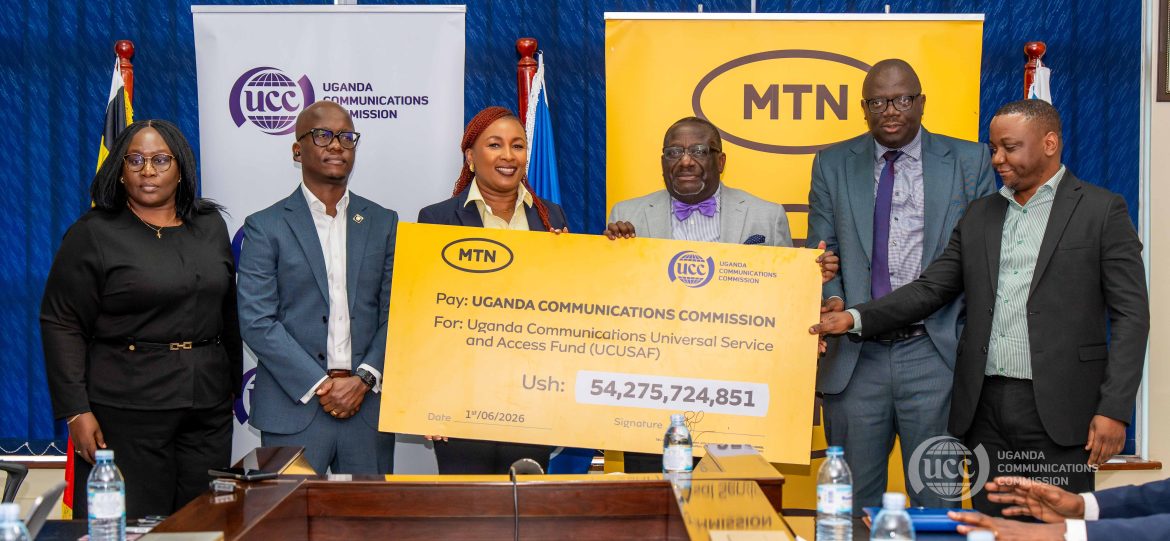
MTN Uganda has strengthened its position as one of East Africa’s leading sustainability-focused telecommunications companies after publishing its 2025 Sustainability Report, which outlines significant progress in digital inclusion, renewable energy adoption, financial inclusion and corporate governance. The report, released under the theme Digitally Unstoppable, illustrates how the operator is integrating environmental, social and governance (ESG) priorities into its long-term business strategy while supporting Uganda’s digital transformation and contributing to broader development objectives across Africa.
The report highlights continued expansion of the company’s communications infrastructure during 2025. MTN Uganda served 24.2 million subscribers while extending 3G population coverage to 96.2%, 4G coverage to 88.6% and 5G coverage to 19%. The operator also expanded its fibre network to more than 27,000 kilometres, reinforcing the digital infrastructure needed to support businesses, public services and households. According to the company, its digital ecosystem now includes approximately 241,000 active mobile money agents, nearly 115,000 merchants and more than 1,600 customer service points, positioning mobile connectivity as an increasingly important component of Uganda’s economic development.
Telecommunications infrastructure has become a critical enabler of economic resilience across Africa as governments seek to accelerate digitalisation while expanding access to financial services, education and healthcare. Mobile connectivity increasingly underpins e-commerce, digital government services and enterprise productivity, particularly in markets where fixed broadband infrastructure remains limited. Continued investment by operators therefore carries implications beyond commercial performance, influencing labour markets, financial inclusion and broader economic competitiveness.
According to MTN Uganda, sustainability now forms part of the company’s operational strategy rather than a standalone corporate responsibility programme. Environmental initiatives featured prominently in the 2025 report, with 45% of network sites now powered through renewable energy sources including solar and hydropower. The company also commissioned a 490-kilowatt-hour solar installation at its headquarters while reporting continued reductions in Scope 1 and Scope 2 greenhouse gas emissions relative to its 2021 baseline. These measures form part of Project Zero, MTN Group’s wider climate strategy aimed at reducing operational emissions while strengthening energy resilience across African markets.
The transition towards cleaner energy has become increasingly important for African telecommunications operators, many of which continue to rely on diesel-powered backup systems to maintain network reliability. Rising fuel costs, electricity supply constraints and climate commitments are encouraging greater investment in renewable energy solutions capable of reducing both operating costs and carbon emissions. Improving energy efficiency also enhances network resilience in regions where electricity infrastructure remains unreliable.
MTN Uganda reported capital investment of UGX 549.4 billion in network expansion during the reporting period alongside UGX 5.1 billion allocated to corporate social investment programmes. The company also contributed approximately UGX 1.6 trillion in taxes, underlining the broader fiscal contribution that large telecommunications operators make to national economies through tax revenues, employment and infrastructure investment.
In a statement accompanying the report, Board Chairman Charles Mbiire said sustainability has become central to the company’s long-term value creation strategy, arguing that digital connectivity now constitutes essential infrastructure supporting education, entrepreneurship, financial inclusion and public service delivery. He noted that the Board remains focused on ensuring commercial growth is accompanied by resilience, responsible governance and sustainable development outcomes.
Chief Executive Officer Sylvia Mulinge similarly positioned digital infrastructure as both a commercial asset and a development platform. According to Mulinge, expanding reliable connectivity, digital tools and financial services continues to create opportunities for enterprise development, innovation and economic participation while supporting Uganda’s transition towards a more digitally enabled economy. She also highlighted the MTN Foundation’s investment of more than UGX 5.1 billion in programmes benefiting over 60,000 people through education, youth development, digital inclusion and community initiatives.
Financial inclusion remained another defining element of the company’s sustainability performance. MTN MoMo served 14.7 million active subscribers during 2025 while processing more than five billion transactions valued at approximately UGX 195.5 trillion. Digital lending platforms disbursed UGX 2.7 trillion to more than 3.4 million borrowers, while new products including Yinvesta, the MoMo Virtual Card and an upgraded MoMo application expanded access to savings, investment products and digital financial services.
The continued growth of mobile money reflects a wider transformation taking place across African financial systems. Mobile financial services have increasingly become important channels for extending formal financial access to individuals and small businesses traditionally excluded from conventional banking. By lowering transaction costs and expanding access to credit, savings and digital payments, mobile money platforms are contributing to greater economic participation while supporting the development of digital commerce across the continent.
Beyond operational indicators, the report included findings from an independent True Value Assessment conducted by KPMG, which estimated that MTN Uganda generated approximately UGX 34.9 trillion in broader economic, social and environmental value between 2022 and 2024. According to the assessment, every UGX 1 of financial profit generated by the company created approximately 22.4 times that amount in wider societal value through employment, taxation, infrastructure investment, financial inclusion and community development.
 The findings illustrate the growing emphasis investors, regulators and development institutions place on measuring corporate performance beyond traditional financial indicators. As ESG reporting standards become increasingly integrated into investment decision-making and regulatory frameworks, companies are under greater pressure to demonstrate measurable contributions to environmental sustainability, social development and responsible governance.
For Uganda and the wider African telecommunications sector, MTN Uganda’s 2025 Sustainability Report reflects how digital infrastructure is becoming increasingly intertwined with sustainable development priorities. Expanding connectivity, strengthening renewable energy adoption and broadening access to digital financial services are no longer viewed solely as commercial objectives but as essential components of economic resilience, financial inclusion and long-term sustainable growth. As Africa continues to pursue digital transformation, the ability of telecommunications operators to align commercial expansion with measurable ESG outcomes is likely to play an increasingly important role in shaping both investor confidence and national development trajectories.


