


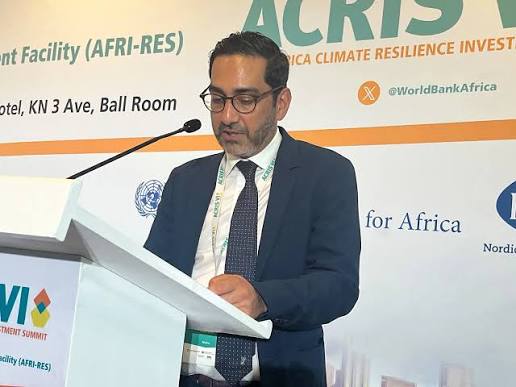
Kenya plans to introduce a national carbon budget as a central mechanism for mobilising about $14 billion in international climate finance needed to implement its low-carbon transition, linking the country’s emissions targets more directly to investment, carbon-market governance and sector-level climate policy. The proposed framework would establish national and sectoral greenhouse-gas limits while restricting the volume of emissions reductions that can be transferred internationally through carbon-credit transactions.
The initiative forms part of Kenya’s broader effort to translate its climate commitments into a financing framework capable of attracting international capital. The government estimates that implementing its emissions-reduction strategy will require $17.7 billion, of which about $3.7 billion is expected to come from domestic resources. The remaining $14 billion is expected to be mobilised through international climate finance, technology transfers and capacity-building support.
According to the government strategy document released on Aug. 4, the carbon budget is intended to provide a more structured link between Kenya’s national climate objectives and the investments required to achieve them. The framework would set indicative annual emissions ceilings, strengthen monitoring and reporting, and establish limits on international transfers of emissions reductions.
The proposal comes as carbon markets face increasing scrutiny over the credibility of emissions reductions and the risk that poorly governed credit systems could undermine national climate targets. For Kenya, establishing a national ceiling could provide a basis for determining how much of the country’s emissions-reduction capacity can be used for domestic purposes and how much can be transferred to international buyers.
The distinction has growing economic importance. International demand for carbon credits could provide an additional source of foreign capital for Kenyan projects, but unrestricted transfers could create tensions if credits sold abroad represent emissions reductions that the country subsequently needs to meet its own climate commitments. A national carbon budget could therefore become an instrument for managing both environmental integrity and the economic value of Kenya’s carbon assets.
Kenya is already one of Africa’s more active markets for climate policy and carbon-market development. Its electricity system relies heavily on renewable sources, including geothermal, hydropower and wind, giving the country a comparatively low-carbon power base. Yet the wider economy remains vulnerable to climate shocks, with droughts, floods and extreme weather affecting agriculture, water availability, infrastructure and household incomes.
That vulnerability gives the financing question a practical dimension. Climate investment in Kenya is not limited to reducing emissions. It also involves strengthening water systems, agriculture, transport infrastructure, energy networks and urban resilience against increasingly disruptive weather events. The scale of the financing requirement means that public resources alone are unlikely to meet the investment needs identified by the government.
The proposed carbon budget is consequently intended to sit between climate policy and capital allocation. By providing clearer emissions limits at national and sectoral levels, the government expects to improve the basis on which investors, development finance institutions and international climate funds assess projects and allocate capital.
Kenya’s updated Nationally Determined Contribution, submitted under the Paris Agreement framework, commits the country to reducing greenhouse-gas emissions by 32% by 2030 compared with a business-as-usual scenario. The government estimates that the baseline would produce emissions of about 143 million tonnes of carbon dioxide equivalent, making the 2030 target dependent on substantial investment across the economy.
For African economies, Kenya’s approach illustrates a wider financing dilemma. Many countries have relatively modest historical contributions to global emissions but face significant costs from climate adaptation and economic transformation. Their governments therefore need to attract international finance without creating carbon-market systems that transfer environmental assets abroad without generating sufficient domestic economic value.
Carbon markets can potentially provide funding for renewable energy, forestry, agriculture, waste management and other emissions-reduction projects. But their effectiveness depends on the quality of measurement, verification and governance. Weak systems can create uncertainty for investors and raise questions about whether credits represent genuine, additional and permanent emissions reductions.
Kenya has moved to strengthen the regulatory architecture surrounding its carbon market in recent years. The proposed carbon budget would add another layer by establishing an economy-wide framework for determining the relationship between domestic emissions targets and internationally transferable reductions.
The financing implications extend beyond carbon credits themselves. International climate finance often comes through a combination of concessional loans, grants, guarantees, private investment and technical assistance. Kenya’s ability to mobilise the full $14 billion will therefore depend on whether its policy frameworks can convert climate priorities into credible, investment-ready programmes and whether international financiers view the country’s regulatory and institutional environment as sufficiently predictable.
There is also a fiscal consideration. Kenya faces competing demands for public spending, including debt servicing, infrastructure, social protection and economic development. The proposed division of $3.7 billion in domestic resources against $14 billion in external support reflects the extent to which the country’s climate strategy depends on international capital and cooperation.
This creates both an opportunity and a risk. Greater access to international climate finance could reduce pressure on domestic public finances and support investments that improve long-term economic resilience. However, delays in accessing external funding, complex eligibility requirements or inadequate project preparation could widen the gap between Kenya’s climate ambitions and actual capital deployment.
The carbon budget could also influence the development of Kenya’s private carbon market. By providing clearer limits on emissions and international transfers, it may give businesses and investors greater visibility over the regulatory environment. At the same time, restrictions on internationally transferable credits could affect the supply available to overseas buyers and the revenues that project developers expect from carbon transactions.
The central test will therefore be implementation. A carbon budget can establish emissions ceilings and improve accountability, but it cannot by itself mobilise billions of dollars. That will require credible institutions, reliable emissions data, bankable projects, transparent carbon-market rules and sustained engagement with international financiers.
 For Kenya, the proposed framework represents an attempt to turn a national climate target into a measurable economic and financing programme. For other African countries facing similar constraints, the experience could offer lessons on how carbon governance can be connected to investment mobilisation while protecting national climate priorities.
The broader issue is whether climate policy can be converted into capital at the scale required. Kenya’s $17.7 billion financing requirement shows the size of that challenge. The proposed national carbon budget is intended to provide part of the institutional architecture, but its ultimate significance will depend on whether it helps translate emissions targets into investment, infrastructure and economic resilience on the ground.


