


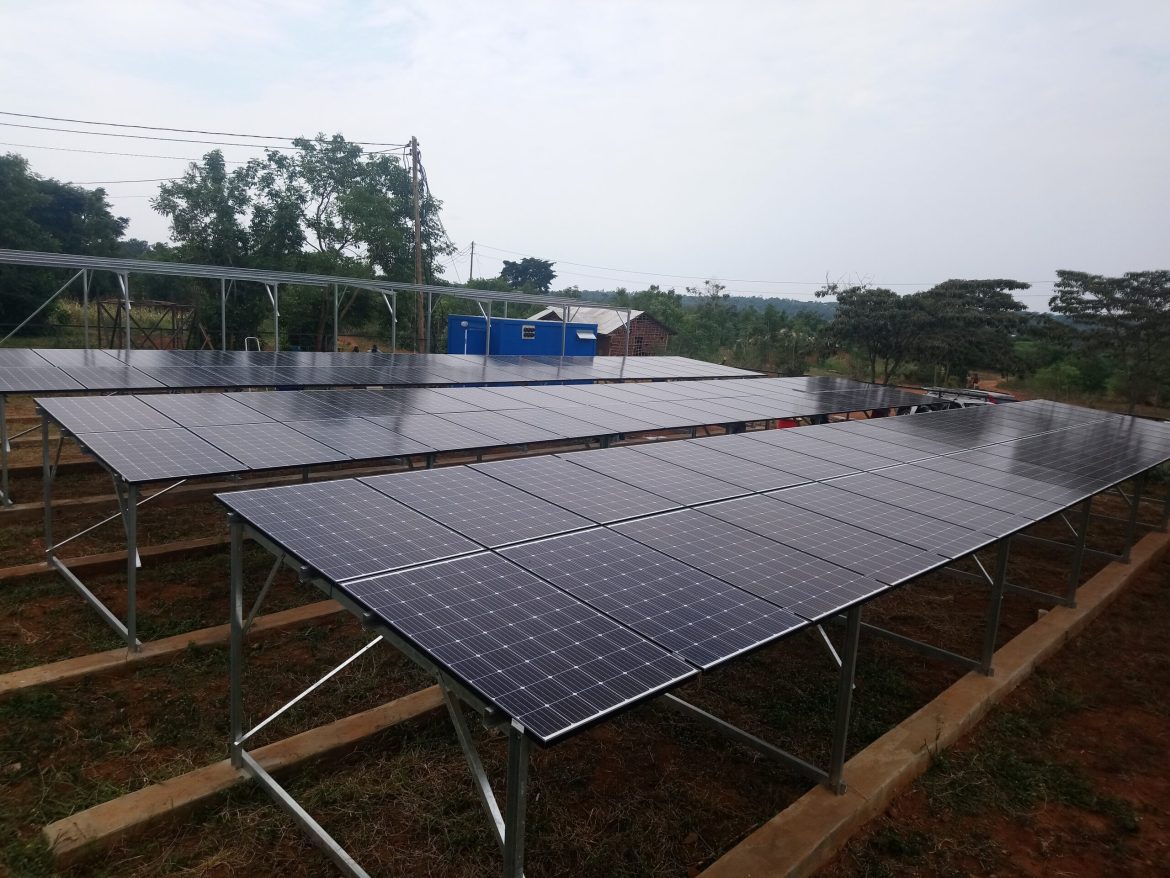
CEI Africa has committed €2 million to Spark, a Netherlands-based provider of modular solar home systems and off-grid energy solutions, in a financing deal aimed at expanding access to electricity across underserved African markets by strengthening the local distribution businesses that bring decentralised energy systems to households and enterprises. The investment, announced on Aug. 20, will support Spark’s next-generation financing mechanisms and the early rollout of its Spark Catalyse and Spark Connect initiatives.
The transaction comes as electricity access remains one of Africa’s largest infrastructure and development constraints. The International Energy Agency estimates that about 600 million people in Africa still lack access to electricity, with sub-Saharan Africa accounting for the overwhelming majority of those without reliable power. The agency says universal electricity access in sub-Saharan Africa by 2035 would require nearly $150 billion of investment, implying a six-fold increase in annual spending from current levels.
For Spark, the investment is less about building a conventional utility-scale power portfolio than about addressing a financing bottleneck further down the energy-access chain. The company operates through local distributors rather than selling directly to consumers. Its model combines modular solar home systems, pay-as-you-go technology, technical support and digital tools, allowing distributors to deploy systems while managing customer payments and equipment. Spark says its solutions have reached approximately 2 million people across more than 23 African countries.
The distinction is important for Africa’s energy market because the economics of last-mile electrification are often different from those of large grid projects. Extending a national transmission or distribution network to sparsely populated communities can require substantial upfront investment before enough customers are connected to generate sufficient revenue. Stand-alone solar systems and mini-grids can instead provide electricity without waiting for a grid extension, although affordability, after-sales service, equipment quality and consumer financing remain critical to their long-term viability.
According to the IEA, decentralised solutions such as mini-grids and stand-alone systems form an important part of the pathway towards universal access, particularly where grid expansion is costly or geographically difficult. The agency’s recent analysis also found that less than $2.5 billion was committed to new electricity-access connections in sub-Saharan Africa in 2023, with more than 70% of that financing coming from international public sources and less than 30% from private capital.
That financing imbalance helps explain why investments such as CEI Africa’s are important. The issue is not simply whether solar equipment exists, but whether companies operating at the distribution end of the market can obtain sufficient working capital to purchase inventory, reach customers and maintain operations. CEI Africa was established by KfW in 2021, on behalf of Germany’s Federal Ministry for Economic Cooperation and Development, to improve energy access for rural and peri-urban households and enterprises in sub-Saharan Africa. The Swiss Agency for Development and Cooperation joined as a contributor in 2022. The initiative is managed by Triple Jump and implemented with GreenMax Capital Group.
The foundation’s investment approach reflects a wider shift in development finance towards using concessional and blended capital to attract private investment into energy-access markets. CEI Africa says its objective is to bridge financing gaps in difficult access-to-energy segments by working with financiers, off-grid solar companies and mini-grid specialists.
Spark’s existing Spark Invest programme illustrates how that approach can work at distributor level. Rather than requiring every local distributor to fund equipment purchases entirely from its own balance sheet, the model provides financing that enables partners to acquire solar equipment and repay funding through revenues generated from customers. The new investment is expected to help Spark develop additional financing mechanisms and strengthen support for its distribution network. This is significant because local distributors often operate much closer to consumers than international energy companies. They understand local purchasing patterns, geography, languages and payment behaviour, but can face limited access to affordable capital. Strengthening their balance sheets could allow them to hold more inventory and serve communities where larger companies may not have a direct commercial presence.
The challenge is that financing alone cannot resolve the structural barriers facing off-grid energy businesses. The IEA estimates that around 220 million people in sub-Saharan Africa without electricity access would struggle to afford even a basic electricity bundle, while about 400 million could find an essential bundle unaffordable. The agency estimates that closing this affordability gap could require an additional $2 billion to $10 billion annually through measures such as consumer subsidies, developer support or lower financing costs. For solar companies, this creates a delicate balance between expanding sales and maintaining commercially sustainable businesses. Products have to be affordable enough for low-income households while generating enough revenue to cover equipment costs, distribution, maintenance, financing and customer-service expenses.
The commercial opportunity extends beyond household lighting. Decentralised solar systems can support productive uses of electricity, including small shops, agricultural processing, irrigation, refrigeration and other rural businesses. The IEA has previously noted that electricity access strategies need to consider productive uses because businesses and agricultural enterprises can create anchor demand that strengthens the economics of energy systems.
Spark’s recent expansion in Tanzania illustrates that broader opportunity. The company is working with Ariya Finergy on a 1.5 MWp solar installation with 2 MWh of battery storage for an Irvine’s poultry-feed factory, according to the information accompanying the investment announcement. The project demonstrates how decentralised energy models can extend beyond household systems into commercial and industrial applications. For Tanzania, the development comes as the country attempts to accelerate electricity access and productive-use energy under the broader Mission 300 initiative. The World Bank and African Development Bank said in June that Mission 300 had connected more than 50 million people to electricity across 40 African countries, with Tanzania accounting for 7.5 million new people gaining access under the programme.
The expansion of decentralised energy could consequently become an important complement to national grid investments rather than a substitute for them. Africa’s electricity challenge is too large and geographically diverse for a single technology to solve it. Grid expansion will remain important in densely populated areas and for industrial demand, while mini-grids and stand-alone solar systems can address locations where grid infrastructure is slower or more expensive to deploy.
The financing structure behind the Spark investment also highlights another issue: the cost of capital. The IEA estimates that electricity-access projects in Africa face costs of capital three to four times higher than comparable grid projects in advanced economies because of perceived and actual country and project risks. Lower-cost development finance can therefore have an effect beyond the amount of money initially invested. If financing allows distributors to demonstrate stronger repayment records, grow their customer portfolios and build more predictable cash flows, those businesses may eventually become more attractive to commercial lenders and institutional investors.
That is the logic behind CEI Africa’s broader financing strategy. In 2024, the foundation received an additional €24 million grant from KfW to expand financing for green mini-grid developers and off-grid solar companies, including businesses supplying solar-powered mills, pumps and cold-storage systems. Its financing windows include loans, results-based financing and outcome-based grants.
The Spark investment therefore sits within a wider effort to build an investable off-grid energy ecosystem rather than simply finance individual solar products. For African governments, the implications are also institutional. Off-grid markets require clear rules around licensing, consumer protection, taxation, importation of equipment, quality standards and integration with national electrification plans. Without predictable regulatory conditions, private capital can remain cautious even when demand is substantial.
The World Bank and African Development Bank’s Mission 300 programme reflects the scale of the challenge. The initiative aims to connect 300 million Africans to electricity by 2030 and is increasingly combining public infrastructure investment with private-sector participation. The private sector will be particularly important because public resources alone are unlikely to provide the capital required for universal access. The IEA’s assessment that international public finance accounted for more than 70% of electricity-access commitments in 2023 highlights both the importance of development finance and the need to mobilise significantly more private investment.
For Spark, the immediate test will be whether the €2 million investment can translate into larger and more sustainable financing channels for distributors. The company has said the funding will support the first phases of Spark Catalyse and Spark Connect, alongside the development of new financing mechanisms. The broader measure of success, however, will be whether those mechanisms enable distributors to deploy more systems at prices households and businesses can afford, while maintaining the commercial performance needed to attract further capital.
Africa’s electricity-access gap is ultimately a financing and infrastructure problem as much as it is a technology problem. Solar modules, batteries and digital payment systems have become increasingly accessible, but the businesses deploying those technologies still need working capital, affordable consumer finance, reliable supply chains and predictable policy environments.
CEI Africa’s investment in Spark addresses one part of that equation by directing capital towards the companies positioned between technology suppliers and end users. If that model can help local distributors expand sustainably, it could provide a pathway for private finance to reach communities that conventional grid investment may not reach quickly.
The significance of the deal therefore extends beyond the €2 million committed. It reflects a broader transition in Africa’s energy-access market: from treating off-grid solar primarily as an emergency solution for communities without electricity towards building commercially viable distribution and financing systems capable of operating at continental scale.
For countries seeking to expand electricity access while managing constrained public budgets, that distinction could increasingly determine how quickly energy reaches households, businesses and productive sectors beyond the reach of the grid.


