


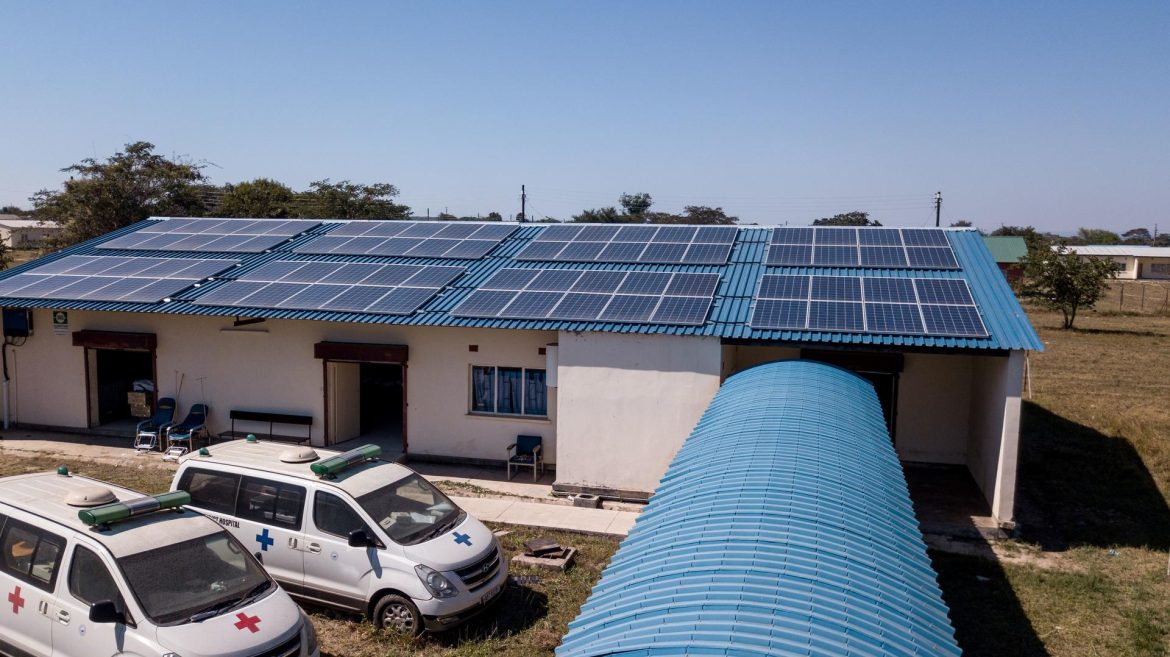
Rural morgues are rarely included in discussions about sustainable healthcare infrastructure, yet they depend on many of the same basic systems that determine whether a health facility can operate safely: reliable electricity, refrigeration, water, sanitation, waste management and resilient buildings. In Africa, where rural health facilities are more likely to face unreliable power and infrastructure gaps, applying clean-energy and climate-resilience principles to mortuary services could reduce operating costs, improve reliability and strengthen the dignity of services available to communities.
The issue is more fundamental than environmental performance. A mortuary requires continuous refrigeration to preserve bodies safely, electricity to operate lighting and equipment, water for cleaning and hygiene, and appropriate systems for handling wastewater and other potentially hazardous materials. When one of these systems fails, the consequences can quickly become operational, financial and public-health problems.
The World Health Organization (WHO) has increasingly framed healthcare infrastructure through this wider lens. Its 2024 overview of safe, climate-resilient and environmentally sustainable healthcare facilities identifies reliable infrastructure, sustainable energy, water and sanitation, waste management, technology and a capable health workforce as interconnected requirements for resilient health services. The WHO also notes that healthcare facilities in developing countries are particularly exposed to weaknesses in infrastructure, water and sanitation and energy supply.

For rural morgues, the electricity challenge is particularly important because refrigeration cannot simply be switched off when the grid fails. The WHO estimates that close to 1 billion people in low- and lower-middle-income countries are served by healthcare facilities without reliable electricity or with no electricity access at all. In sub-Saharan Africa, about 15% of healthcare facilities were estimated to have no electricity, while only around half of hospitals have reliable electricity. The gap is generally more pronounced in remote and rural facilities.
That makes decentralised renewable energy a practical infrastructure consideration rather than simply a climate initiative. Solar photovoltaic systems combined with battery storage can provide electricity independently of an unreliable central grid, while reducing reliance on diesel generators. According to the WHO, such decentralised systems can be rapidly deployed and can improve the climate resilience of healthcare facilities by reducing dependence on diesel supplies. For a rural mortuary, the economics could be significant. Refrigeration represents a continuous electricity load, meaning that energy efficiency can reduce both the size and cost of the solar-and-battery system required. Replacing ageing refrigeration units with more efficient equipment, improving insulation and monitoring electricity consumption can therefore complement renewable-energy investment.
The same principle applies to other parts of the facility. LED lighting, efficient water pumps, improved ventilation and better building insulation can reduce energy requirements. New facilities can incorporate these measures into their design from the beginning, while existing morgues can be retrofitted in stages according to available budgets. The financial case matters for rural governments because capital expenditure is only one part of healthcare infrastructure costs. A facility that requires frequent diesel purchases, emergency equipment repairs and replacement of damaged refrigeration systems can impose recurring pressure on already constrained health budgets. Reducing energy consumption and fuel dependence can potentially release resources for maintenance, staffing and other health services.
The WHO’s broader framework recognises this relationship. Its guidance states that climate-resilient and environmentally sustainable healthcare facilities can improve resource efficiency, reduce environmental impacts and contribute to more affordable and accessible healthcare. The organisation’s 2024 global framework also calls for reliable electricity, water, sanitation, hygiene and healthcare waste services as fundamental components of quality care.
Water and sanitation are equally important in mortuary infrastructure. Cleaning and hygiene require reliable water supplies, while wastewater must be managed in ways that comply with public-health and environmental requirements. Rainwater harvesting could provide supplementary water for appropriate non-potable uses where local regulations and technical conditions allow. Water-efficient fixtures and properly designed wastewater systems can further reduce operating pressures.
Waste management requires particular care. Healthcare facilities generate waste streams that may be infectious, toxic or otherwise hazardous, and the WHO identifies proper waste management as an essential part of safe and environmentally sustainable healthcare. For morgues, sustainability therefore cannot be separated from health and safety. Waste must be appropriately segregated, stored, treated and disposed of, while workers need training on handling procedures. A poorly designed waste-management system could create environmental and public-health risks even if the facility has an otherwise efficient solar power system.
Climate resilience adds another layer. Rural healthcare infrastructure can be exposed to floods, droughts, extreme heat and other disruptions that can affect electricity, water supplies and physical access. The WHO’s 2024 guidance specifically recommends that healthcare facilities be designed and operated to withstand climate-related disruptions while reducing their environmental footprint. For Africa, this has implications beyond individual facilities. Health systems across the continent are expanding services in rural and underserved areas, where infrastructure investments must often perform under more difficult operating conditions than their urban counterparts. A mortuary constructed without considering electricity reliability, water availability or future climate risks can become expensive to operate or maintain.
Kenya provides a useful example of why the infrastructure discussion is relevant. The country’s Ministry of Health Climate Change and Health Strategy 2024–2029 identifies energy-efficient facilities, building retrofits, solar systems for critical healthcare equipment, and solar-powered water systems among measures that can improve resource sustainability and climate resilience in healthcare. The country’s experience with larger healthcare institutions also demonstrates the financial dimension of energy resilience. In 2025, Kenyatta National Hospital secured technical support for a planned solar photovoltaic system intended to increase energy independence and reduce reliance on diesel generation. The hospital said the initiative was expected to reduce energy costs while strengthening operational resilience.
The same logic can be adapted to smaller rural facilities, although the technical solution would need to be designed around the specific electricity demand of each mortuary. A rural facility may not require the same scale of generation as a major hospital, but refrigeration remains a critical continuous load. Solar generation, battery storage and efficient refrigeration could therefore be evaluated as an integrated system rather than as separate investments. A 2025 project in Ukwala, western Kenya, offers another relevant local example, although it should not be described as a fully sustainable or solar-powered facility. The Serenity Parlor Mortuary was developed to address inadequate mortuary infrastructure and preservation capacity in surrounding rural communities. The facility has a reported 33-body capacity, covers about 5,333 square feet and used approximately 70% local materials during construction, with 30 local workers employed during the construction phase.
The Ukwala example is significant because sustainability in rural infrastructure is not necessarily synonymous with renewable energy. Using locally available construction materials and labour can reduce some construction-related costs and strengthen local economic participation. But the available information does not establish that the facility is solar-powered or that it meets a comprehensive environmental sustainability standard. It is therefore better understood as an example of locally responsive infrastructure development rather than evidence of a completed green-mortuary model.
That distinction is important because sustainability claims in healthcare infrastructure need to be supported by measurable evidence. A building constructed with local materials may have economic and environmental advantages, but long-term sustainability also depends on energy consumption, water efficiency, waste management, equipment performance, maintenance and resilience.
The challenge of maintenance is particularly relevant in rural areas. Solar panels and batteries require technical oversight. Refrigeration systems require preventive maintenance. Water pumps, sanitation systems and electrical equipment can fail if spare parts and trained technicians are unavailable. Without maintenance budgets, even well-designed green infrastructure can deteriorate.
This is where county governments, national health authorities and development-finance institutions can play an important role. Rather than financing equipment alone, projects can incorporate long-term maintenance contracts, staff training, equipment monitoring and replacement planning. The WHO’s approach similarly emphasises the importance of infrastructure, technology, workforce capacity and resource management as interconnected components of resilient healthcare.
There is also a case for standardising sustainability requirements for rural healthcare infrastructure. Governments could incorporate minimum energy-efficiency, water, sanitation, waste-management and climate-resilience criteria into the design and procurement of new mortuaries. Existing facilities could then be assessed against those criteria and upgraded according to risk and available financing. Such an approach would shift sustainability from an optional project feature to part of infrastructure planning. It could also make it easier for governments and financiers to compare investment needs across counties and regions.
The broader development implications are significant. Reliable mortuary services are part of the healthcare system, even though they receive considerably less attention than hospitals, clinics and emergency services. Families depend on these facilities during difficult periods, while health workers require safe infrastructure for handling and preserving bodies. In rural communities, a functional mortuary can also reduce the need for families to travel long distances to access appropriate preservation services. That can reduce transport burdens and the financial pressures associated with arranging services far from home.
For Africa’s healthcare systems, the question is therefore not whether mortuaries should become “green” as a matter of branding. It is whether rural health infrastructure can be designed to remain functional when electricity fails, fuel prices rise, water becomes scarce or extreme weather disrupts normal operations.

The answer increasingly lies in integrated infrastructure planning. Solar power can address electricity reliability, efficient refrigeration can reduce demand, water and sanitation systems can protect health and the environment, while climate-resilient construction can reduce vulnerability to physical disruptions. Training and maintenance determine whether those investments continue to deliver value.
The most sustainable rural mortuary will consequently not be the one with the most visible solar panels. It will be the facility that can preserve bodies reliably, maintain safe hygiene standards, manage waste responsibly, operate within a constrained public budget and continue functioning when the systems around it come under pressure.
For governments across Africa, that is a practical infrastructure question with implications for public health, public finances and community dignity. Sustainable design can help rural morgues become more reliable and less expensive to operate, but only when clean energy is combined with efficient equipment, adequate water and sanitation, resilient buildings, skilled staff and long-term maintenance. The principle extends beyond mortuaries. If African countries are investing in climate-resilient healthcare systems, the sustainability standard should apply across the entire infrastructure chain, including the facilities that serve communities after conventional medical care has ended.


