


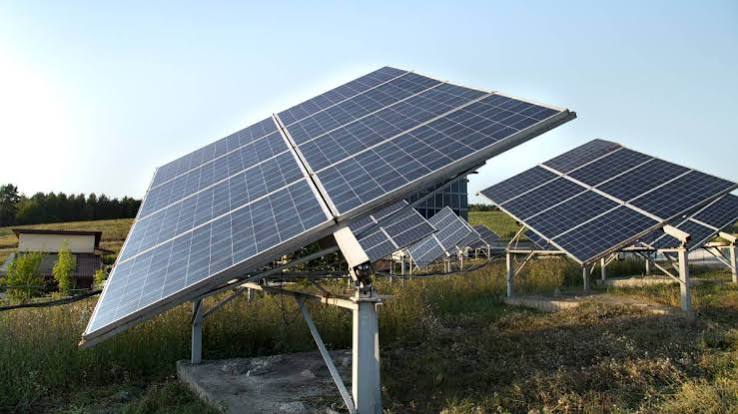
South African data centre operator Teraco has appointed China-based JA Solar as the exclusive photovoltaic module supplier for its 120-megawatt (MW) Sediba solar project in the Free State, advancing a renewable energy investment designed to supply its data centre operations through the national electricity grid. Announced on November 12, the supplier agreement marks another step in a project expected to generate more than 354,000 megawatt-hours of electricity annually, as rising demand for cloud computing, artificial intelligence and digital services increases pressure on the energy systems supporting Africa’s expanding digital infrastructure.
The project is located in Parys and will supply renewable electricity to Teraco’s facilities through a wheeling arrangement involving Eskom and local municipalities. Under this arrangement, electricity generated at the solar plant will enter the national grid, while the corresponding renewable energy allocation will be credited to Teraco’s data centre operations across the country. The model allows a company to procure electricity from a generator located away from its facilities without requiring a direct physical connection between the power plant and the data centre.

JA Solar will supply high-efficiency n-type photovoltaic modules for the project. The company said its selection followed technical evaluation and testing, with performance, durability and reliability considered in relation to South Africa’s high temperatures, solar irradiation, dust and seasonal weather conditions. The announcement also places attention on the equipment and supply chain requirements of large scale solar developments, where module performance and degradation rates can influence electricity output and project economics over several decades.
However, the appointment is not the start of construction. Teraco secured grid capacity from Eskom in February 2024 and began construction in November of that year, working with renewable energy developer JUWI Renewable Energies South Africa and installation partner Subsolar. The company’s latest sustainability disclosures place the expected completion of Sediba in the first quarter of 2027, rather than the end of 2026 initially anticipated. The project is therefore moving through its construction and procurement stages, with commissioning and operational delivery still ahead.
The investment is significant for a data centre business whose electricity requirements have grown alongside demand for digital services. Teraco consumed 399.3 gigawatt-hours of electricity in 2025, more than three times its 2021 consumption of 130GWh, according to figures reported from its latest sustainability report. Its renewable energy share, however, declined from 15.77% in 2023 to 14.04% in 2025, while rooftop solar generated 5.25GWh, equivalent to about 1.3% of its electricity consumption.
The Sediba plant’s projected annual output of 354,000MWh would be equivalent to approximately 89% of Teraco’s 2025 electricity consumption. That comparison illustrates the scale of the investment, although it does not mean the company will meet nearly all its future electricity needs from the project. Demand is continuing to grow, and the actual contribution will depend on the plant’s generation, the timing of commissioning and the expansion of Teraco’s data centre operations.
The project is estimated to cost about R2.25 billion and is being financed through a green loan, according to reporting on the company’s sustainability disclosures. Teraco has also contracted four wind projects under power purchase agreements, with the first expected to reach commercial operation in the third quarter of 2026. Together, these investments form part of the company’s target to source 50% of its energy from clean sources by 2027 and 100% by 2035.
The growth in data centre electricity demand reflects a wider shift in the infrastructure requirements of digital economies. Data centres provide the computing, storage and interconnection capacity required for financial services, telecommunications, cloud platforms, e-commerce and increasingly artificial intelligence applications. Their expansion can support investment in digital services, improve the availability of local data infrastructure and reduce dependence on overseas hosting. But the facilities operate continuously and require reliable electricity, making energy availability and cost central considerations in decisions about where to build them.
South Africa’s position as one of the continent’s largest data centre markets gives the issue wider economic significance. A 2025 digital infrastructure investment study supported by the Development Bank of Southern Africa projected that the country’s data centre IT load could increase from about 435MW in 2024 to 829MW by 2029. It identified cloud adoption, digital services and artificial intelligence as key drivers of demand. The expansion creates opportunities for investment in connectivity and technology infrastructure, but it also increases the need for generation capacity, transmission networks and reliable electricity procurement.
For electricity utilities and municipalities, the growth of large commercial power users presents both opportunities and operational challenges. Wheeling arrangements can create additional demand for renewable generation and enable private investment in power infrastructure. They also require coordination between generators, transmission operators and municipal distributors, including clear rules for network access, tariffs, metering and settlement. As more companies seek to procure electricity outside traditional supply arrangements, municipalities will need to adapt their distribution models while maintaining the revenue required to operate and maintain local networks.
Grid capacity remains a critical constraint. Although the Sediba plant is located in the Free State, its electricity allocation is intended for Teraco facilities elsewhere in South Africa. This requires the national grid and municipal networks to accommodate the transfer of power across different jurisdictions. The arrangement demonstrates how existing infrastructure can be used to connect renewable generation in areas with strong solar resources to electricity users in major urban centres. It also underlines the importance of continued investment in transmission and distribution networks as private generation expands.
The sustainability implications extend beyond the source of electricity. Data centres consume water for cooling, occupy land and depend on equipment-intensive supply chains. Teraco reported water usage effectiveness of 0.03 litres per kilowatt-hour for its data centre operations in 2025, according to its sustainability disclosures. In a water-stressed country such as South Africa, the environmental performance of digital infrastructure will increasingly depend on how operators manage water consumption, energy efficiency, construction impacts and the lifecycle of electronic equipment alongside renewable electricity procurement.
The expansion of data centres across Africa makes these considerations relevant beyond South Africa. Markets such as Kenya, Nigeria and Egypt are seeking to attract investment in cloud infrastructure, digital financial services and data hosting. As facilities expand, electricity availability and the carbon intensity of power supply may influence operating costs, investor decisions and the ability of countries to attract global technology companies. Renewable energy procurement could help reduce exposure to grid constraints and emissions, but its effectiveness will depend on whether projects are additional, reliably connected and supported by transparent electricity market arrangements.

Sediba therefore represents more than a corporate solar procurement project. It illustrates how large electricity consumers can finance generation capacity and use national networks to secure renewable power for energy-intensive operations. The longer term test will be whether the project delivers its expected output, how much of Teraco’s growing demand it can cover and whether the wheeling model can be replicated by other commercial and industrial users. For South Africa, the relationship between digital infrastructure investment and electricity-system capacity is likely to become an increasingly important factor in the competitiveness and sustainability of its digital economy.


