


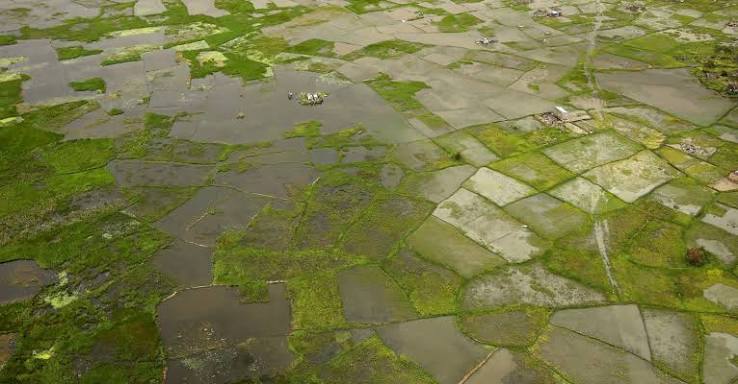
African governments are facing renewed pressure to strengthen disaster early warning systems as a powerful El Niño event raises the risk of floods, drought and extreme weather across parts of the continent, with an estimated $5 billion to $10 billion in additional investment needed to close critical gaps in monitoring, forecasting and public alerts. The warning, highlighted in a Reuters report published on November 11 and discussed at the COP31 climate summit in Antalya, comes as new United Nations data show that millions of people in some of Africa’s most climate-vulnerable regions remain inadequately protected against approaching hazards.
The scale of the challenge is reflected in the uneven reach of existing warning systems. According to the 2026 Global Status of Multi-Hazard Early Warning Systems report by the United Nations Office for Disaster Risk Reduction (UNDRR) and the World Meteorological Organization (WMO), 136 countries now report some form of early warning capacity, representing 70% of countries globally. However, only 64 have systems covering all four essential components: understanding disaster risks, monitoring and forecasting hazards, communicating warnings and ensuring communities and institutions are prepared to respond.

The gap is particularly pronounced in Central and Western Africa. Data from the Lloyd’s Register Foundation’s World Risk Poll, cited in the Reuters report, show that only 47% of people surveyed in these regions who had experienced a disaster in the previous five years said they had received an advance warning. The corresponding figure for East Asia was 95%, illustrating the disparity in access to information that can help communities prepare for extreme weather.
The findings also point to a problem beyond the delivery of alerts. In low income and lower-middle-income countries, fewer than half of people who received warnings were able to take protective action, compared with about three-quarters in upper-middle-income countries. The figures suggest that effective disaster preparedness depends not only on the availability of forecasts and communication technology, but also on whether households have the resources, infrastructure and institutional support to act on the information.
For Africa, the financial implications are substantial. James Kinyangi, Head of Climate and Policy at the African Development Bank, told Reuters that the continent requires an additional $5 billion to $10 billion to strengthen early warning systems. The bank is working with more than 30 countries to develop these capabilities, while more than 20 others still require financial and technical support to establish the infrastructure, institutional capacity and services needed to protect communities.
The investment requirement covers more than weather-monitoring equipment. Effective early warning systems depend on functioning meteorological observation networks, reliable data exchange, forecasting expertise, communication infrastructure, trained personnel and the ability of local authorities to coordinate emergency responses. They also require sustained funding for maintenance and operations, areas that can be difficult to finance through short-term donor projects or temporary humanitarian programmes.
The urgency is increasing as El Niño strengthens. The WMO has warned that the current event could become exceptionally strong, with effects on global rainfall and temperature patterns extending into 2027. Its October seasonal outlook indicated a further intensification towards stronger El Niño conditions during November 2026 to January 2027. However, the consequences will differ across regions, making country-level and seasonal forecasting essential rather than relying on a single continental assessment.
In the Greater Horn of Africa, the outlook points to increased rainfall in parts of the region during the October to December 2026 season, raising the risk of flooding in areas already exposed to fragile infrastructure and limited drainage capacity. The WMO has noted that this rainfall period contributes a substantial share of annual precipitation in parts of Ethiopia, Kenya and Somalia, as well as Rwanda, Burundi, Tanzania and Uganda. In contrast, Southern Africa faces elevated drought risks during the 2026–2027 main agricultural season. These contrasting conditions could affect crop production, livestock, water availability and food prices in different parts of the continent.
The economic consequences of delayed or inaccessible warnings can extend well beyond the immediate cost of disaster response. Flooding can damage roads, bridges, electricity infrastructure and irrigation systems, disrupting trade and agricultural supply chains. Drought can reduce harvests, weaken livestock production and increase pressure on water resources. Governments may then face higher spending on emergency assistance, reconstruction and food imports, often at a time when public finances are already constrained by debt-servicing costs and competing development priorities.
For rural households, the difference between receiving a warning and being able to act on it can determine whether crops are harvested early, livestock moved to safer areas or essential supplies secured before a flood or drought intensifies. In urban areas, timely alerts can help local authorities organise evacuations, protect transport networks and prepare emergency services. But warnings have limited value where communities lack safe evacuation routes, reliable communications or the financial means to respond.
Africa has made progress in expanding its early warning coverage. The Addis Ababa Call to Action on Early Warnings in Africa, adopted following the Africa Early Warnings Forum in September 2026, reported that 41 African countries were reporting on early warning systems, compared with 14 in 2015. The comprehensiveness of those systems has more than doubled since 2022, supported in part by regional cooperation through the Africa Multi-Hazard Early Warning and Early Action System, led by the African Union Commission.
The WMO’s latest global assessment also recorded an increase in Africa’s reported early warning coverage, with 11 additional countries reporting some capabilities over the past year, bringing the regional figure to 77%. That progress, however, should not be interpreted as universal protection. National reporting on the existence of a system does not establish whether forecasts reach remote communities, whether warnings are understood or whether local institutions have the resources to respond. The low reported warning coverage in Central and Western Africa demonstrates the difference between formal national capacity and protection experienced by people on the ground.
The Addis Ababa Call to Action identifies the remaining priorities as closing last-mile communication gaps, treating early warning systems as core public infrastructure, improving coordination between institutions and linking forecasts to anticipatory action. It also calls for dedicated domestic budget allocations and predictable international financing, particularly for least developed countries, small island developing states and fragile contexts. The framework places early warnings within wider development planning, including agriculture, health, water management, education, transport infrastructure and social protection.
Technology could help address some of the communication constraints. Mobile-based cell broadcast systems can send location-specific alerts to phones within a defined area without requiring users to download an application or register for a service. According to the UN report cited by Reuters, 38 countries had fully operational cell broadcast warning systems as of June 2026, while another 17 were in the final stages of developing them. The report estimated that $500 million would be sufficient to extend such systems to every country and maintain them for three years.
However, mobile alerts cannot replace local preparedness or reliable public services. People without network coverage, electricity or access to mobile devices may remain excluded, while communities receiving warnings may still lack transport, safe shelters or financial resources to evacuate. The experience of low income households also highlights the recurring costs of maintaining community-based monitoring and communication systems, including the cost of phone services and the time required from local volunteers.
For African governments, the financing challenge therefore involves both capital investment and long term operational expenditure. Meteorological agencies need sustained budgets to maintain observation stations, retain technical staff and provide timely forecasts. Disaster-management institutions need clear mandates and coordination arrangements, while local authorities require resources to translate warnings into evacuation plans, emergency support and infrastructure protection. Regional bodies also have a role in sharing data and coordinating responses to hazards that cross national borders.

The wider test for Africa will be whether early warning systems become integrated into routine economic and public-sector planning rather than remaining largely dependent on externally funded projects. As El Niño conditions continue to influence weather patterns into 2027, the ability to anticipate risks and act before losses occur will have direct consequences for agricultural output, infrastructure resilience, food security and government spending. Expanding warning coverage is an important step, but the effectiveness of the investment will ultimately be measured by whether people and institutions can respond before a predictable hazard becomes a disaster.


